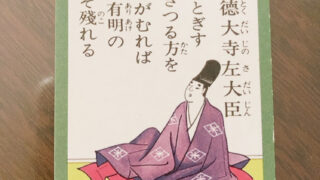

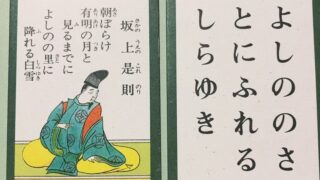
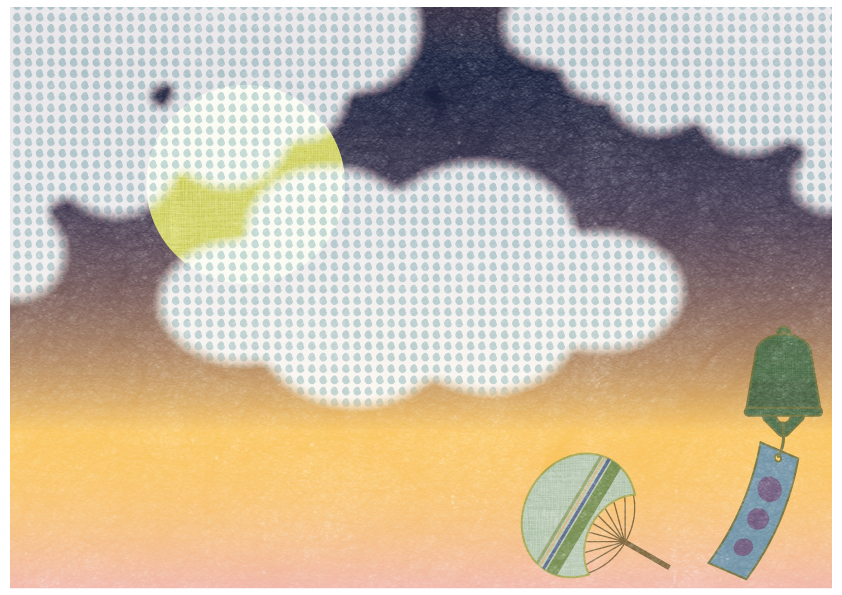
夏の夜は まだ宵ながら 明けぬるを 雲のいづくに 月宿るらむ
清原深養父 (9??-9??)
百人一首 三十六番 夏
「古今和歌集」
かな
なつのよは まだよひながら あけぬるを くものいづこに つきやどるらむ
「よひ」は「よい」、「らむ」は「らん」と読みます。
言葉の意味
まだ宵ながら:まだ宵だけど While it is still early night
ここでは「まだ宵だと思っていたけど」という意味で使われています。
宵は、遅くない夜の時間、日が沈んでから9時ぐらいまでの時間です。
It is used here to mean “even though I thought it was still early night.” Yoi refers to the time of night that is not yet late, from sunset until about 9:00 PM.
明けぬるを:夜が明けたけど Though the night has dawned
雲のいづこに:雲のどこに In what part of the clouds
月やどるらむ:月が宿をとっているのだろう。どこの宿に泊まっているのだろう。
The moon must be taking shelter / At what lodging is it staying?
現代語訳
夏の夜はまだ宵だと思っていたら、もう明けてしまう。月はどこの雲の宿をとっているのだろう。
While I thought the summer night was still in its early hours, it has already dawned. In which cloud’s lodging is the moon staying?
From spring to summer, the days gradually become longer. Even though I thought the sun had only just set, it is already morning. I wonder in which cloud’s lodging the moon is staying? (Since the night is so short, there would have been no time even to find a place to stay). Because summer nights are comfortable, they feel like they end faster than the actual time.
The author, Kiyohara no Fukayabu, is the great-grandfather of Sei Shonagon, who is famous for “The Pillow Book.” In “The Pillow Book,” she writes the following about summer:
夏は、夜。月のころはさらなり。闇もなほ、蛍の多く飛びちがひたる。また、ただ一つ二つなど、ほのかにうち光りて行くも、をかし。雨など降るも、をかし。
In summer, nights are the best. When the moon is out, it goes without saying. Even in the dark, when many fireflies are flying around and crossing paths. Also, when just one or two go by, glowing faintly, it is charming. Even when it rains, it is charming
Summer nights are enjoyable. This has not changed from the past to the present. The page below is about Sei Shonagon’s poem.
今日もここまで読んでくれてありがとうございました。
このページのサムネイル画像は、素材サイトのイラストACからダウンロードしたものです。SHIEDAさんという方のイラストを使っています。
令和八年五月九日