
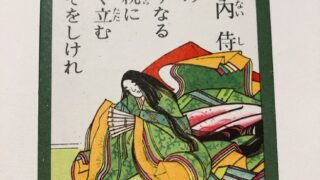



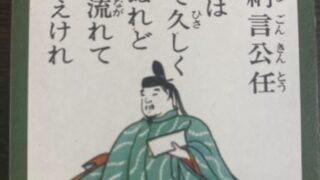



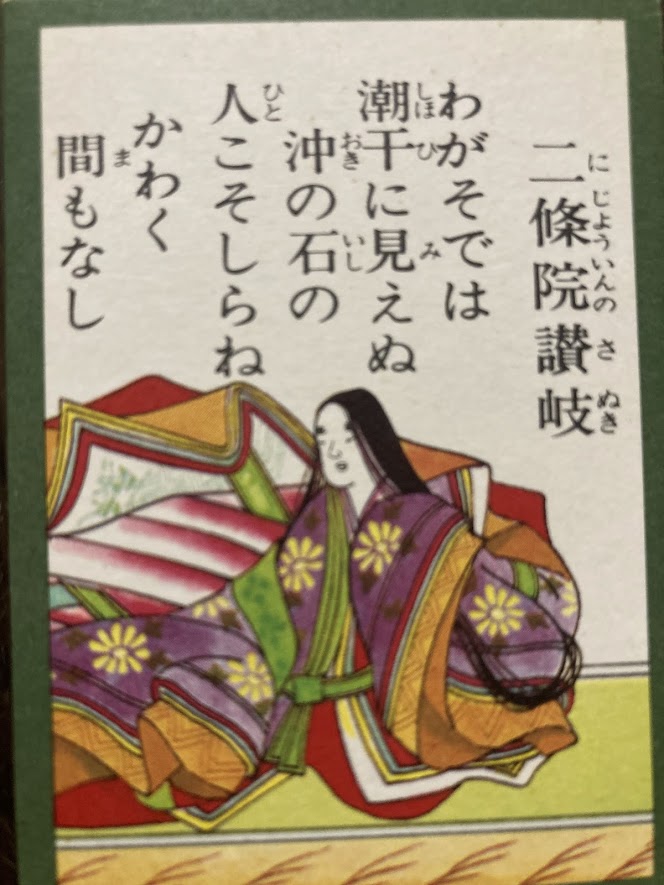
わがそでは 潮干に見えぬ 沖の石の 人こそしらね かわく 間もなし
二条院讃岐(1141-12**)
百人一首 九十二番 恋
『千載集』
かな
わがそでは しほひに みえぬ おきのいしの ひとこそ しらね かわくまもなし
言葉の意味
私のそでは、引き潮の時にも見えない沖の石のように、あなたには見えないでしょうが、乾く間もなく濡れているのです。
Though unseen by you, my sleeves are always wet with tears, like a stone deep under the sea.
「袖をぬらす」、「袖が乾く間もない」という表現は、涙のメタファーとしてよく使われます。
以前にも書いたとおり、昔の貴族の恋愛、結婚は、男性が夜に女性の家に泊まりに行き、朝になると帰るというものです。今何をしているのかわからない人のことをただ待つのは、とても苦しいことであったと思われます。
作者は、涙で乾く間もない袖を、引き潮の時にも見えない深い海の石に例えています。ストレートな気持ちを詠んだ歌ですが、この歌には、深く思いつめて涙が乾くひまがないくらい苦しんでいるのに、それを人に見せたくないという作者の性格も見えます。かっこ悪い自分が許せないという価値観、よくわかります。
貴族の世が終わり、武士の世が始まる時代に生きた歌人です。
The expression “wetting my sleeves,” or “my sleeves are never dry,” is often used as a metaphor for tears.
As I have written before, in the old aristocratic love and marriage, the man would stay at the woman’s house at night and leave in the morning. It must have been tough to just wait for someone whom she did not know what they were doing now.
The author compares the sleeves, which are still wet from tears, to stones in the deep sea that cannot be seen even at ebb tide. This is a straightforward poem about feelings. It also shows the author’s character that she does not want people to see her sorrow though she is in deep thought and suffering so much that her tears do not have time to dry. I understand how she feels—she couldn’t forgive herself for looking weak or uncool.
This poet lived at a time when the world of the aristocrats was ending and the world of the samurai was beginning.
源氏物語 ~ Tale of Genji ~
この歌の解説を書いていて、「源氏物語」に出てくる女性の一人を思い出しました。美しく、賢く、センスのいい女性。プライドの高い女性です。光源氏とつきあうことで、深く苦しみます。「源氏物語」には多くの女性が登場しますが、その中でも特に印象の強い女性です。
Writing the commentary for this poet reminded me of one woman in “The Tale of Genji.” A woman of beauty, cleverness, and good taste. She is a woman of pride. She suffers deeply from dating Hikaru Genji. You can see many women in this tale, and she is one of the most memorable.
今週、生徒さんと「源氏物語」の話をしました。今その方は英訳を読んでいて、1000年くらい前の日本の文化がおもしろいと言っていました。古い時代の文化と、現在でも理解できる人の気持ちが伝わってくる物語です。長い物語なので、これからもレッスンで感想を聞くのを楽しみにしています。
This week, I talked about “The Tale of Genji” with a student. Now he is reading the English translation and said that it is interesting to see the culture of Japan about 1000 years ago. The story conveys the culture of an older time and the feelings of people who can still understand it today. It is a long story, and I look forward to hearing more of his impressions in future lessons.
今日もここまで読んでくれてありがとうございました。
令和七年五月十八日