








みなさん、年末年始は楽しく過ごせましたか? 私はお正月は本を読んだり家族と映画を見たりしました。家族とゆっくり過ごすお正月はいいですね。
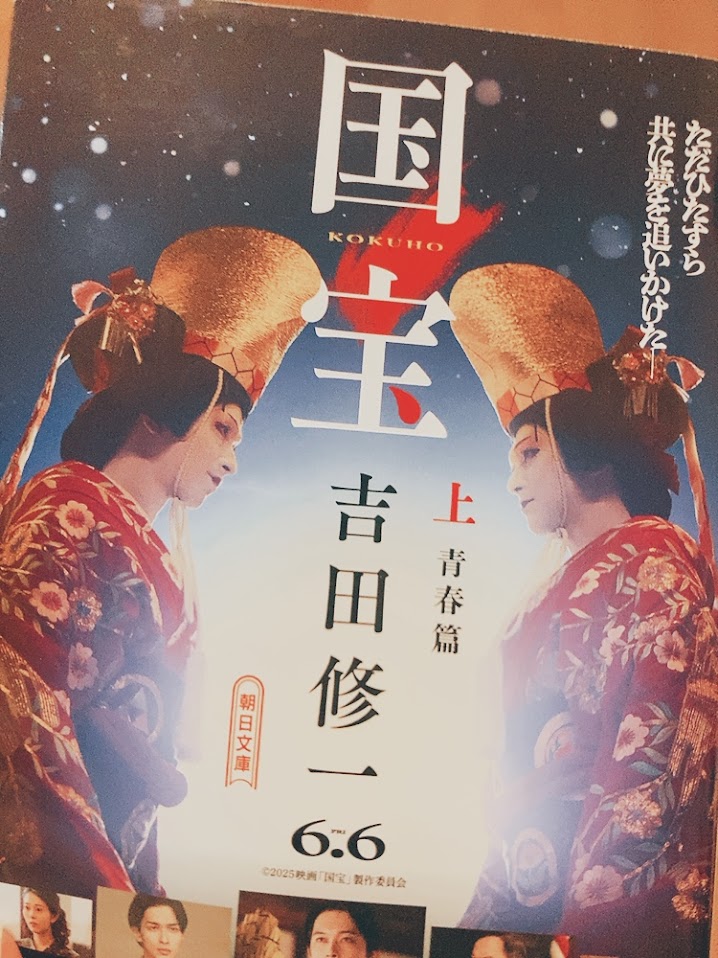
今日はお正月に読んだ本の中から、「国宝」という作品を紹介します。これは2025年にヒットした映画「国宝」の原作です。歌舞伎役者の話です。
(このブログの日本語の文章は、JLPTN3以上の学習者を対象に書いています。)
Did you all have a fun time during the New Year holidays? I spent New Year’s reading books and watching movies with my family. It’s nice to spend New Year’s relaxing with family.
Today, I would like to introduce the film Kokuhou (National Treasure), which became a hit in 2025. This is a story about Kabuki actors.
(The Japanese text in this blog is written for learners at the Japanese Language Proficiency Test N3 level or above.)
かぶきとは
日本語学習者のみなさんなら、歌舞伎という言葉を聞いたことがあると思います。日本の伝統的な芝居です。言葉は知っているけどよくわからないという人も多いと思うので、作品の話の前に歌舞伎について少し説明します。
If you are a Japanese learner, I think you have probably heard the word “Kabuki.” It is a traditional Japanese play. Many people may know the word, but don’t really know what Kabuki is, right? Before talking about the story, let me explain a little bit about Kabuki.
歌舞伎の起源(origin)は1603年に出雲阿国という女性が始めた「かぶき踊り」です。奇抜な衣装、独特なパフォーマンスでかぶき踊りの人気はまたたく間に広がり、社会現象となりました。
The origin of Kabuki is the “Kabuki Odori” (Kabuki Dance) started by a woman named Izumo no Okuni in 1603. With its outlandish costumes and unique performances, Kabuki dance’s popularity spread like wildfire, becoming a social phenomenon.
ところが、1629年に幕府(武士の時代の政府)は女性が歌舞伎に出ることを禁止しました。1653年には未成年の男性が出るのも禁止されました。役者を利用した商売にトラブルが多かったようです。こうして、歌舞伎は成人男性だけが演じるものになりました (現在は小さい男の子も出ています)。女性の役も男性が演じるようになり、独特の芸術に発展していきます。
However, in 1629, the shogunate (the government of the samurai era) banned women from appearing in kabuki. In 1653, the appearance of underage boys was also prohibited. It seems there were many troubles in businesses involving the actors. Thus, Kabuki became something performed only by adult men (though boys appear in it nowadays). Men began to play the roles of women as well, and it developed into a unique form of art.
また、歌舞伎のもうひとつの特徴は、世襲であるということです。世襲とは、職業などが親から子へ受け継がれる制度のことです。男性だけで演じる歌舞伎は、役者の家の中で現在まで受け継がれてきました。
Also, another characteristic of Kabuki is that it is hereditary. Heredity is a system where things like occupations are passed down from parent to child. Kabuki, performed only by men, has been passed down within the actors’ families to the present day.
芝居としての歌舞伎の特徴は、リアリティよりも型や美しさを重視するという点にあります。型とは、決まった形、動きのことです。歩き方、座り方、感情の表し方、全てが決まっています。少し難しい表現をすると「様式美(stylistic beauty) を楽しむ芸術」です。
The characteristic of Kabuki as a play lies in the fact that it emphasizes “form” (kata) and beauty rather than reality. Kata refers to fixed shapes and movements. The way of walking, the way of sitting, and the way of expressing emotions are all decided. To put it in a slightly difficult way, it is an “art of enjoying stylistic beauty (yoshikibi).”
国宝
国宝とは「重要文化財」の中から「世界文化の見地から価値が高く、たぐいない国民の宝」と認められるものであり、文部科学大臣によって認定されるものです。簡単に言うと「国が認めた極めてすばらしい文化的な宝」のことです。演技の技術で国宝と認定された歌舞伎役者もいます。
“National Treasures” are items among “Important Cultural Properties” that are recognized as “treasures of the people with high value and peerless from the perspective of world culture,” and are designated by the Minister of Education, Culture, Sports, Science and Technology. To put it simply, they are “extremely wonderful cultural treasures recognized by the country.” There are also Kabuki actors who have been certified as National Treasures for their acting techniques.
その極めてすばらしい国の宝「国宝」という言葉をタイトルにした映画が2025年にリリースされました。作品の評判がSNSで広がり、大ヒットしています。2026年現在、国外でも上映されています。
舞台芸術が本当に美しい作品です。また、登場人物の演技に圧倒されます。芸を極める人生、家の名前を背負うということ、いろいろなことが伝わってきます。
A movie titled with that word, Kokuhou, an extremely wonderful treasure of the country, was released in 2025. The film’s reputation spread through social media, and it has become a massive hit. As of 2026, it is now being screened outside of Japan as well.
It is a work where the stage art is truly beautiful. Also, you will be overwhelmed by the actors’ performances. Many things are conveyed, such as a life dedicated to mastering one’s acting and the weight of carrying a family name.
下は「国宝」のテーマ音楽のミュージックビデオです。ため息がでるくらい美しい動画です。開演前の緊張感、劇場の高揚感が伝わってきませんか。
Below is the music video for the theme music of Kokuhou. It is a breathtakingly beautiful video. Can’t you feel the tension before the performance begins, the exaltation in the theater?
下は映画「国宝」の公式サイトです。
https://kokuhou-movie.com
映画がとてもよかったので、原作(original) も読んでみました。映画と原作、それぞれのよさがありました。映画では演技、衣装、音楽の美しさ、原作では登場人物の人生についての描写や映画でカットされていた部分が楽しめました。
Because the movie was so nice, I also tried reading the original book. Both the movie and the original work had their own merits. In the movie, I enjoyed the beauty of the acting, costumes, and music; in the original book, I enjoyed the descriptions of the characters’ lives and the parts that had been cut from the movie.
私はあまり歌舞伎にくわしくないのですが、十分楽しめました。歌舞伎のことをよく知らなかったら、映画を見てから原作を読んだほうが楽しめると思います。「国宝」の映画と原作を見て、今年は歌舞伎の公演を見てみたいと思うようになりました。
I didn’t know much about Kabuki, but I was able to enjoy it thoroughly. For those who aren’t familiar with Kabuki, I think you will enjoy it more if you watch the movie first and then read the original book. After seeing the movie and the original Kokuhou, I’ve started to want to go see a live Kabuki performance this year.
今日もここまで読んでくれてありがとうございました。
今年2026年がみなさんにとってすばらしい一年になりますように。
令和八年一月七日
演目
歌舞伎には様々な演目 (program) があります。
「国宝」では「二人道成寺」と「曽根崎心中」「鷺娘」が印象的でした。
There are various enmoku (programs) in Kabuki. In “Kokuhō,” “Ninin Dōjōji,” “Sonezaki Shinjū,” and “Sagi Musume” were impressive.
二人道成寺:ある姫が僧侶 (monk)に恋をします。ところが、僧侶は姫から逃げ、道成寺の鐘の中に隠れます。裏切られた姫は蛇となり、隠れている僧侶を鐘ごと焼き殺します。数年後、新しい鐘を作った道成寺に姫が訪れるというところから話が始まります。次々に衣装を変えながら二人の女形が踊るシーンがとても美しい演目です。
Ninin Dōjōji: A certain princess falls in love with a monk. However, the monk runs away from the princess and hides inside the bell of Dōjōji temple. The betrayed princess becomes a snake and burns the hiding monk to death along with the bell. The story begins from the point where the princess visits Dōjōji temple, which made a new bell several years later. It is a very beautiful program where the scene of two onnagata dancing while changing costumes one after another is shown.
曽根崎心中:江戸時代の町人と遊女の心中 (double suicide) 事件をもとにした話です。二人は深く愛し合っていましたが、男は義兄とその仲間にだまされて罪を着せられます (be framed)。解決する方法はなく、「来世 (next life)でいっしょになろう」と決意します。「国宝」では主人公たちの運命を決める演目です。
Sonezaki Shinjū: This is a story based on a shinjū (double suicide) incident of a townsperson and a courtesan in the Edo period. The two loved each other deeply, but the man was deceived by his brother-in-law and his companions and was framed. There was no way to solve it, and they determined, “Let’s be together in the next life.” In “Kokuhō,” it is a program that decides the destiny of the main characters.
鷺娘:踊りを見る演目です。人間に恋をした鷺が人間の姿になり、踊ります。孤独な踊りが本当に美しい鷺娘は、「国宝」のテーマを象徴する演目です。
Sagi Musume: This is a program to watch a dance. A heron that fell in love with a human takes a human form and dances. The dance that makes you feel a lonely heart is truly beautiful, and it is a program that symbolizes the theme of “Kokuhō.”
令和八年六月九日追記