




5月も終わりに近づき、日本はだいぶ蒸し暑くなってきました。そろそろエアコンが必要です。
さて、今日は京都のお寺をいくつか紹介します。今回の旅行では、直前に東洋哲学の本を読んでいたこともあり、仏教を感じたいと思いました。若い時は3、4か所お寺を見ると「もういいかな」という気持ちになっていたのですが、今回はいくらでも見て回れました。お寺だけでも充実していました。
Today, I will introduce several temples in Kyoto. For this trip, partly because I had been reading a book on Eastern philosophy just before, I wanted to feel Buddhism. When I was young, looking at three or four temples made me feel like “that’s enough,” but this time, I could visit as many as I wanted. Even just the temples made it a fulfilling trip.
東寺 Toji Temple 真言宗 Shingon sect
大阪伊丹空港からリムジンバスに乗り、京都へ向かいました。京都駅に着いてすぐデリバリーサービスで荷物をホテルに送り、最初の目的地、東寺へ。京都駅から徒歩15分のお寺です。
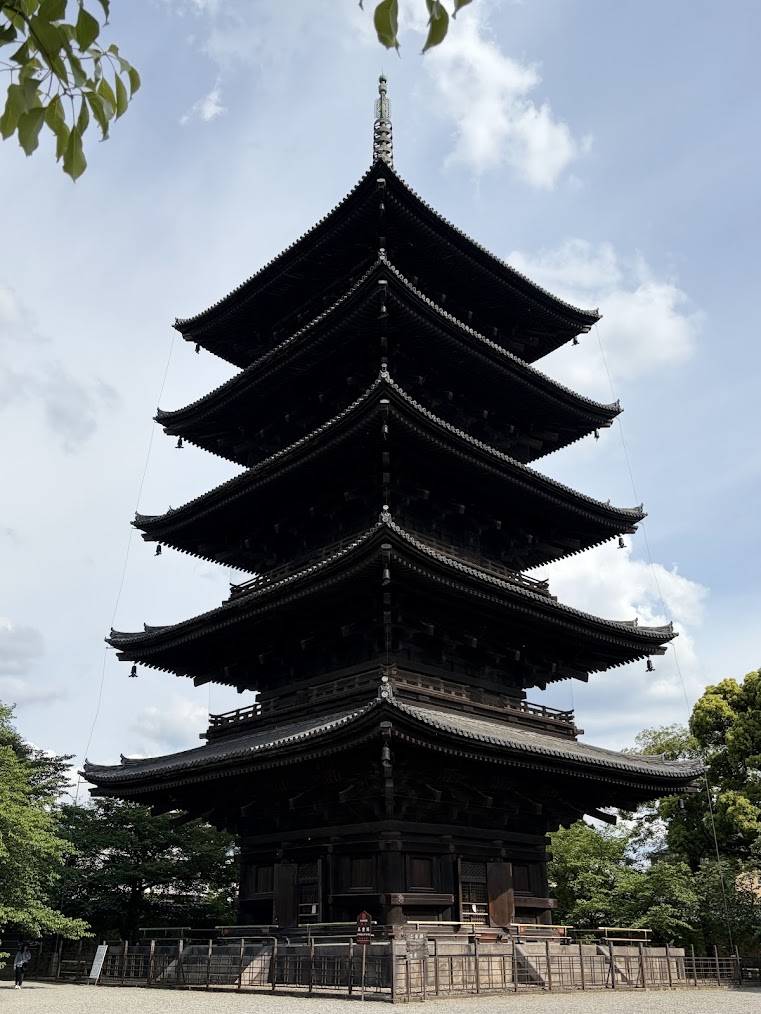
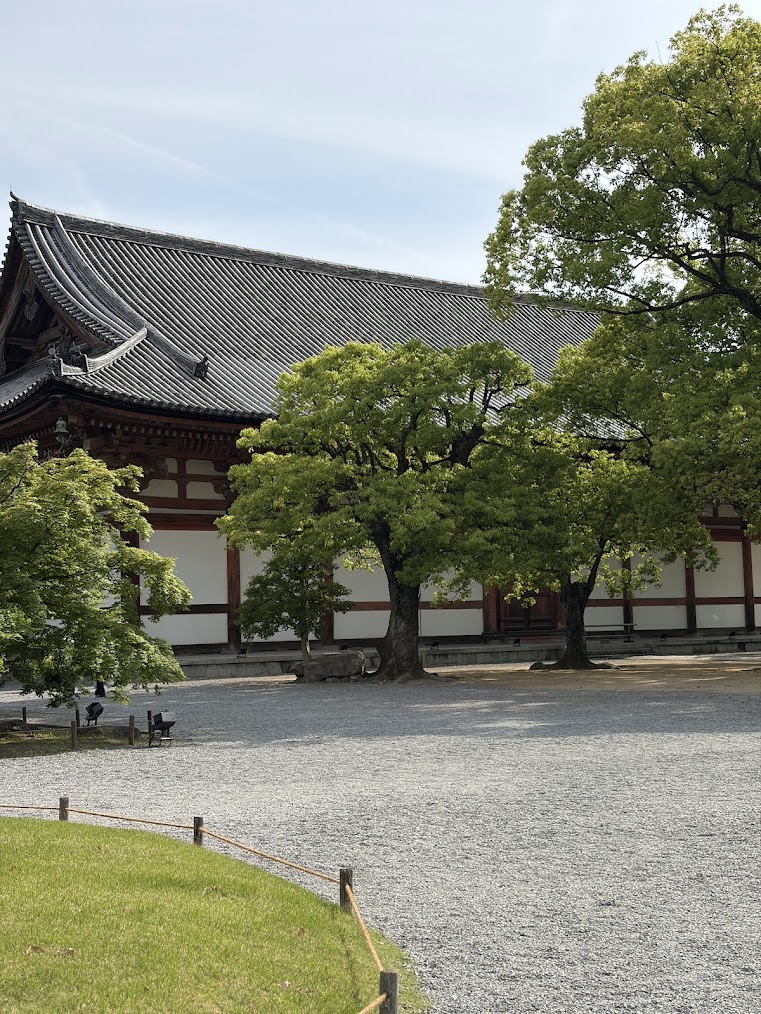
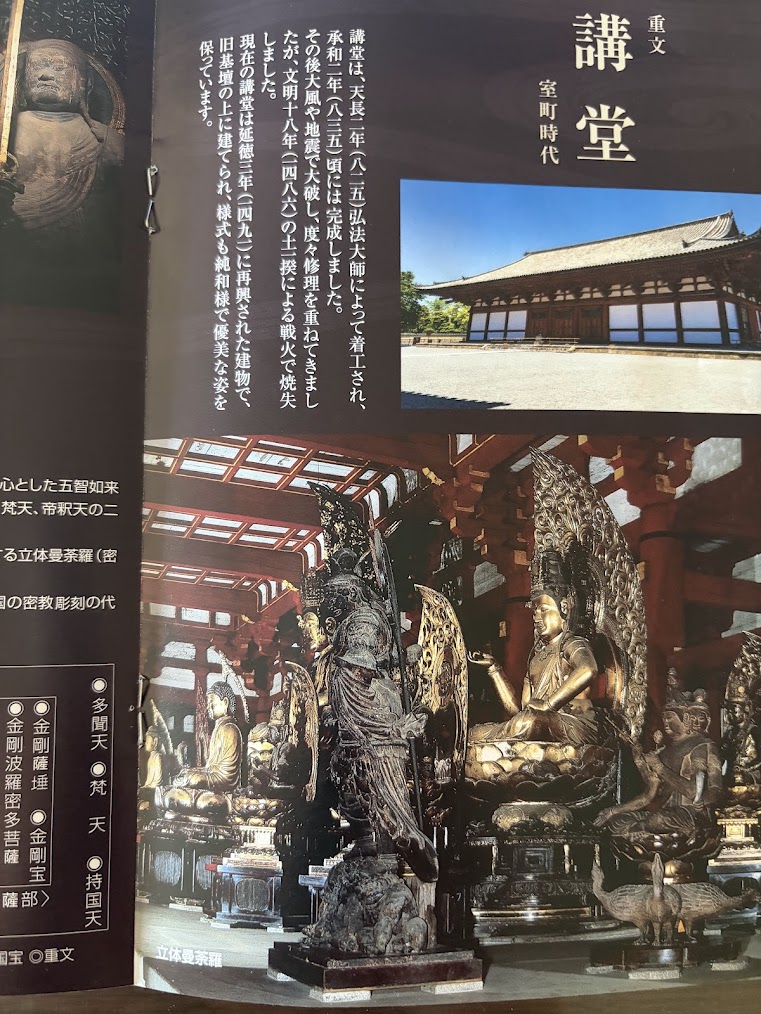
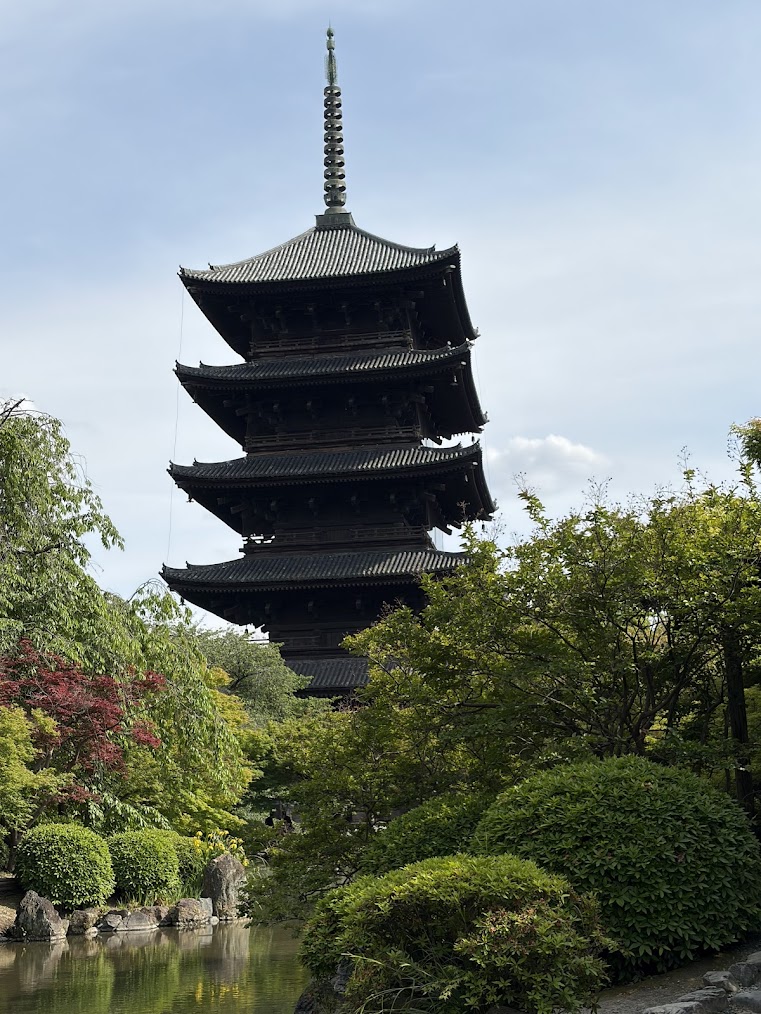
東寺は奈良から京都に都 (capital) を移すのにあたって、国家を守護するために796年に開かれたお寺です。823年に唐 (Tang Dynasty) で密教 (Esoteric Buddhism) を学んだ空海に与えられた後、講堂 (lecture hall) や塔 (tower) が建てられます。これらの建物は何度か火事で焼けていて、現在残っている講堂は1491年に、塔は1644年に再建されたものです。
講堂の中の仏像は仏教の世界観を表しています。本当にすばらしく、圧倒されました。古い時代の仏像 (Buddhist statue) には、古代ペルシア、インドから続いているものを感じることができます。この中で空海の時代から残っている仏像は15体あります。
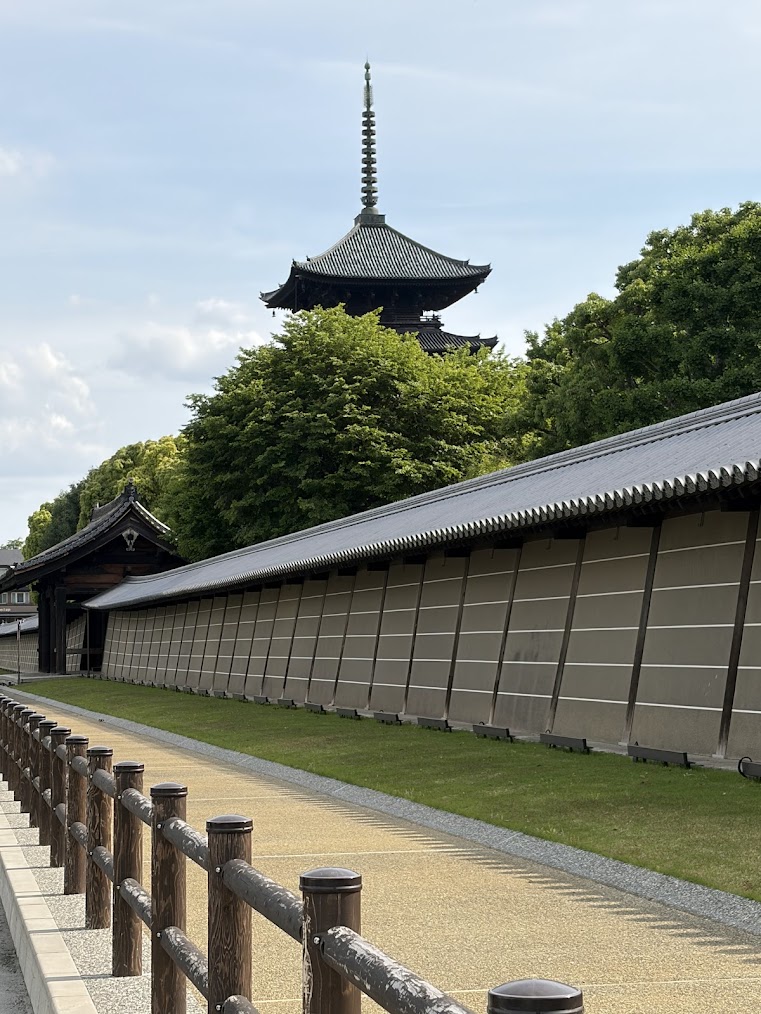
塔は高さ55メートルの木造建築です。何度も火事で焼失しましたが、地震で倒れたことはありません。地震に強い構造になっています。庭や塀 (wall) も美しいですね。
I took a limousine bus from Osaka Itami Airport and headed to Kyoto. Right after arriving at Kyoto Station, I sent my luggage to the hotel using a delivery service and went to my first destination, Toji Temple. It is a temple, a 15-minute walk from Kyoto Station.
Toji is a temple opened in 796 to protect the nation when transferring the capital from Nara to Kyoto. After it was given in 823 to Kukai, who had studied Esoteric Buddhism in the Tang Dynasty, the lecture hall and tower (pagoda) were built. These buildings burned down in fires several times, and the lecture hall remaining today was rebuilt in 1491, and the tower in 1644.
The Buddhist statues inside the lecture hall express the worldview of Buddhism. They were truly wonderful and I was overwhelmed. In the Buddhist statues from ancient times, you can feel a connection continuing from ancient Persia and India. Among these, there are 15 Buddhist statues remaining from Kukai’s time.
The tower is a 55-meter-high wooden structure. It burned down in fires many times, but it has never collapsed in an earthquake. It has a structure strong against earthquakes. The garden and walls are also beautiful, aren’t they?
三十三間堂 Sanjuusanngendou 天台宗 Tendai sect
東寺の後はバスに乗って三十三間堂へ。京都市内の観光はバスが本当に便利です。
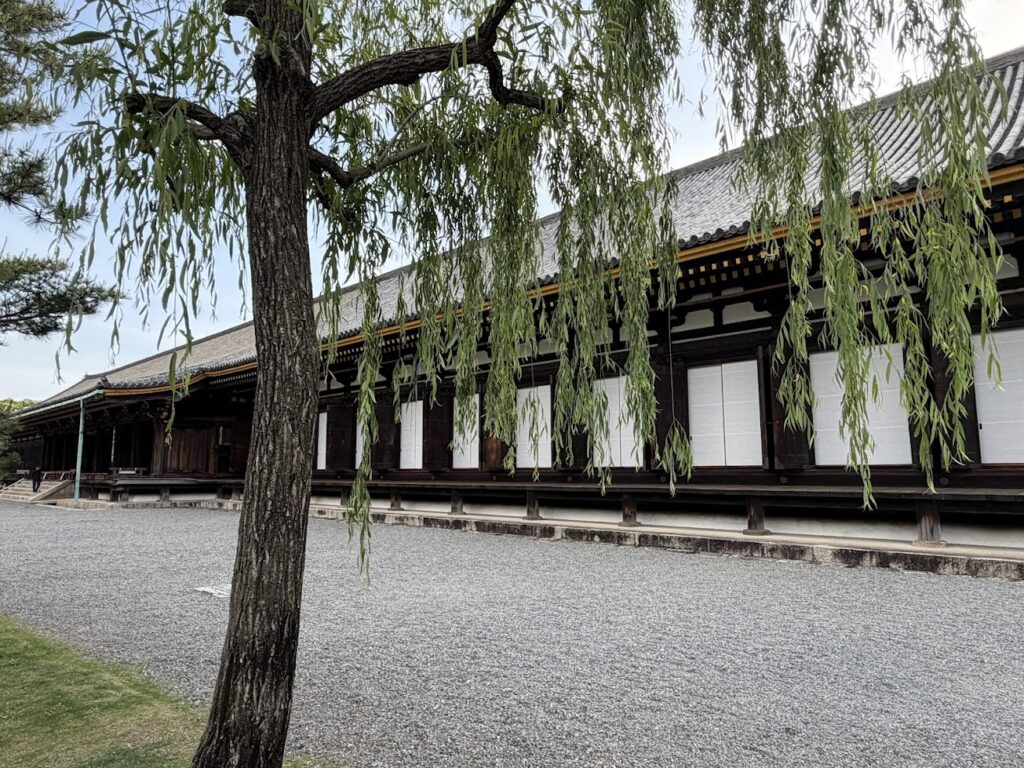
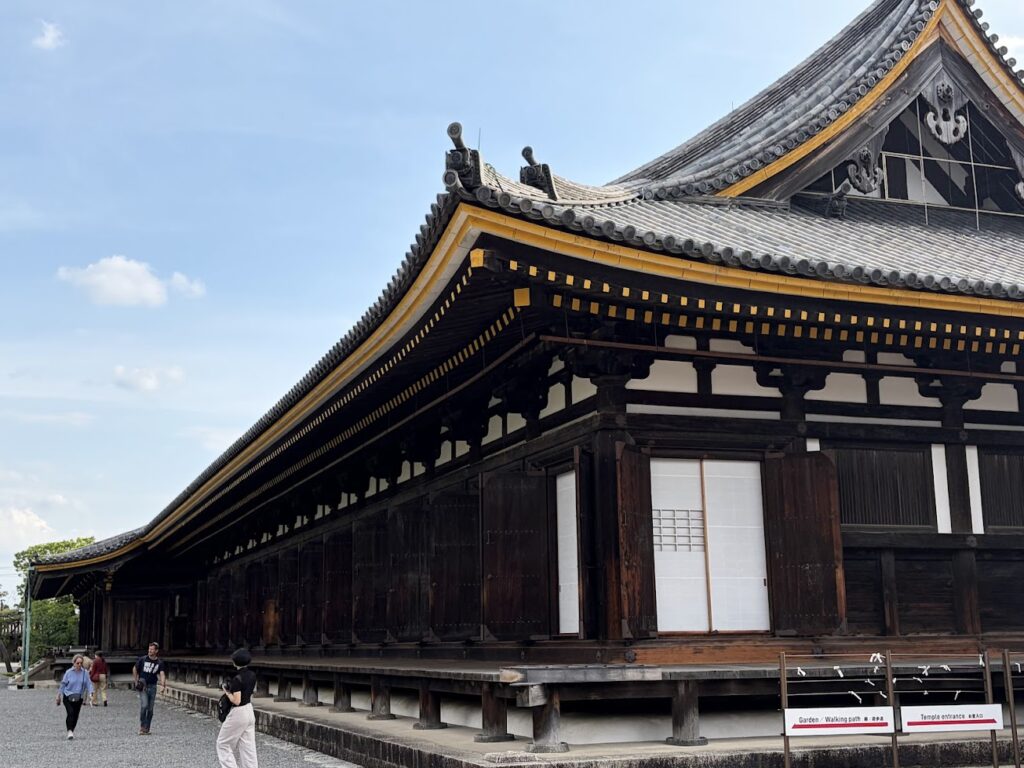
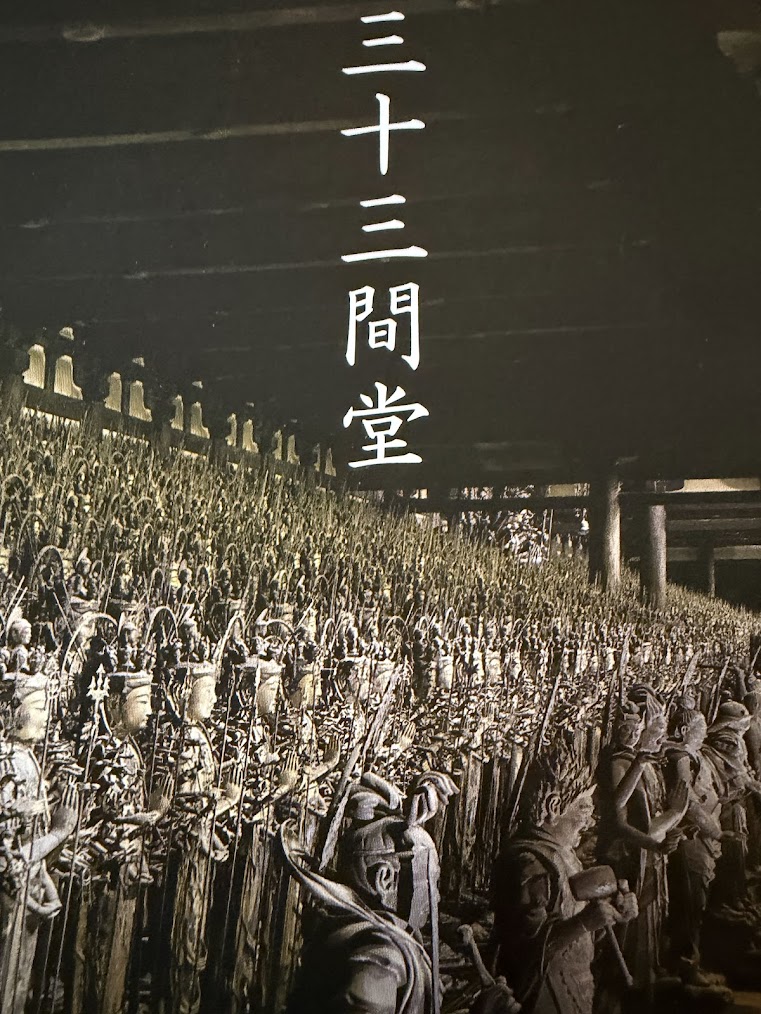
三十三間堂は1164年に建てられました。その後、火事で焼失し、1266年に再建されました。横幅120メートルの長い木造建築です。ずらりと並んだ1001体の千手観音 (Thousand-Armed Kannon) と、眷属 (kin) の像が圧巻 (overwhelming) です。千手観音はヒンドゥー教の影響を受けてできた像で、眷属はヒンドゥー教から取り入れた神です。
After Toji, I took a bus to Sanjusangendo. Buses are truly convenient for sightseeing within Kyoto city.
Sanjusangendo was built in 1164. After that, it burned down in a fire and was rebuilt in 1266. It is a long wooden building with a width of 120 meters. The 1,001 statues of Thousand-Armed Kannon lined up in rows, along with the statues of their attendants, are overwhelming. The Thousand-Armed Kannon is a statue created under the influence of Hinduism, and the attendants are statues of gods adopted from Hinduism.
清水寺 Kiyomizudera Temple 北法相宗 Kitahossou sect
みんな大好き清水寺。日本語を学習しているみなさんなら、このお寺の写真を一度は見たことがあると思います。
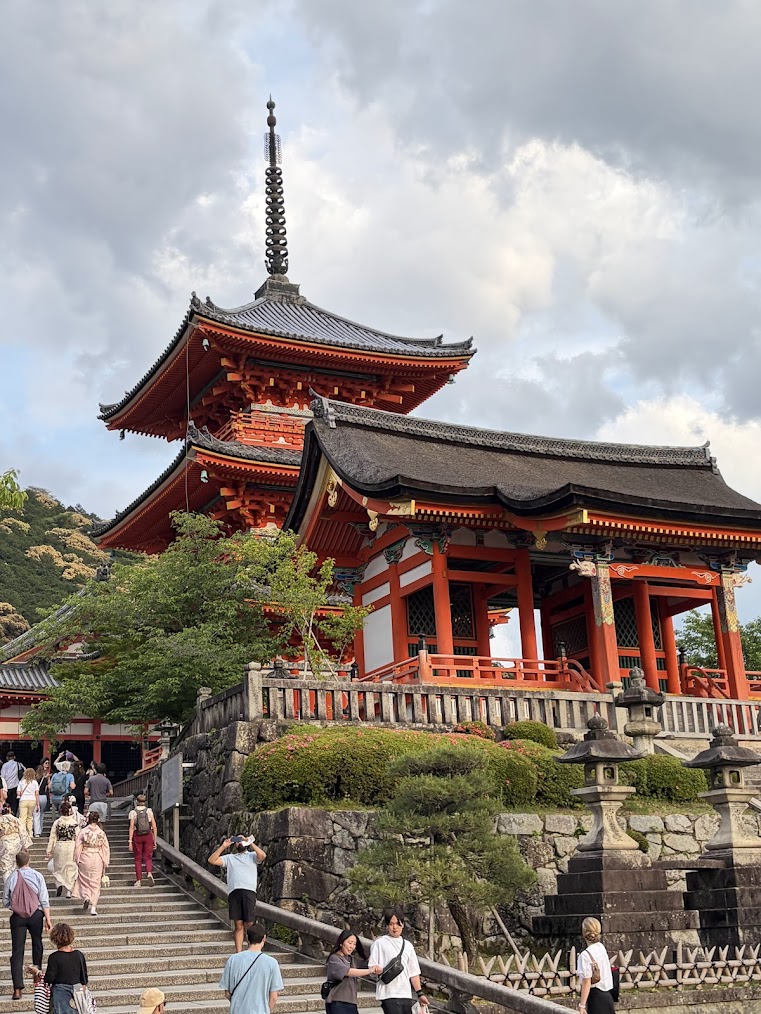
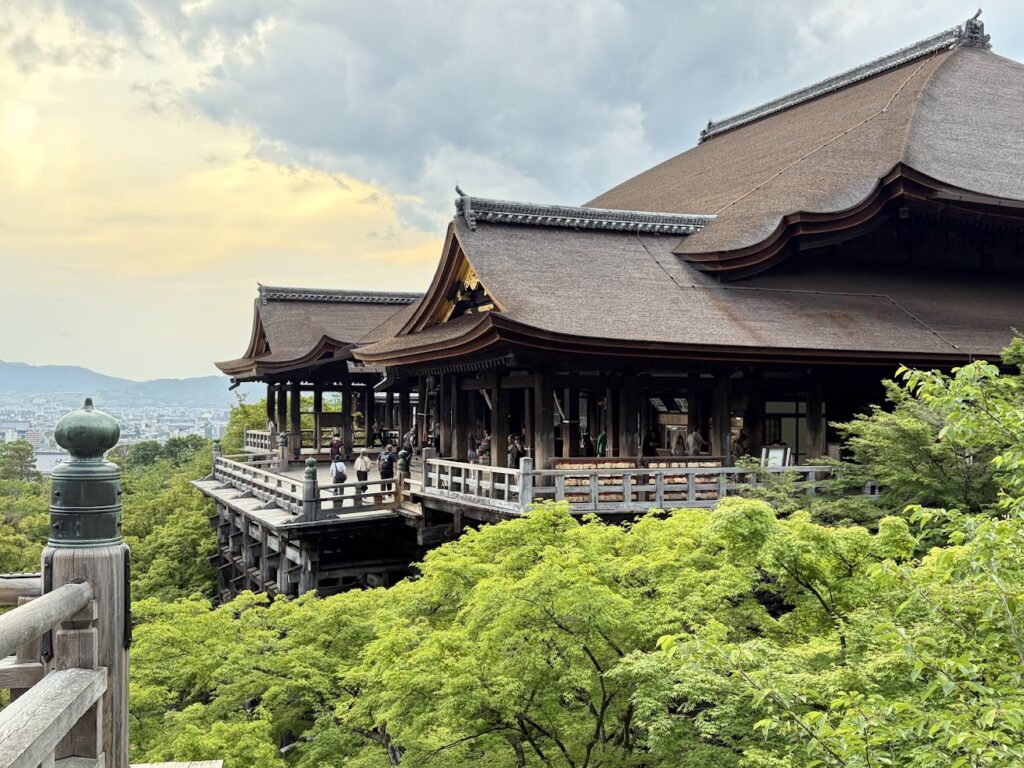
このお寺は778年に奈良の僧 (monk) により開かれました。清水の舞台 (the Stage of Kiyomizu) で有名なお堂は1,100年ごろ建てられたと言われています。このお寺も何度か焼失し、現在残っているお堂は1633年に再建されたものです。
お堂、塔、門と初夏の緑が美しい5月の清水寺です。
Kiyomizudera, which everyone loves. If you are learning Japanese, I think you have seen a photo of this temple at least once.
This temple was opened in 778 by a monk from Nara. The main hall, famous for the Stage of Kiyomizu, is said to have been built around the year 1100. This temple also burned down several times, and the main hall remaining today was rebuilt in 1633. It is Kiyomizudera in May, where the main hall, tower, gates, and the green of early summer are beautiful.
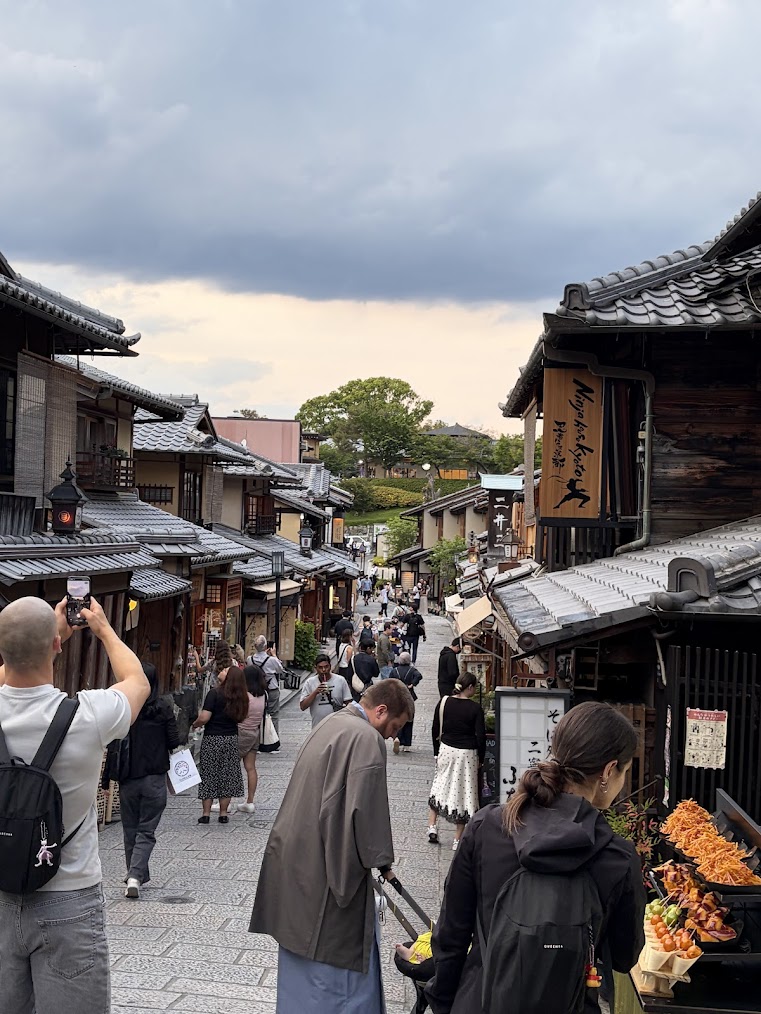
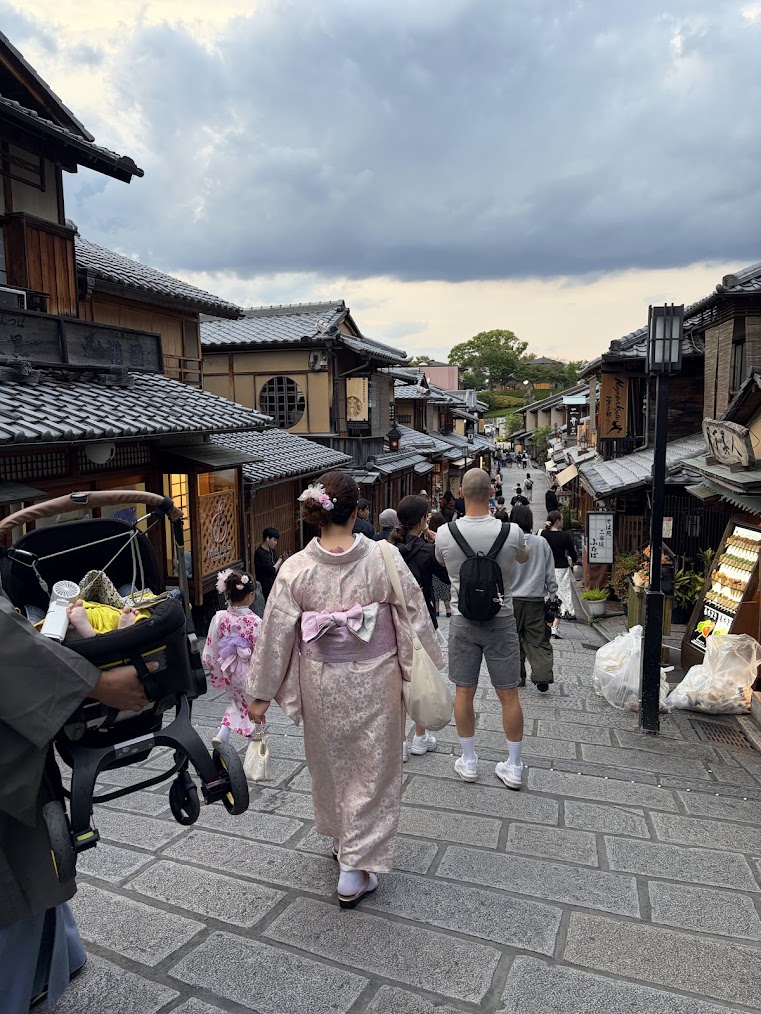
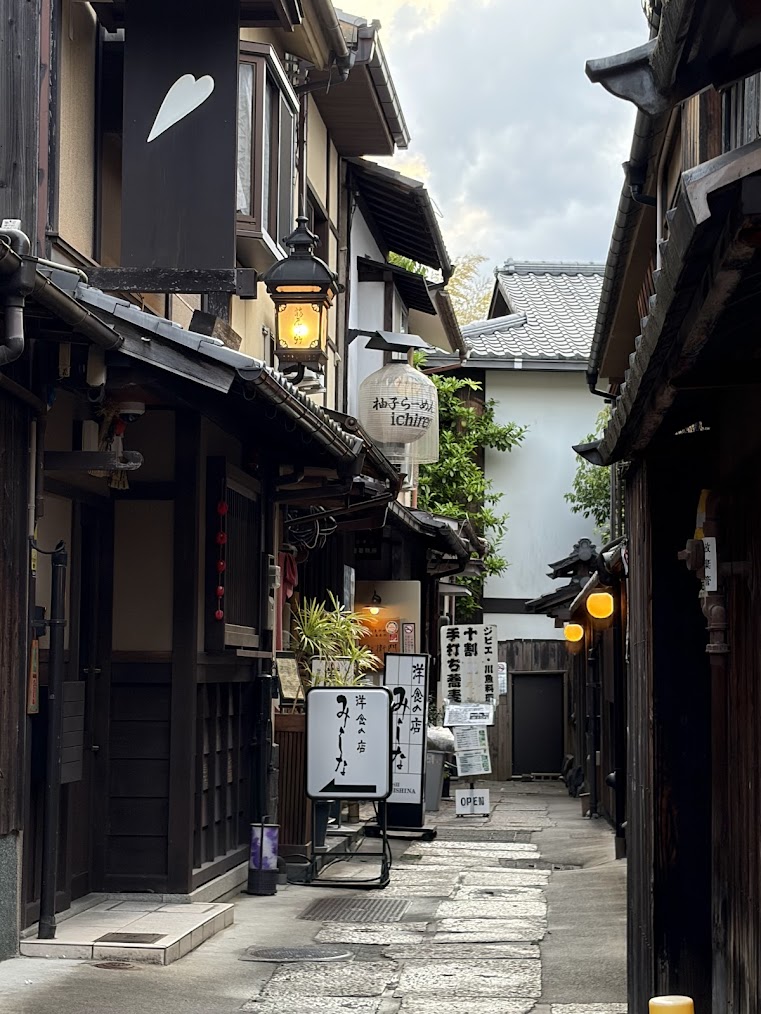
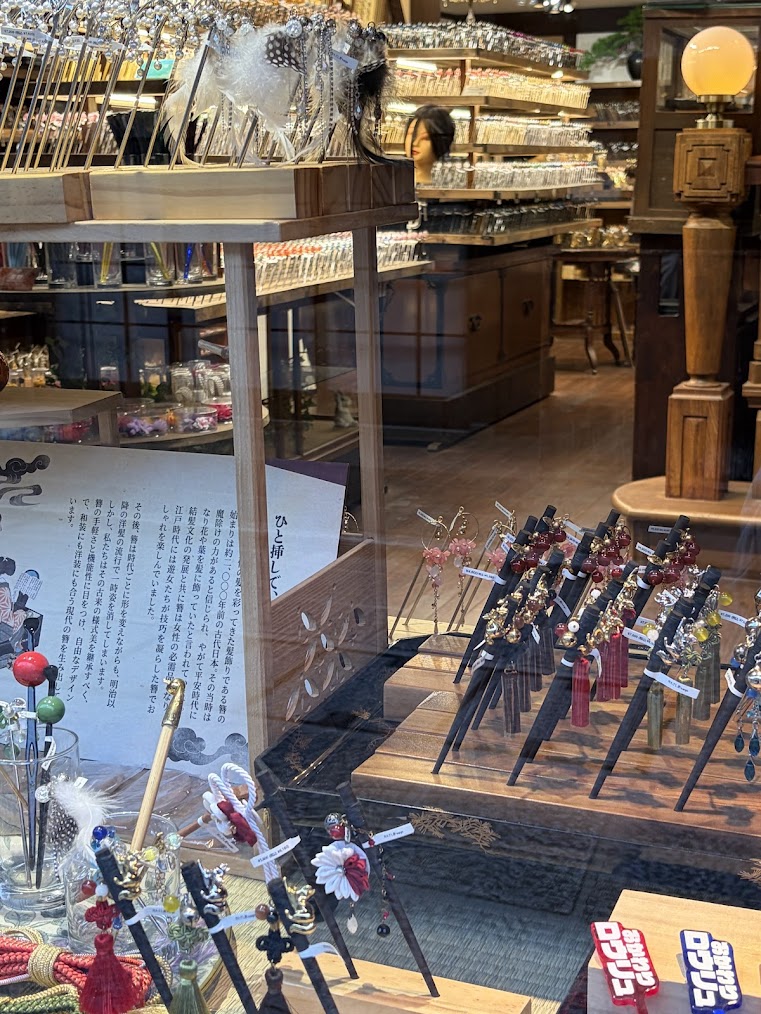
清水寺の周りは観光客にとても人気があります。建物や通りの雰囲気がとてもいいエリアです。着物を借りて散歩をしている人たちがとても楽しそうです。
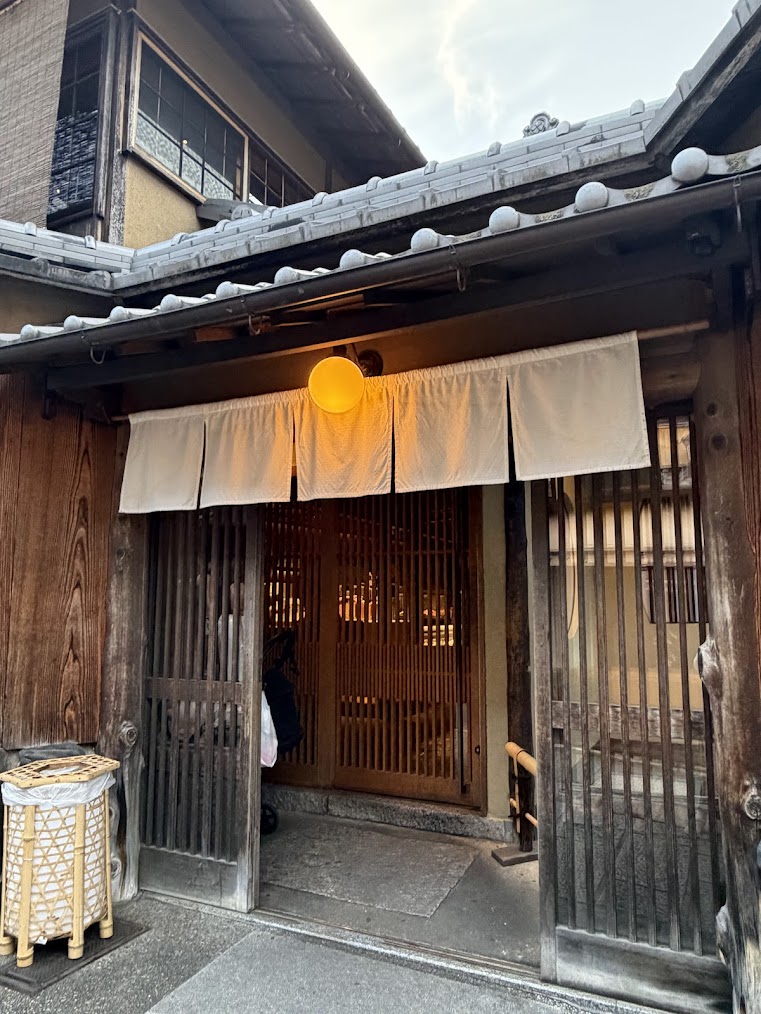
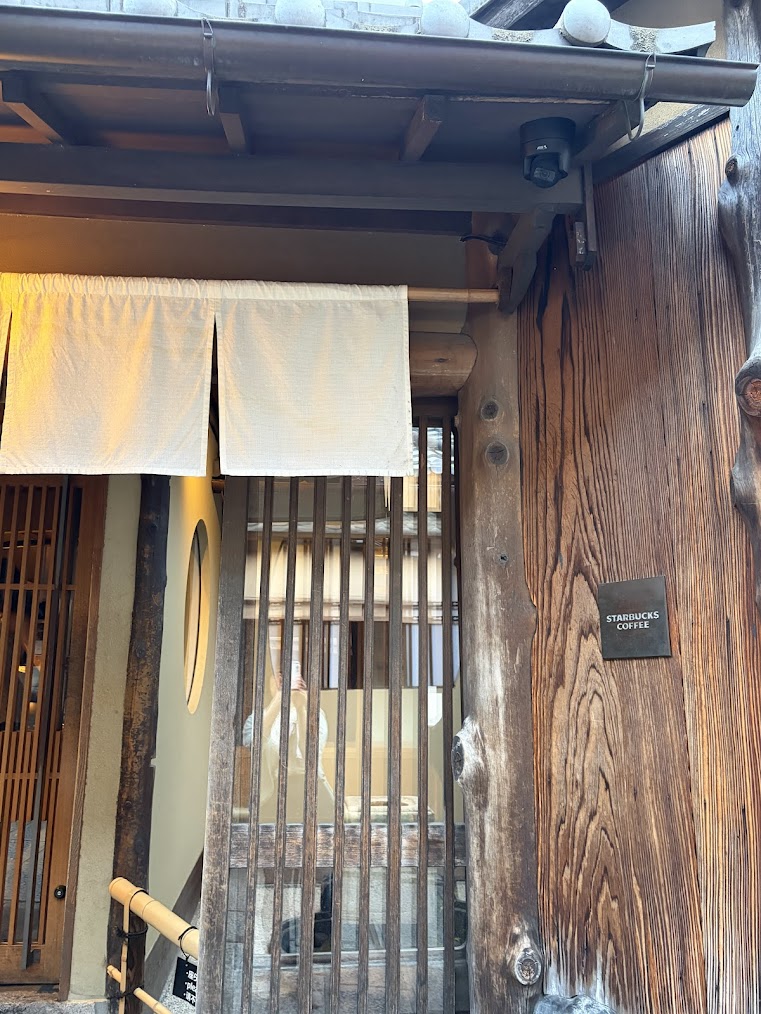
下の左のお店は何だと思いますか?
このお店はスターバックスです。
この地域では派手な看板は禁止されているので、スターバックスも控えめです。
The area around Kiyomizudera is very popular with tourists. It is an area with a very nice atmosphere in its buildings and streets. The people walking around renting kimonos look very happy.
What do you think the shop on the bottom left is?
This shop is Starbucks. Because flashy signs are prohibited in this area, Starbucks is also understated.
西芳寺 Saihouji Temple 臨済宗 Rinzai sect
京都1日目は古い仏教のお寺を見て回りました。2日目は禅のお寺です。
禅は古代インドから中国に伝わり、日本で発展した仏教です。禅から日本庭園、茶道など、現在に伝わる多くの文化が生まれました。
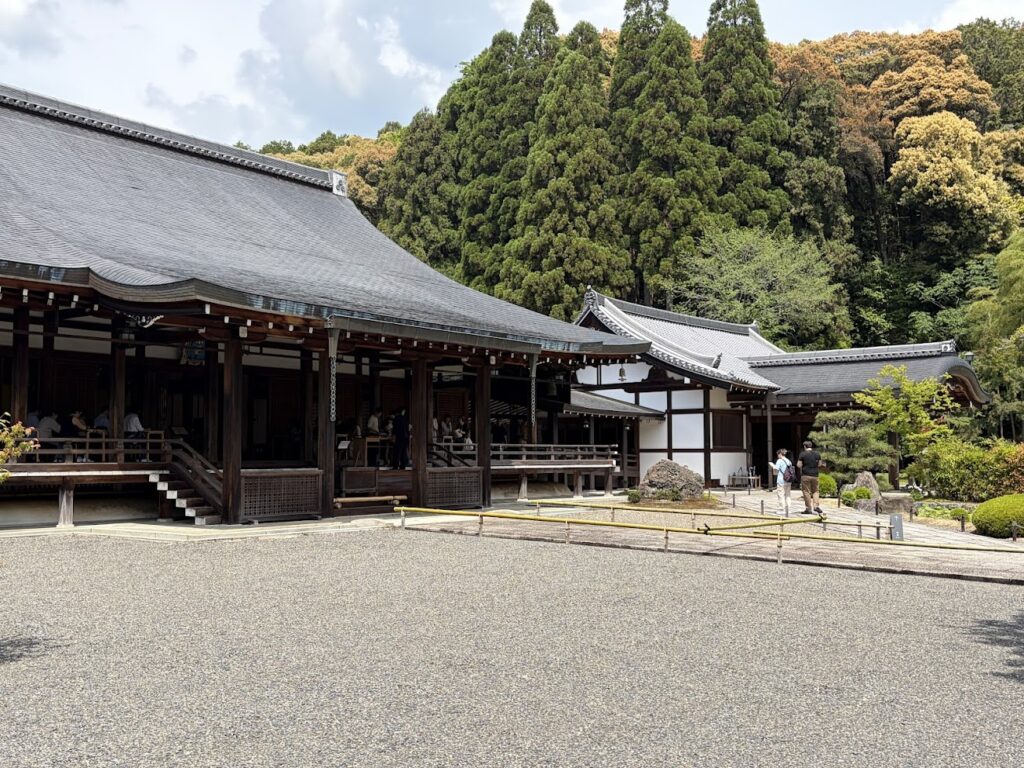
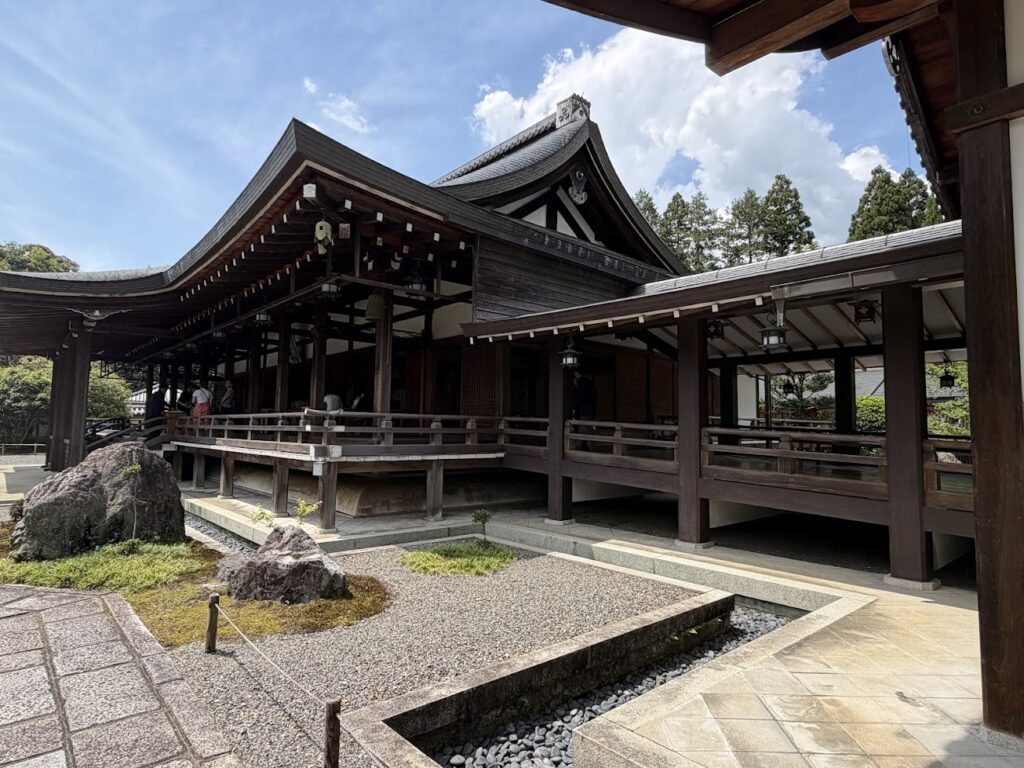
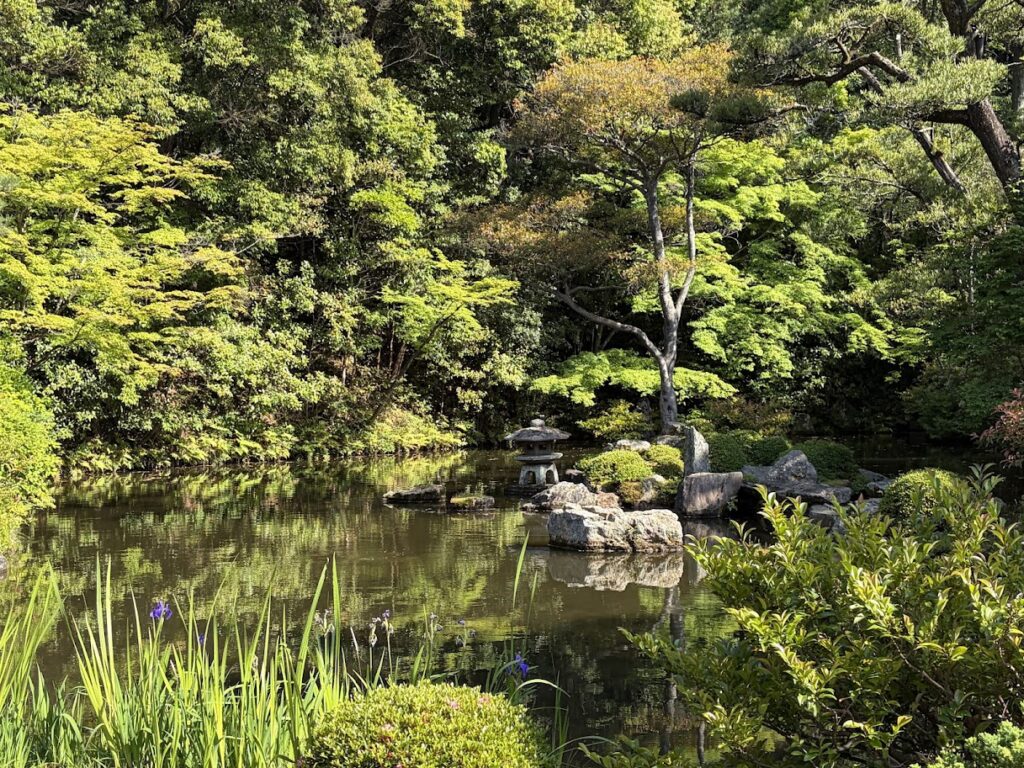
京都市内のホテルからバスで、予約していた西芳寺に向かいました。このお寺は美しい苔庭で有名で、スティーブ・ジョブズが訪れたことでも知られています。
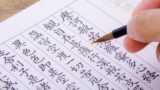
このお寺では写経 (copying a sutra by hand) をしました。写経は紙に薄い字で書いてあるお経をトレースするだけなので、そこまで難しくはありません。海外からの方もいっしょうけんめい写経をしていました。お経を書くのに集中していると、気持ちが鎮まってきます。写経の後で静かな苔庭をゆっくり見て回るのは本当に心地よい体験でした。
On the first day in Kyoto, I visited old Buddhist temples. The second day was Zen temples. Zen is Buddhism that spread from ancient India to China and developed in Japan. From Zen, many cultures that continue to today, such as Japanese gardens and the tea ceremony, were born.
I headed by bus from my hotel in Kyoto city to Saihoji, which I had reserved. This temple is famous for its beautiful moss garden and is also known for having been visited by Steve Jobs.
At this temple, I did sutra copying (Shakyo). Since sutra copying is just tracing sutra characters thinly written on paper, it is not that difficult. People from overseas were also copying sutras with all their might. When you focus on writing the sutras, your mind becomes calm. Looking around the quiet moss garden slowly after sutra copying was a truly pleasant experience.
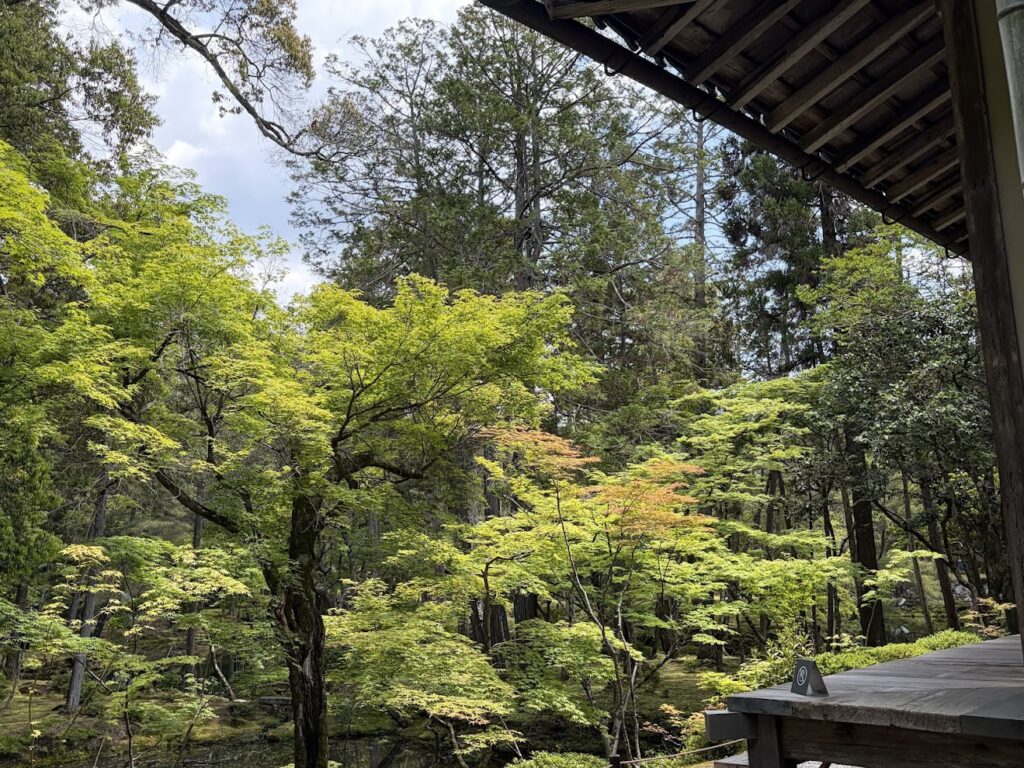
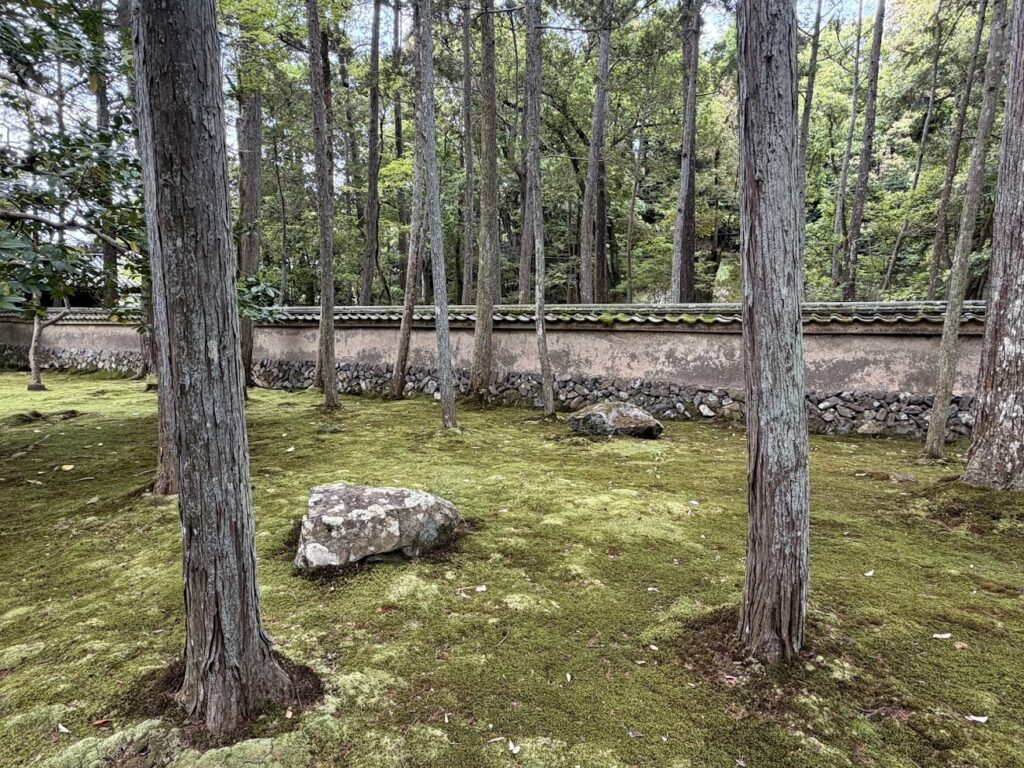
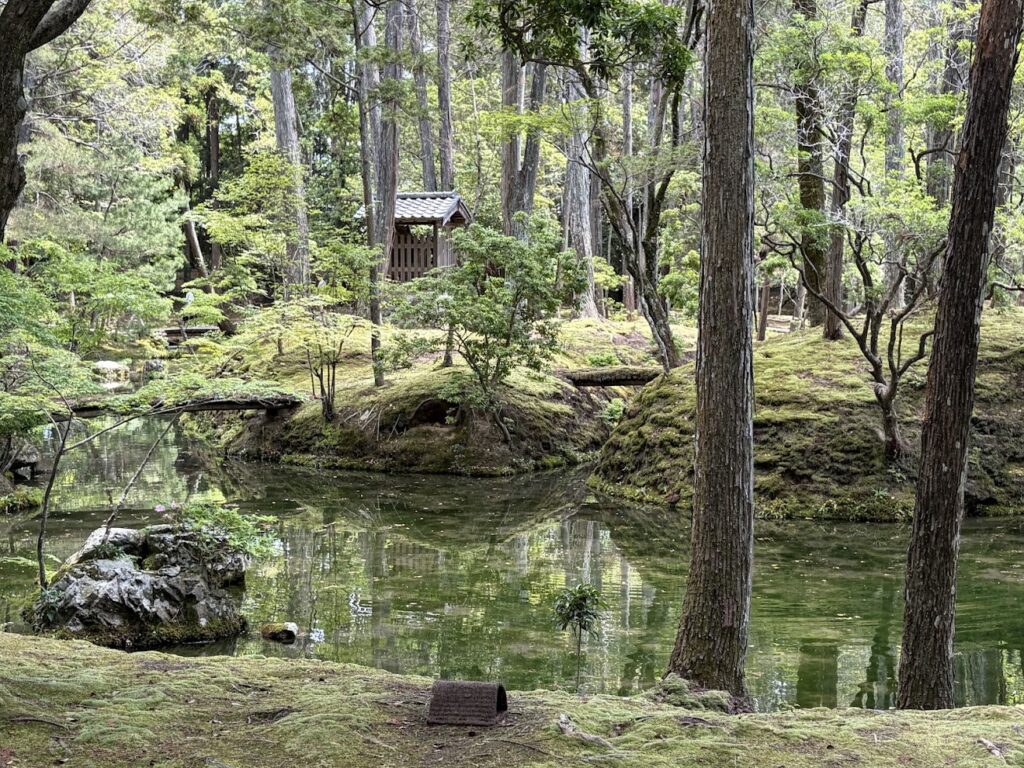
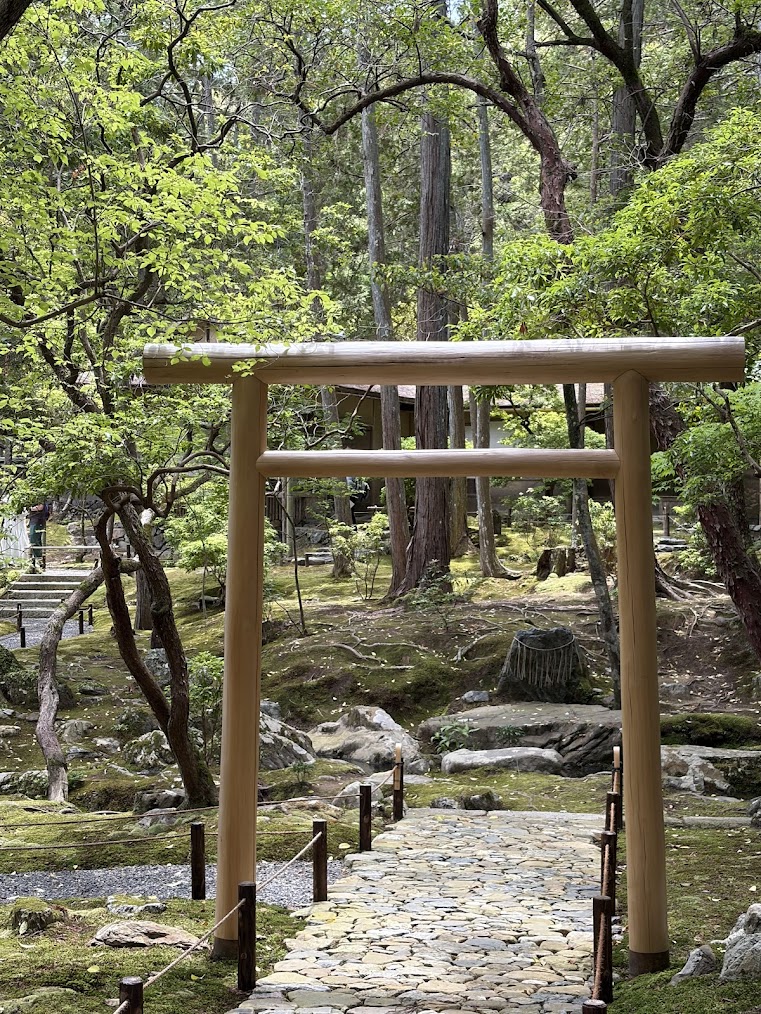
このお寺を拝観するには事前予約が必要です。
To visit this temple, a prior reservation is required.
天龍寺 Tenryuuji temple 臨済宗 Rinzai sect
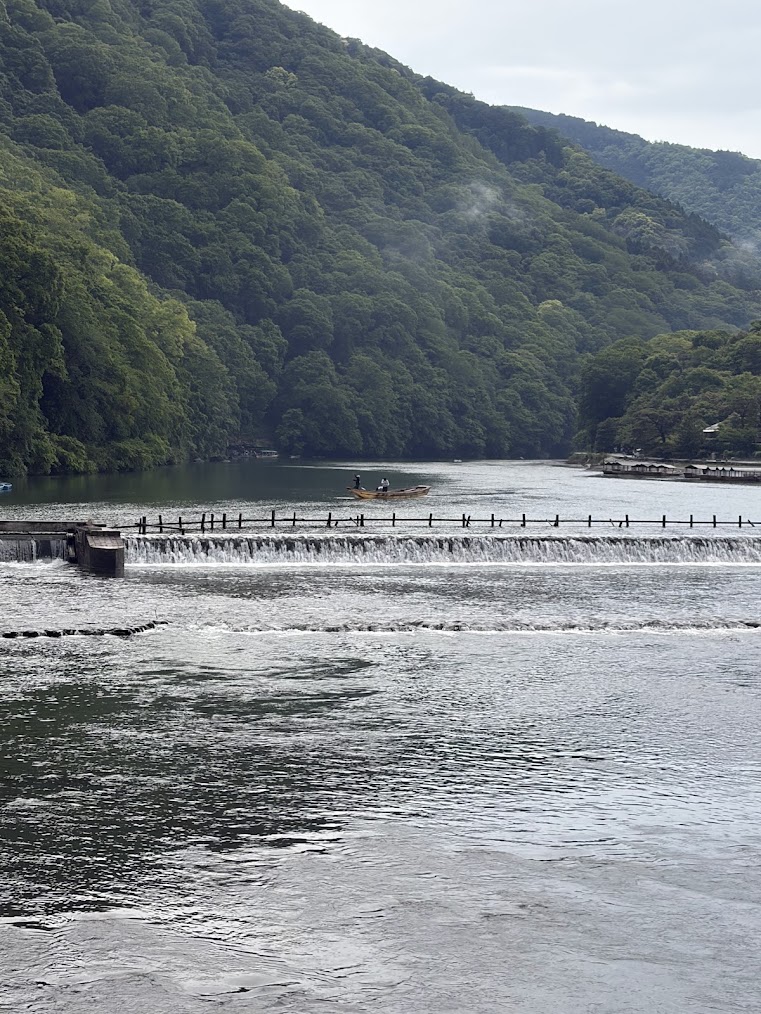
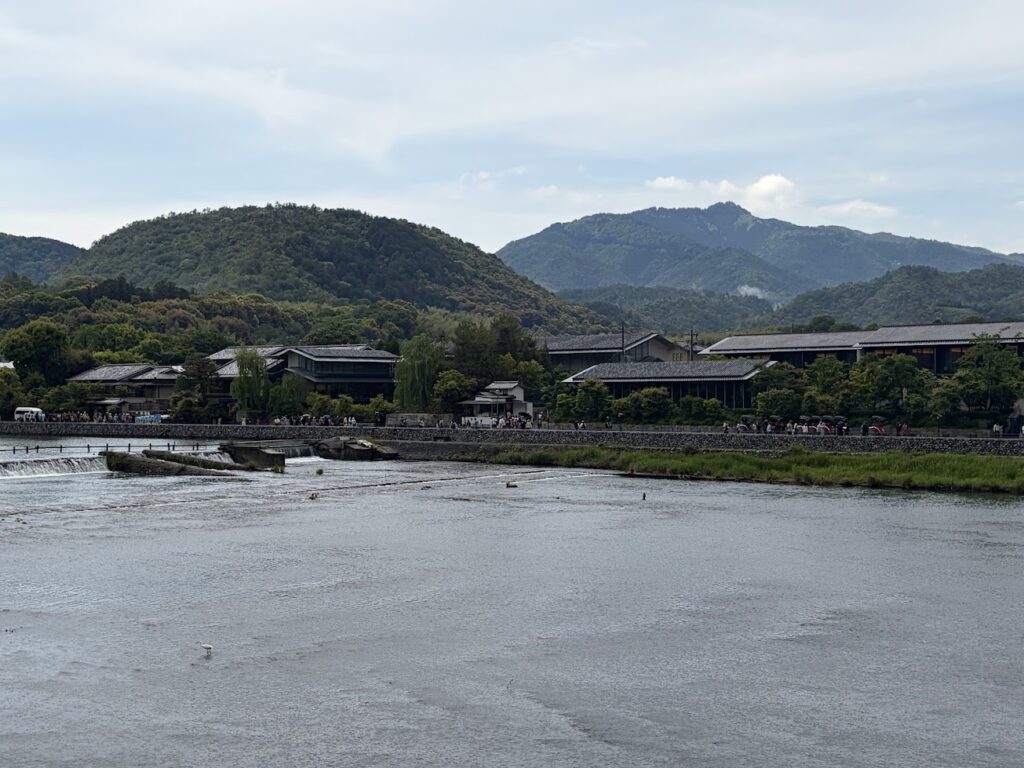
下の写真は嵐山の渡月橋から撮りました。ここも景色がきれいで、おしゃれなカフェやお店が多く、人気のエリアです。竹林の小径もこのエリアにあります。春と秋は素晴らしいんだろうなと思いますが、雨に濡れてしっとりとした光景も印象的でした。
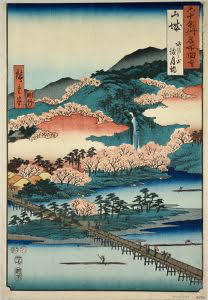
右下の絵は江戸時代に作成された版画です。ニューヨーク公共図書館のウェブサイトからダウンロードしたものです。古い時代から愛されてきたところです。
The photo below was taken from Togetsukyo Bridge in Arashiyama. This is also a popular area with beautiful scenery and many stylish cafes and shops. The Bamboo Forest Path is also in this area. I think it must be wonderful in spring and autumn, but the scenery wet and damp with rain was also impressive.
The print on the bottom right is a woodblock print created in the Edo period. It was downloaded from the New York Public Library website. It is an area that has been loved since ancient times.
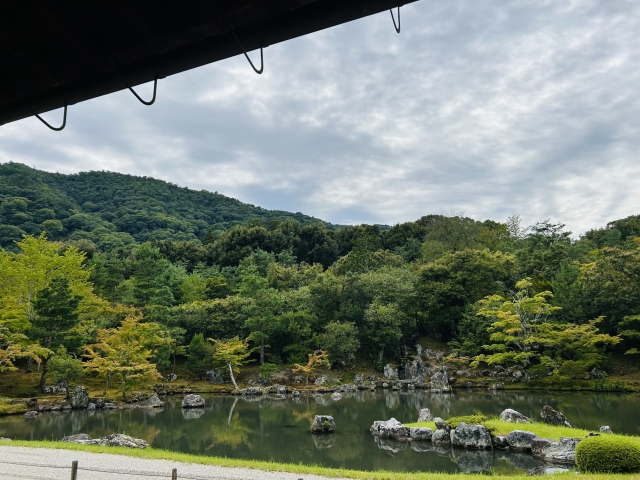
この渡月橋から数分歩くと、天龍寺(1339-)があります。美しい庭園で有名なお寺です。この庭園は敷地外の山や森も庭の背景に取り入れる借景 (borrowed scenery) という技法で作られています。嵐山駅からすぐなので、このエリアに来たらぜひ行ってほしいと思います。
Walking a few minutes from this Togetsukyo Bridge, there is Tenryuji Temple (1339-). It is a temple famous for its beautiful garden. This garden is made with a technique called “shakkei” (borrowed scenery), which incorporates mountains and forests outside the grounds as the background of the garden. It is right near Arashiyama Station, so please try to go there if you come to this area.
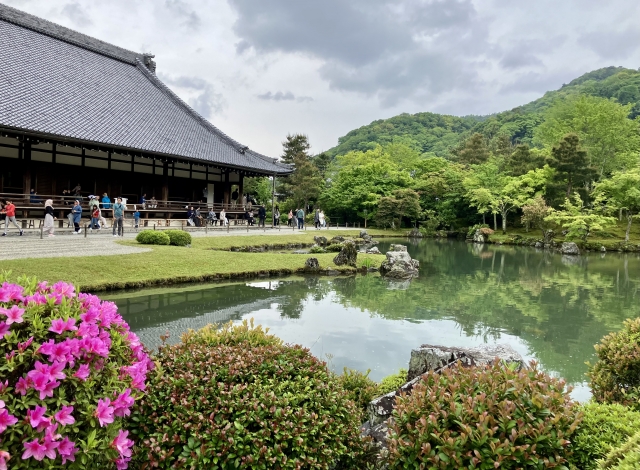
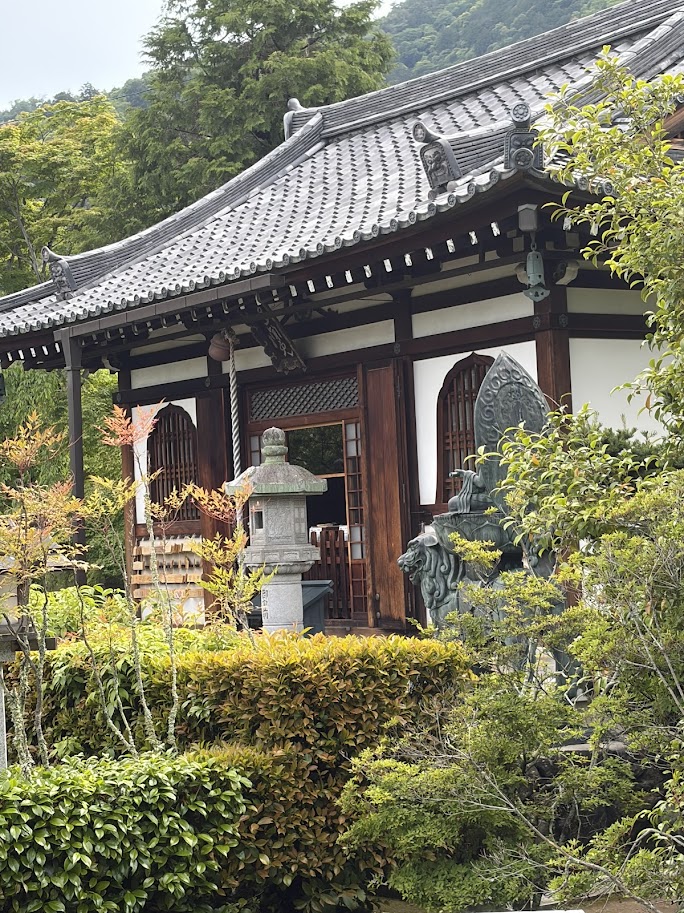
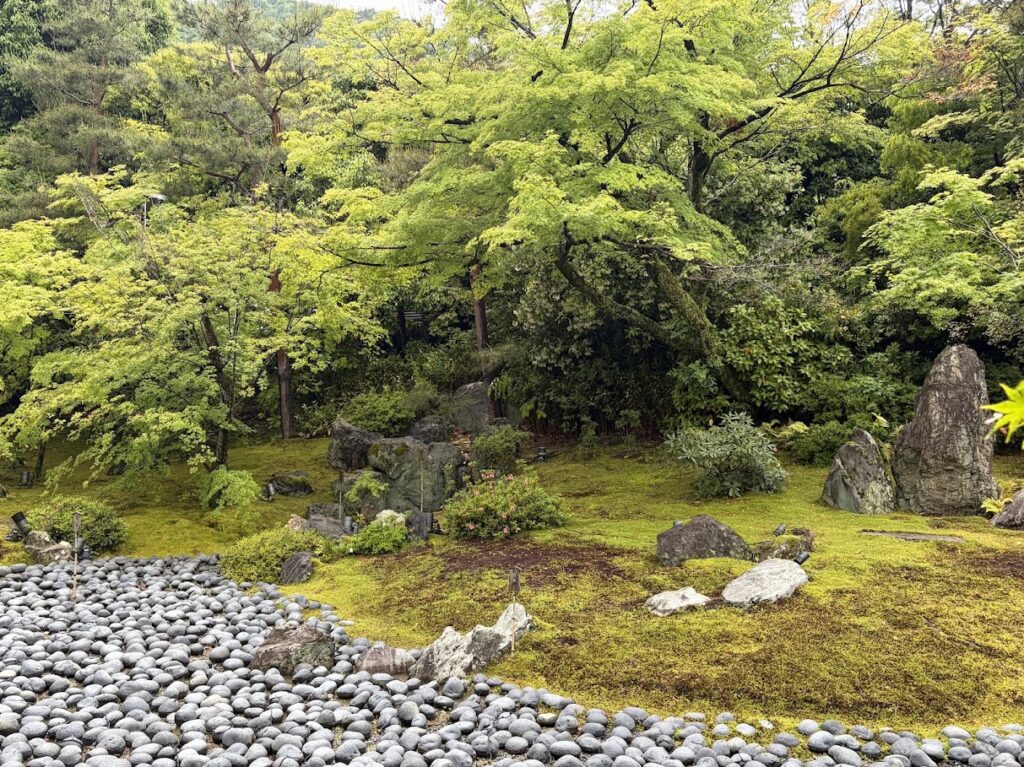
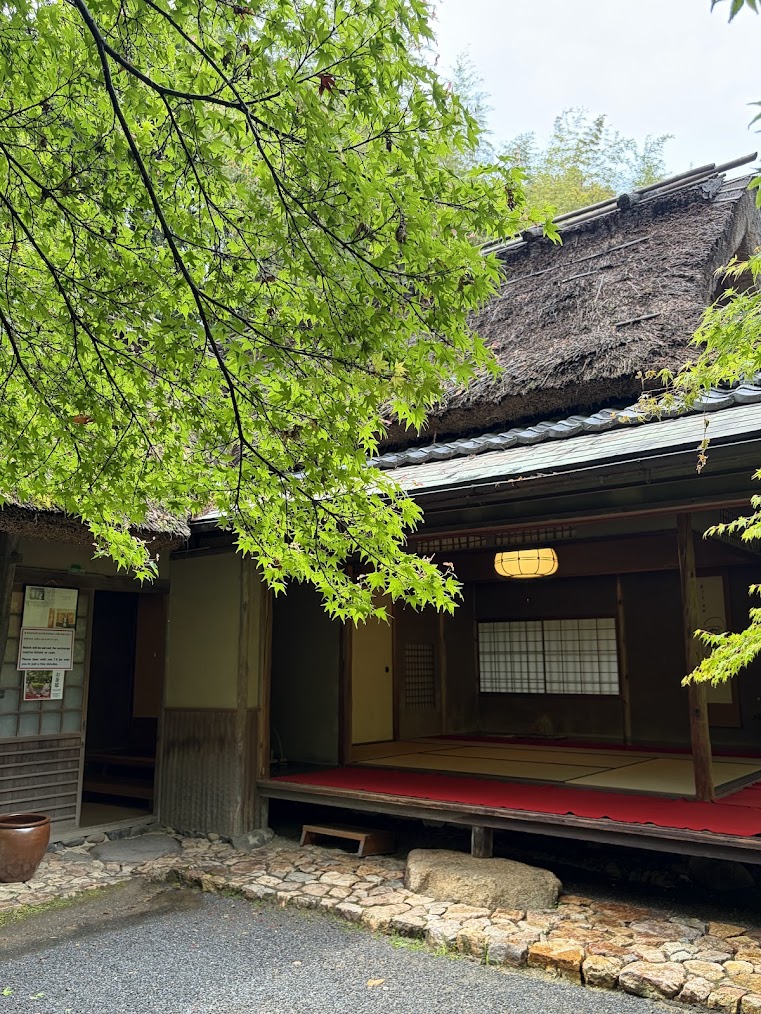
天龍寺の周りには、小さなお寺がいくつかあります。小さいお寺もいい雰囲気です。下の写真は弘源寺(1429-)というお寺です。
Around Tenryuji, there are several small temples. Small temples also have a good atmosphere. The photo below is a temple called Kogenji (1429-).
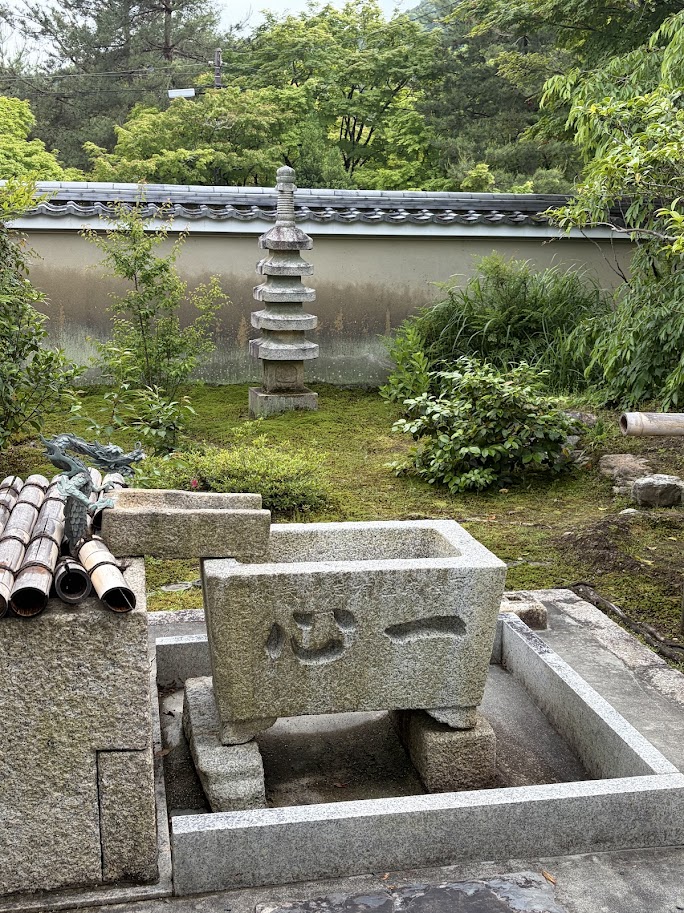
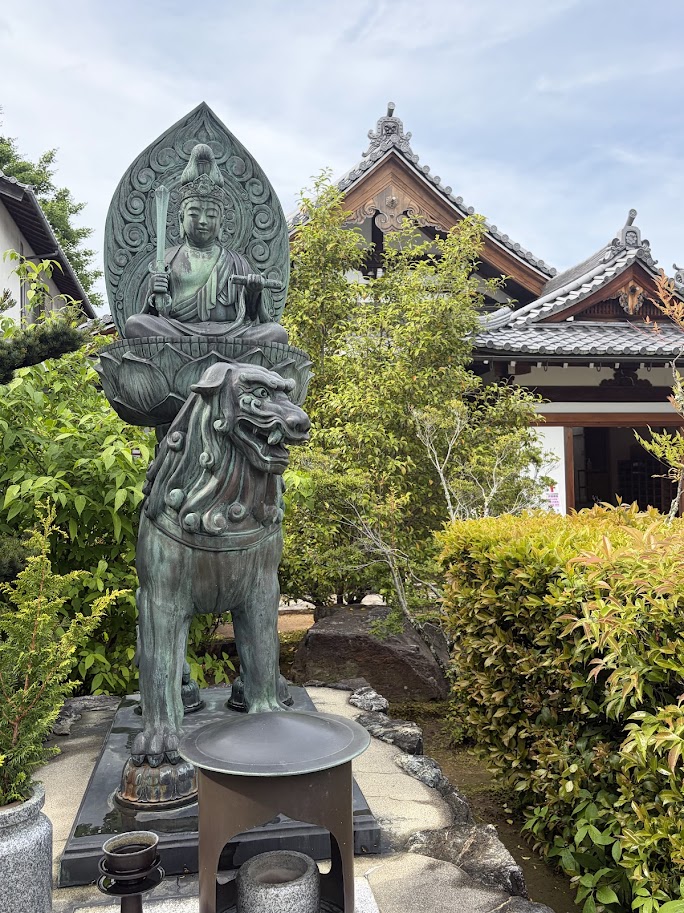
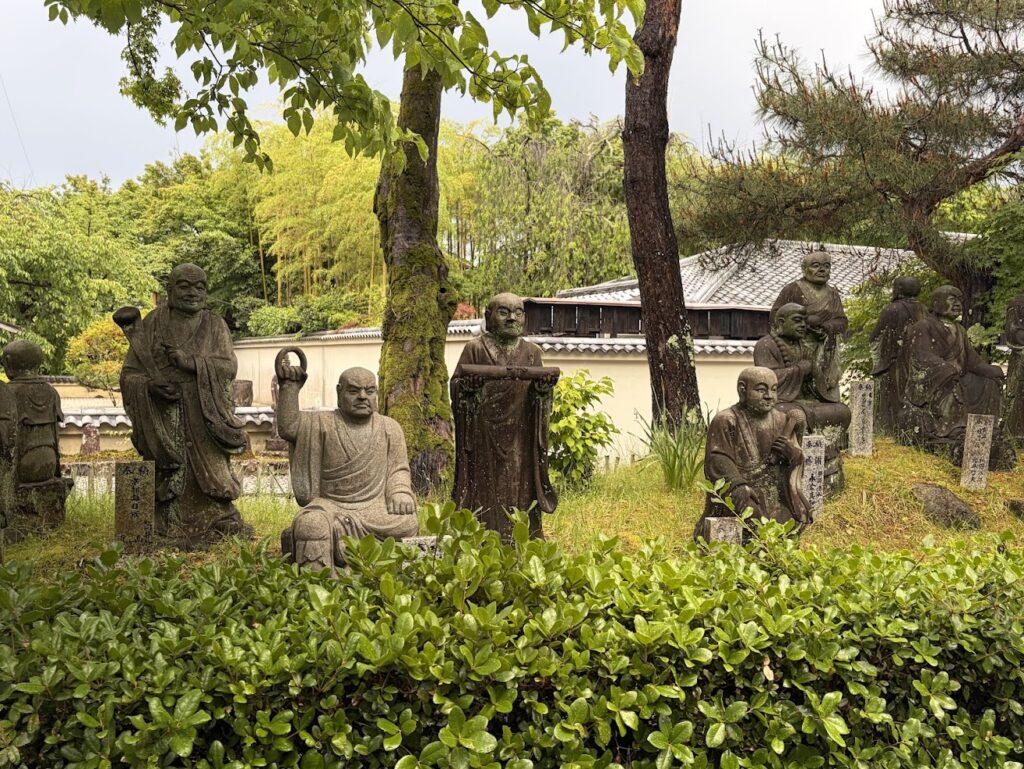
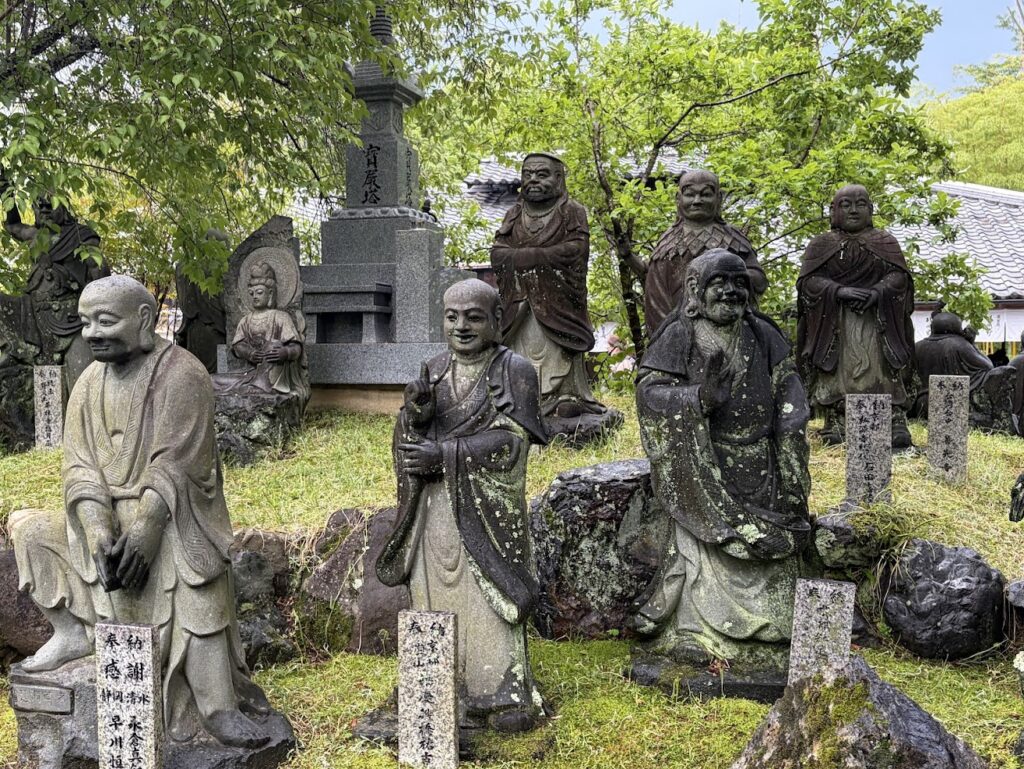
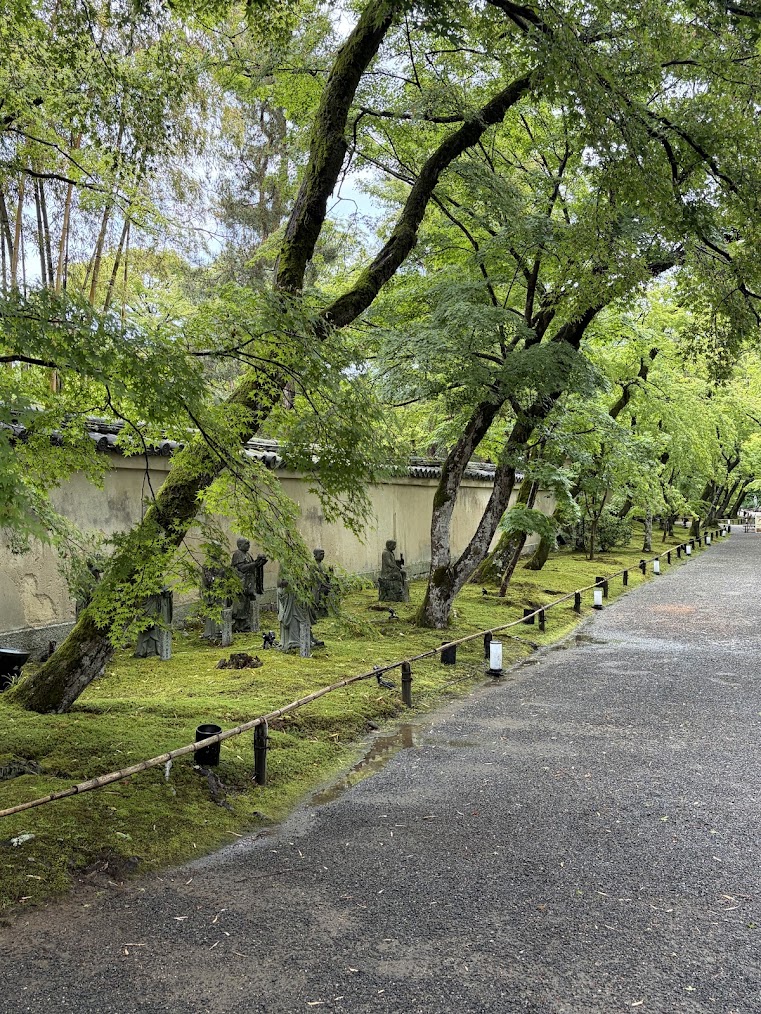
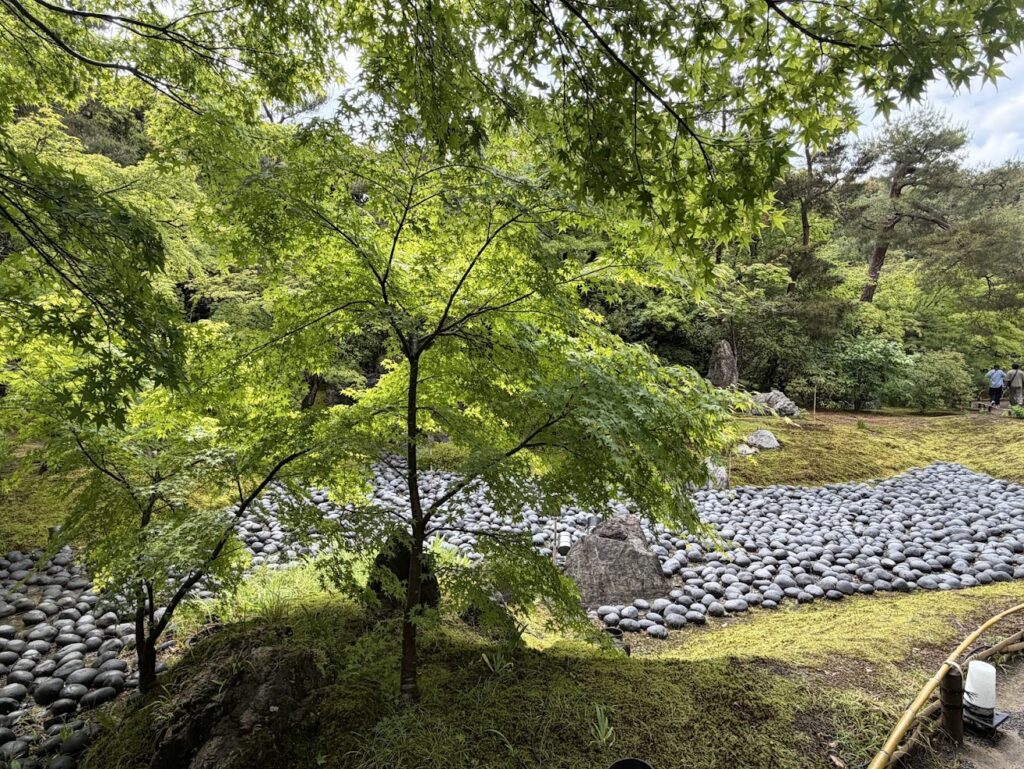
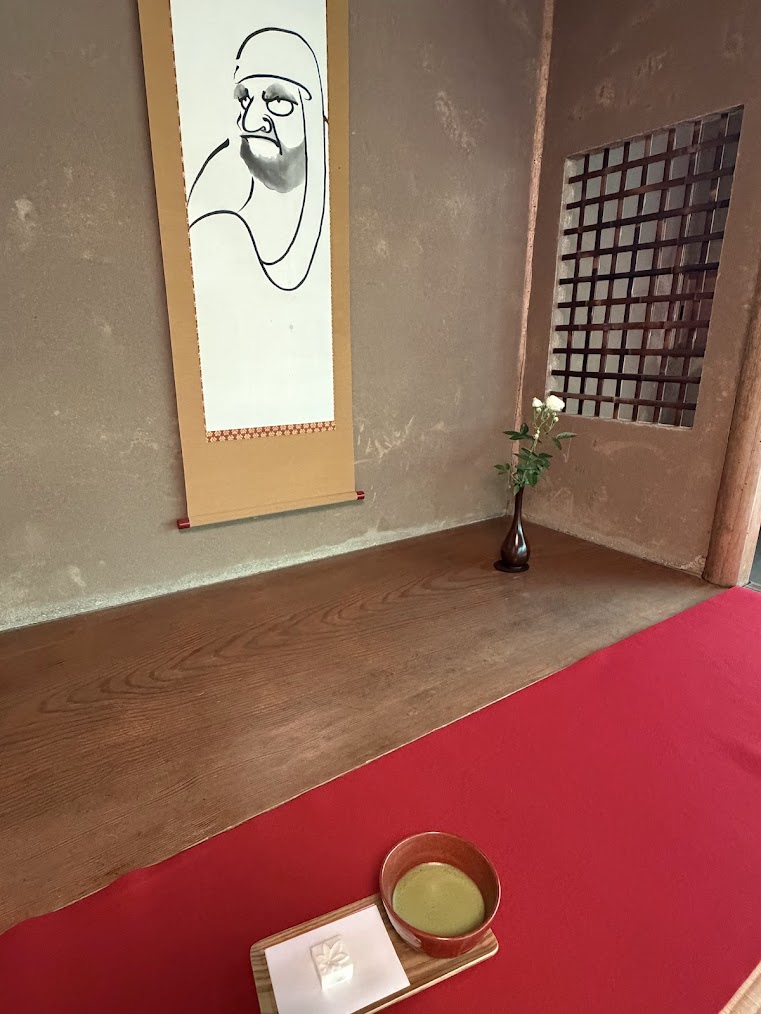
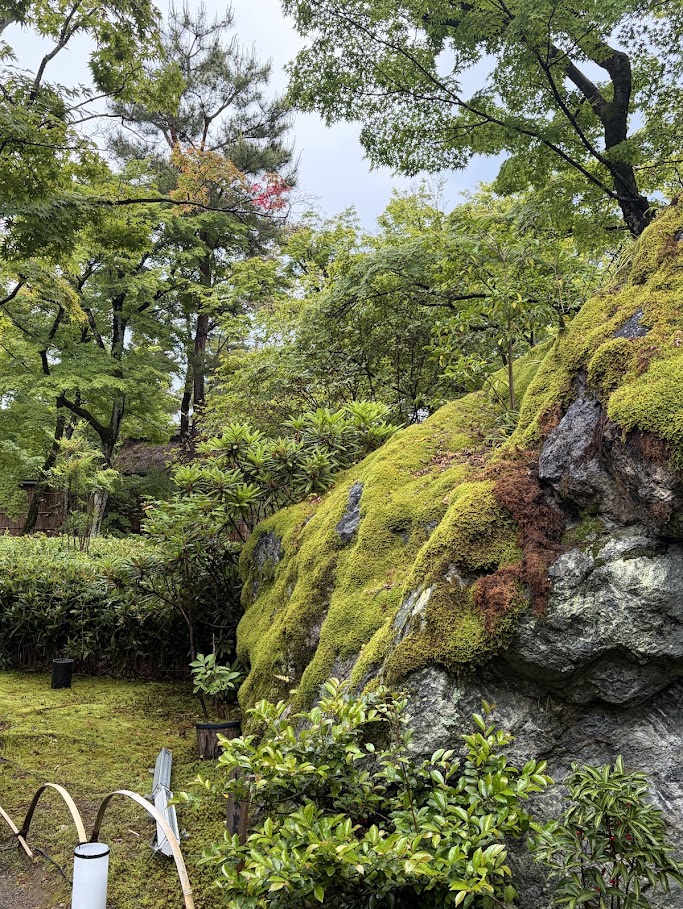
天龍寺の南側、石像が並ぶ小道を行くと宝厳院(1461-)というお寺があります。このお寺の庭園も美しい借景庭園です。初夏の青もみじが本当にすばらしい。また、この庭園には茶室もあります。この日は、来る直前に雨がふったので庭にあまり人がいなくて、茶室を一人でぜいたくに楽しむことができました。下の中央の写真の絵は、禅宗の創始者、達磨です。インドから中国に渡り、禅を伝えた人物です。
Going down the small path lined with stone statues on the south side of Tenryuji, there is a temple called Hogon-in (1461-). The garden of this temple is also a beautiful borrowed scenery garden. The fresh green maples of early summer are truly wonderful. Also, there is a tea room in this garden. On this day, since it rained right before I came, there weren’t many people in the garden, and I was able to luxuriously enjoy the tea room all by myself. The drawing in the center photo below is Daruma, the founder of the Zen sect. He is the person who crossed from India to China and transmitted Zen.
龍安寺 Ryoanji Temple Rinzai sect
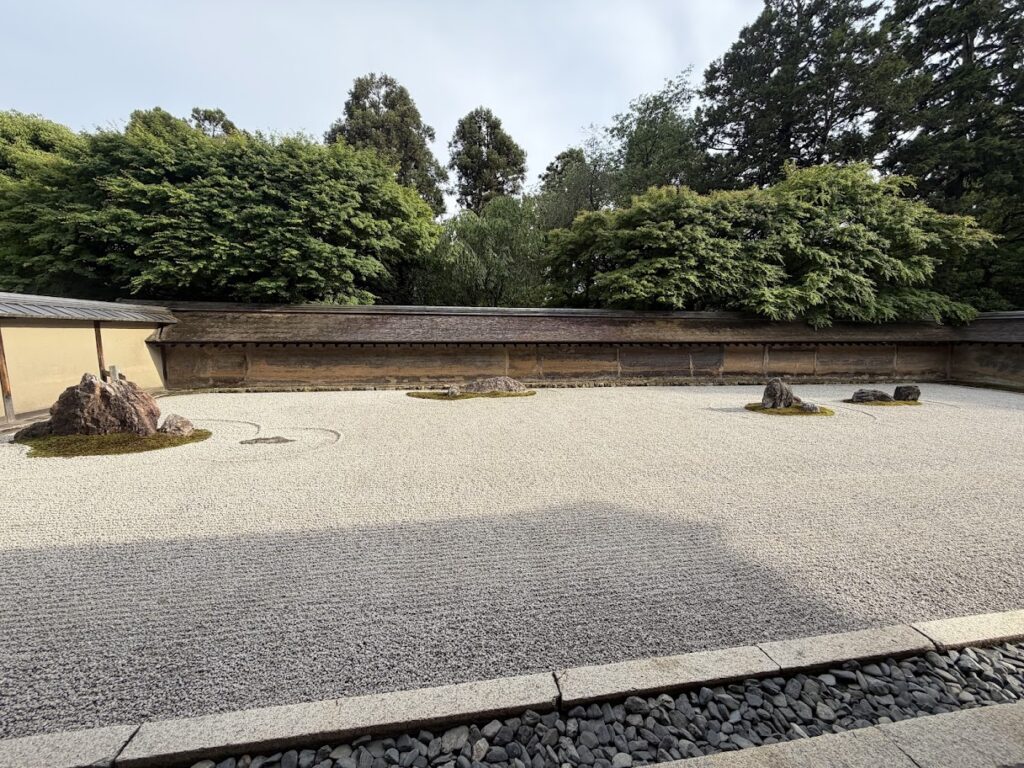
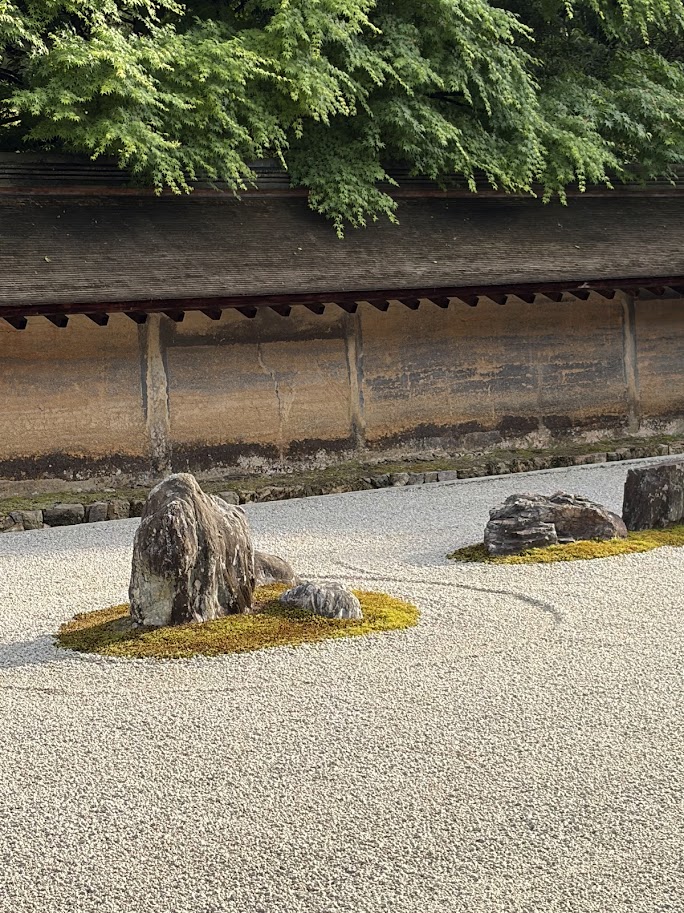
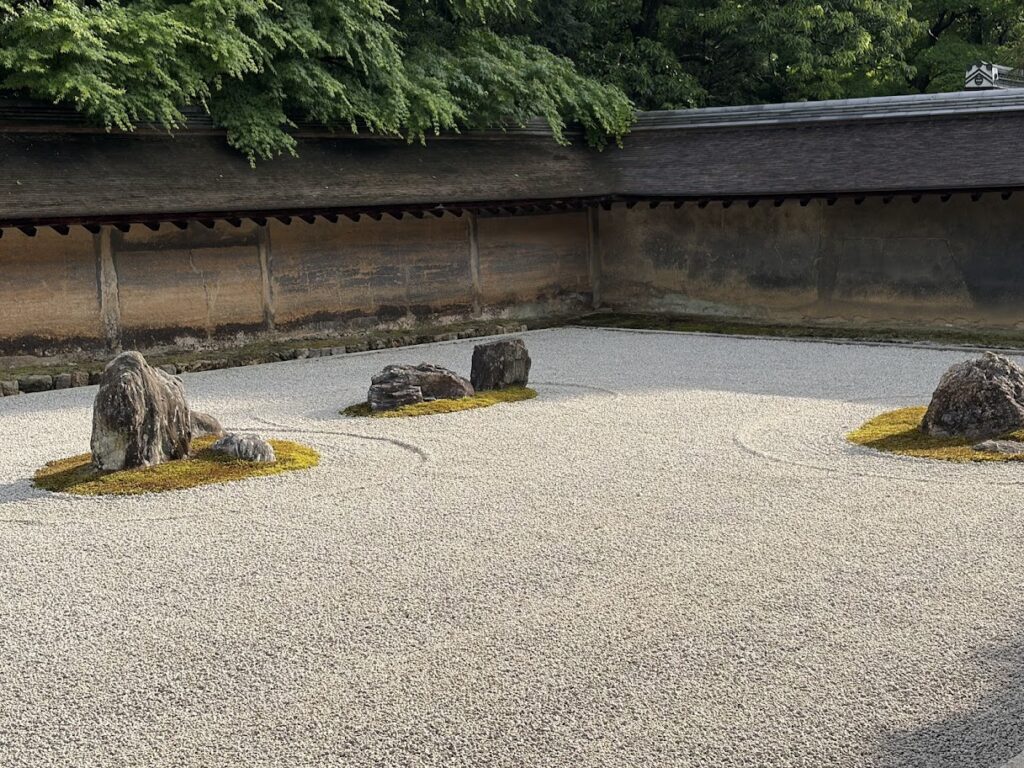
嵐山から電車に乗って、京都市の北側に向かいました。金閣寺で有名なエリアですが、ここでの目当ては、エリザベス女王も愛した枯山水 (dry landscape garden) の庭園を持つ龍安寺 (1450-) です。
枯山水とは、水 (池や小川など) を全く使わずに、岩、石、苔だけで作る庭です。禅の精神世界を表していると言われています。
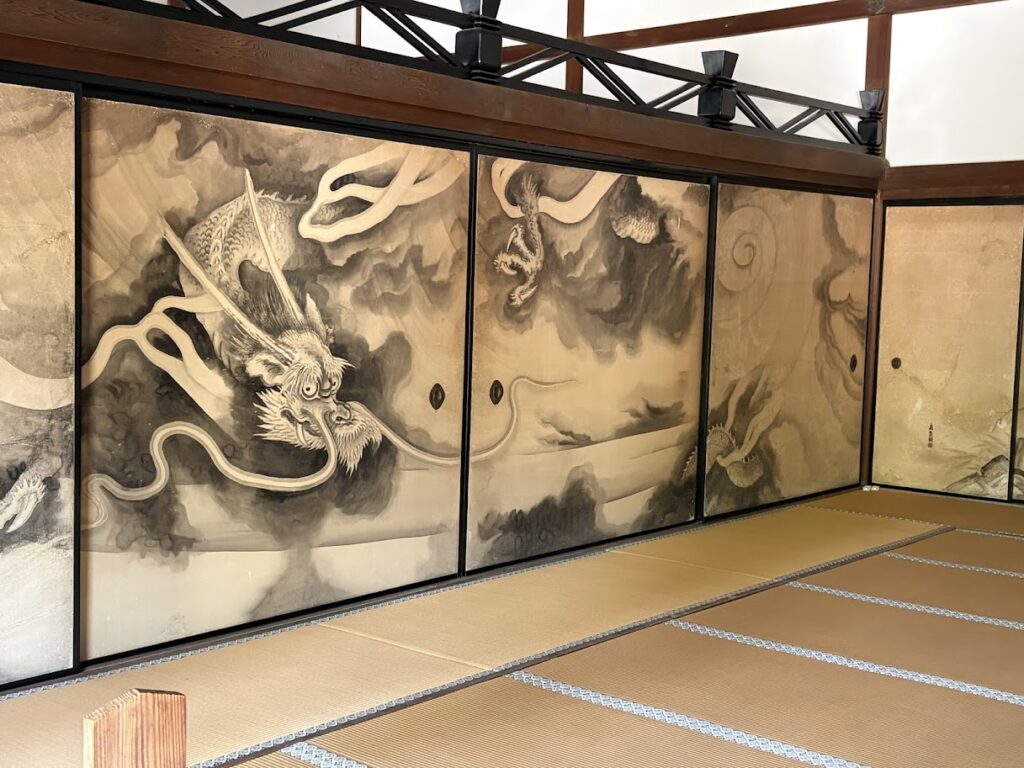
白い石で表現されている波紋 (ripples) が美しいですね。この庭を眺めていると、心が落ち着いてくる気がします。お寺のふすまに描かれた龍がかわいい。
I took a train from Arashiyama and headed to the northern side of Kyoto city. It is an area famous for Kinkakuji, but my objective here was Ryoanji Temple (1450-), which has a dry landscape garden (Karesansui) that Queen Elizabeth also loved.
A dry landscape garden is a garden made using absolutely no water (such as ponds or streams), using only rocks, stones, and moss. It is said to express the spiritual world of Zen. The ripples expressed by the white stones are beautiful, aren’t they? Looking at this garden, I feel like my heart is calming down. The dragon drawn on the temple’s sliding doors (fusuma) is cute.
仁和寺 Ninnaji Temple Shingon sect
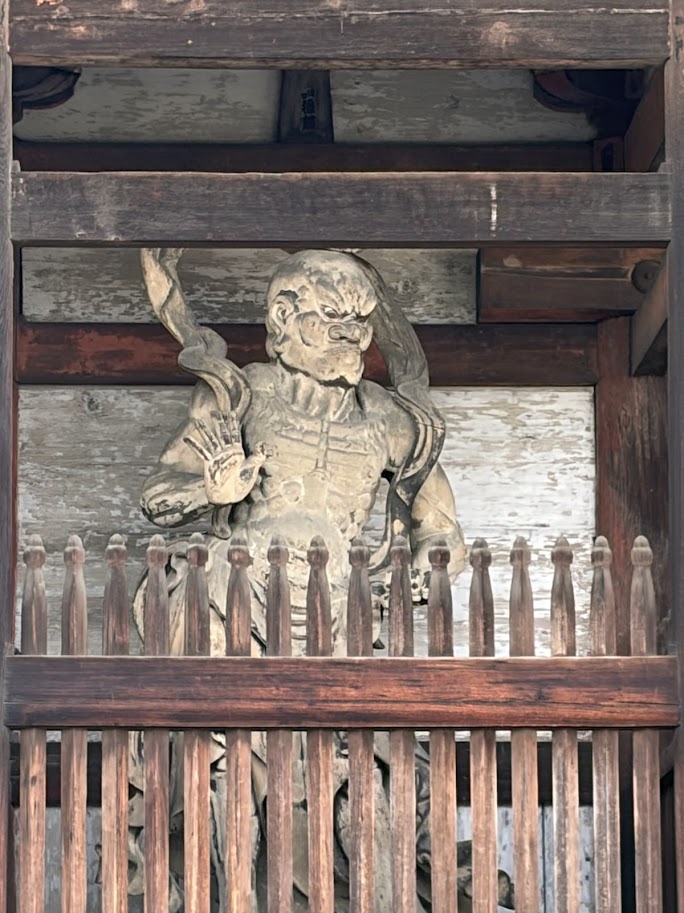
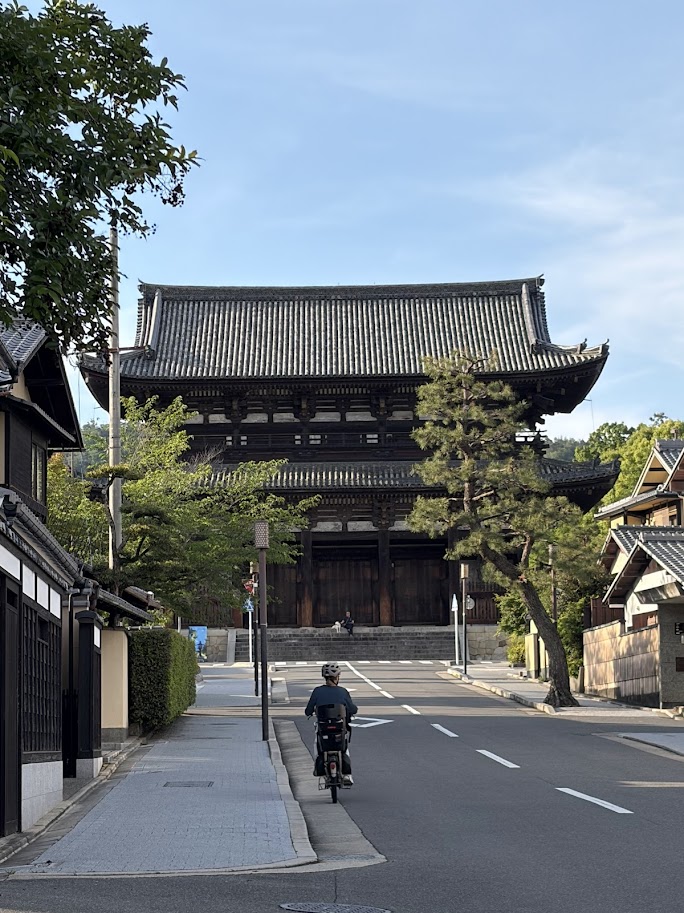
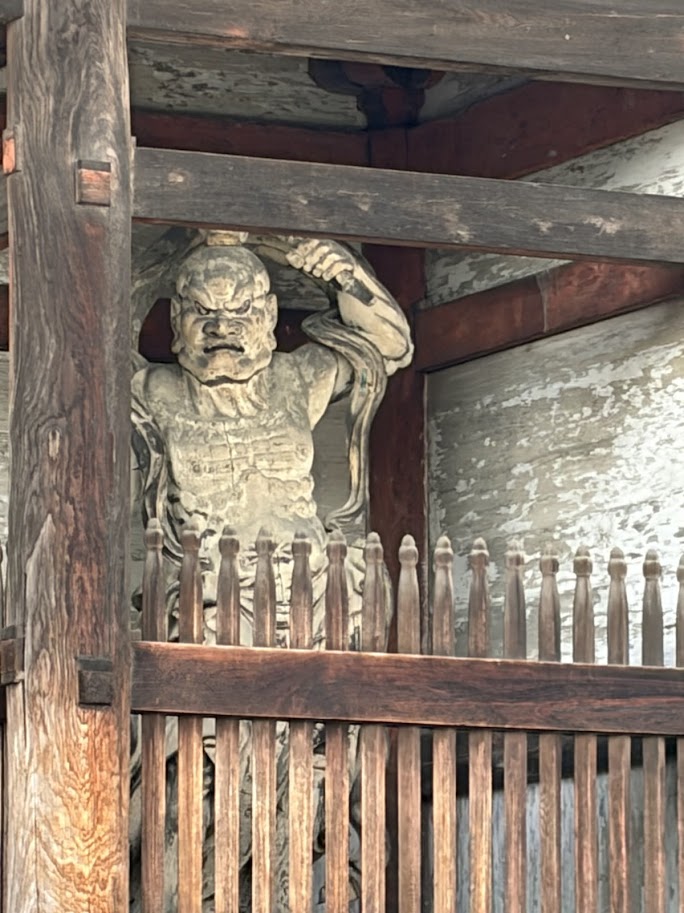
龍安寺からバスに数分乗ると仁和寺の大きな門の前に着きます。仁和寺は888年に開かれました。皇室 (Imperial family) と縁の深い格式高い (highly prestigious) お寺です。残念ながら、すでに閉まっていましたが、それでも迫力ある門、その両側にある仁王像 (Nio statues) を見ることができました。このお寺は遅咲きの桜、御室桜で有名なので、春にもう一度来たいと思いました。
Taking a bus for a few minutes from Ryoanji, you arrive in front of the large gate of Ninnaji. Ninnaji was opened in 888. It is a highly prestigious temple with deep ties to the Imperial Family. Unfortunately, it was already closed, but even so, I could see the powerful gate and the Nio statues on both sides of it. This temple is famous for its late-blooming cherry blossoms, Omurozakura, so I thought I would like to come again in spring.
知恩院 Chionin Temple 浄土宗 Joudo sect
「念仏を唱える」ということ。
What it means to ”chant the Nembutsu.”
古い時代のお寺、禅のお寺を回って、最終日に行ったのは、浄土宗のお寺です。
それまでの仏教は国の宗教であったものの、救われるには出家して (renounce the world) 修行をしなければならない、もしくはお寺に高額の寄付 (donation)をしなければならないと考えられていて、一般庶民 (ordinary common people) からは遠いものでした。しかし、法然 (1113-1212)は「南無阿弥陀仏」という念仏を唱えれば救われるという教えを説きます (preach)。
これは仏教の革命でした。
ここから仏教は広く大衆 (masses) を救う教えとなります。しかし、法然とその教えは旧仏教から弾圧されます (be persecuted) 。法然の死後、最後の地に弟子たちが廟堂 (mausoleum) を建て信仰 (faith) をつなげます。時を経て、江戸時代には徳川家のお寺となり、豪華な門やお堂が建てられ、現在に至ります。
After visiting temples of ancient times and Zen temples, the one I visited on the final day was a temple of the Jodo (Pure Land) sect. Until then, although Buddhism was a religion of the state, it was thought that to be saved, one had to renounce the world and practice asceticism, or make a large donation to a temple, so it was far removed from the ordinary common people. However, Honen (1113-1212) preached the teaching that one would be saved if one chanted the Nembutsu, “Namu Amida Butsu.”
This was a revolution in Buddhism. From here, Buddhism became a teaching that widely saved the masses. However, Honen and his teachings were persecuted by the old Buddhism. After Honen’s death, his disciples built a mausoleum (grave) at his final place to connect the faith. Over time, in the Edo period, it became the temple of the Tokugawa family, and a luxurious gate and main hall were built, leading to the present day.
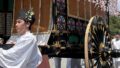
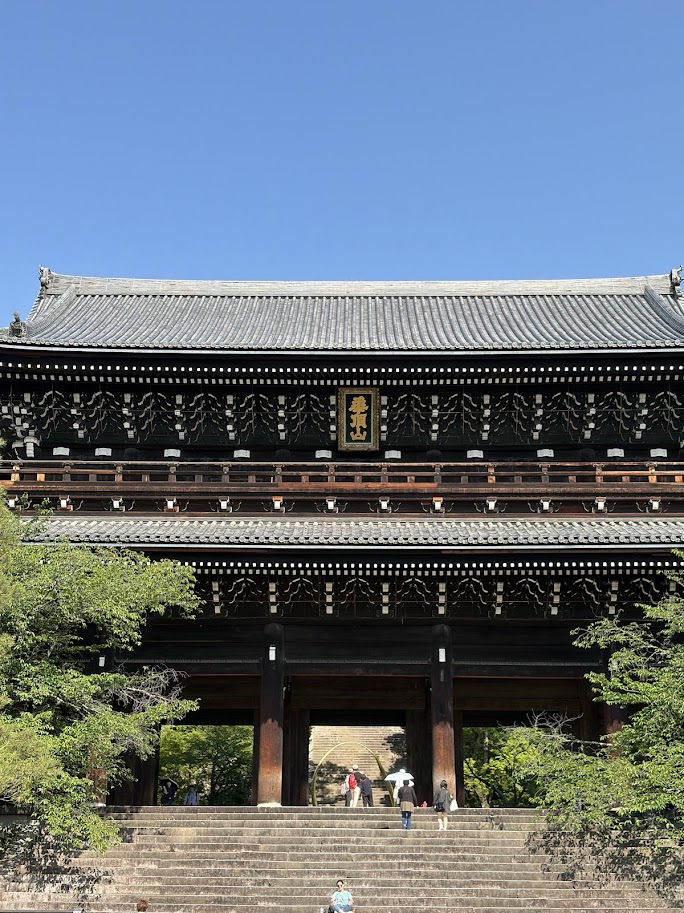
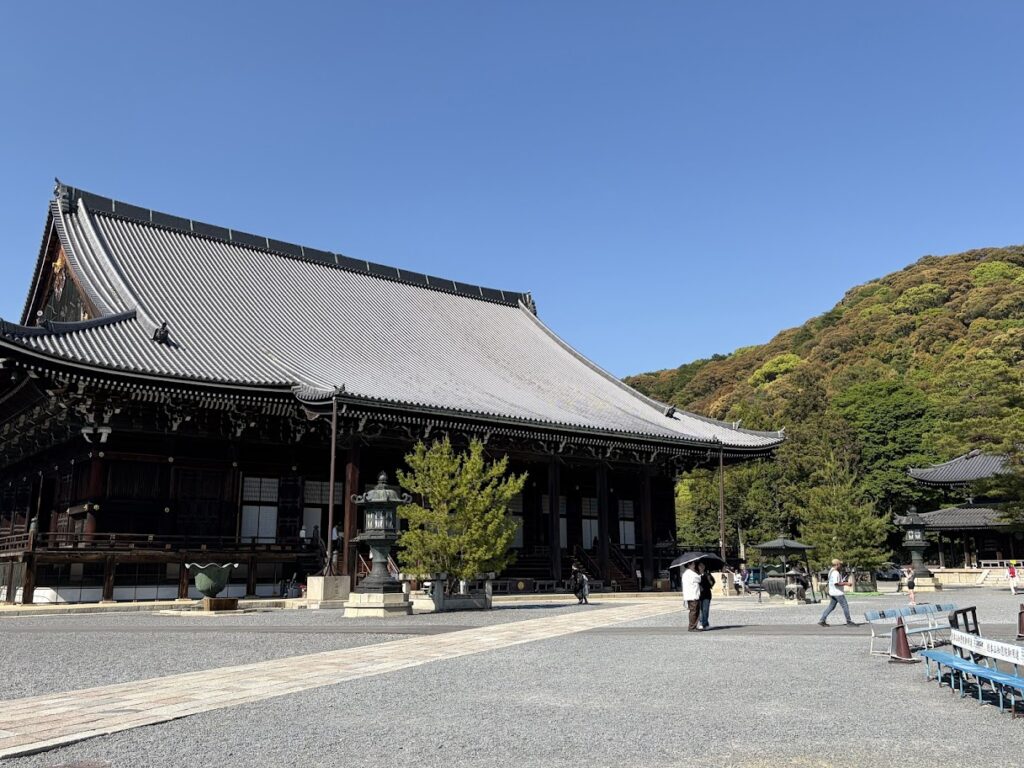
葵祭の行列を見た後、京都御苑 (Imperial Garden) からバスで知恩院に向かいました。知恩院前でバスを下りて歩くと、目の前に壮大な門が広がります。1621年に徳川秀忠が建てた高さ24メートル、横幅50メートルの迫力ある門です。門をくぐり、石段を登ると1639年に徳川家光が建てたお堂があります。中も外も立派で「徳川家のお寺」を感じさせます。
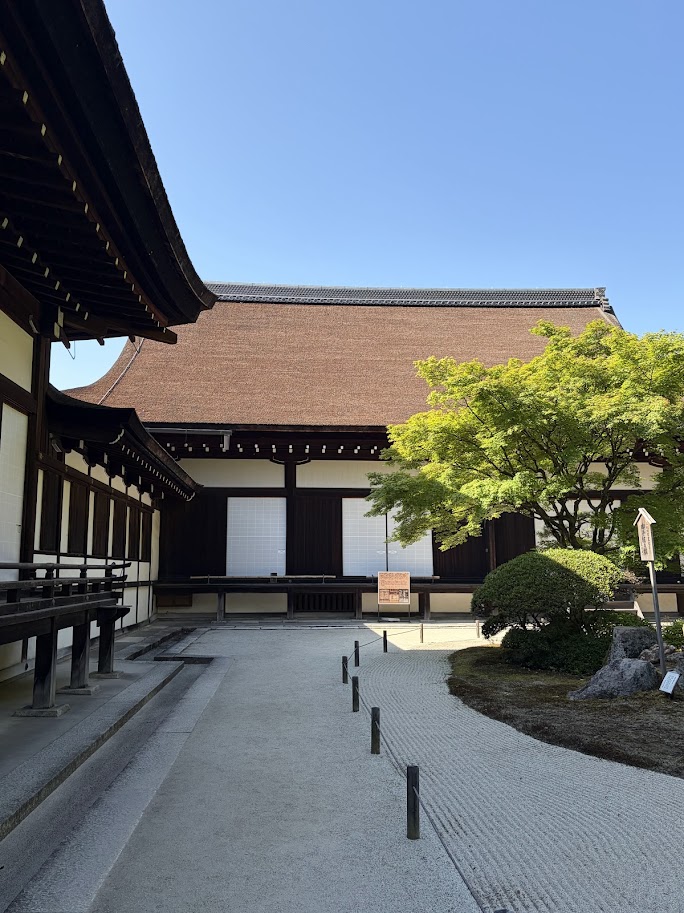
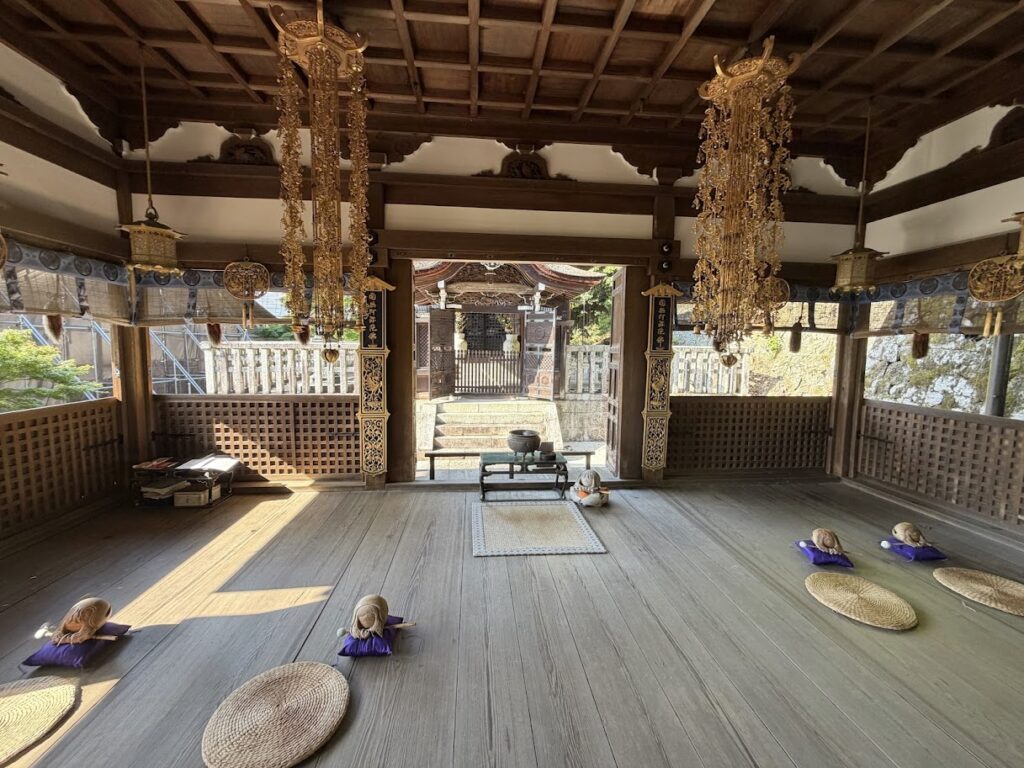
お堂に参拝して (worship) 、お堂の裏にまわると禅寺風の庭があります。この庭を抜けて石段を登っていくと、法然の遺骨を祀っている (enshrine) 御廟(mausoleum)があります。下の写真は御廟の手前の拝殿(お参りをするところ)です。たまたまそこに参拝しているグループがいて、いっしょに木魚を叩いて念仏を唱えることができました (普段は自由に叩けないようです)。私は浄土宗ではないのですが、なんだか楽しくなってきました。自分のような者でも念仏を唱えれば救われる。シンプルで力強い教えに、この瞬間心を任せることができたように思います。
After watching the Aoi Matsuri festival procession, I headed to Chionin by bus from Kyoto Gyoen. Walking after getting off the bus in front of Chionin, a magnificient gate spreads out in front of your eyes. It is a powerful gate 24 meters high and 50 meters wide, built by Tokugawa Hidetada in 1621. Passing through the gate and climbing the stone steps, there is a hall built by Tokugawa Iemitsu in 1639. Both inside and outside are magnificent, making you feel “the temple of the Tokugawa family.”
After worshiping at the hall and going around to the back of the hall, there is a Zen-style garden. Passing through this garden and climbing the stone steps, there is a mausoleum (grave) enshrining Honen’s remains. The photo below is the Haiden (a place for worshiping) in front of the mausoleum. Coincidentally, there was a group worshiping there, and I was able to strike the wooden fish and chant the Nembutsu together with them (it seems you cannot normally strike it freely). I am not of the Jodo sect, but I started to feel somewhat happy. Even a person like myself can be saved if they chant the Nembutsu. I think I was able to entrust my heart to this simple and powerful teaching at that moment.
下の動画は知恩院にある自動販売機です。何とこの自販機、お金を入れると念仏を唱えます。法然の教えが弾圧されながらも、広く受け入れられてきた理由がわかる気がしませんか。私もついお茶を買っちゃいました。また、売店では知恩院限定宇治抹茶アイス、知恩院限定カレーなども売っています。念仏と同時に「何だっていいんですよ」という声が聞こえてくる気がします。
「南無阿弥陀仏」とは「阿弥陀様、助けてください」「阿弥陀様に全てを任せます」という祈りです。
2026年5月現在、知恩院の一番古い建物、勢至堂は改修中です。
The video below is a vending machine at Chionin. Incredibly, when you put money into this vending machine, it chants the Nembutsu. Don’t you feel like you can understand the reason why Honen’s teaching has been widely accepted while being persecuted? I also ended up buying tea without thinking. Also, at the shop, they sell Chionin-limited Uji matcha ice cream, Chionin-limited curry, and so on. Together with the Nembutsu, I feel like I can hear a voice saying, “Anything is fine.”
“Namu Amida Butsu” is a prayer meaning “I simply ask Amida-sama for help” or “I entrust everything to Amida-sama.”
As of May 2026, the oldest building, Seishido, is under renovation.
今日もここまで読んでくれてありがとうございました。
今回の旅行では3泊4日でいろんなところを回ることができました。古い時代のお寺の仏像、禅のお寺のわびさび、知恩院の迫力、どれも心を動かされるものでした。春や秋の景色は素晴らしいんだろうなと思うものの、初夏の鮮やかな緑につつまれた京都も素敵でした。京都は見るところが多くて、何度行ってもまた行きたいと思えます。比叡山や西本願寺など、まだまだ行きたいところがたくさんあります。
この記事の中に行ってみたいと思ったお寺はありましたか。
初中級の会話で使うことがない言葉が多く難しかったと思いますが、読み応えを感じてもらえるとうれしく思います。
Thank you again for reading this far today.
On this trip, I was able to visit various places in 4 days and 3 nights. The Buddhist statues of old temples, the wabi-sabi of Zen temples, the power of Chionin—all of them were deeply moving. Although I think the scenery in spring and autumn must be wonderful, Kyoto, surrounded by the bright green of early summer, was also lovely. Kyoto has so many places to see that no matter how many times I go, I feel like I want to go again. There are still many places I want to go, such as Mount Hiei and Nishi Honganji.
Were there any temples in this article that you thought you would like to visit?
I think it was difficult because there were many words that are not used in lower-intermediate conversations, but I would be happy if you felt it was worth reading.
下は古代インドから日本の仏教までの哲学を簡単に書いた記事です。
Below is an article briefly describing the philosophy from ancient India to Japanese Buddhism.
令和八年五月二十七日