
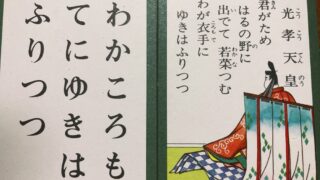
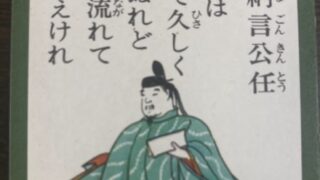



契りきな かたみに袖を しぼりつつ 末の松山 波越さじとは
清原元輔 (908-990)
百人一首 四十二番 恋
「後拾遺集」
かな
ちぎりきな かたみにそでを しぼりつつ すゑのまつやま なみこさじとは
「ゑ」は、今では使われていないひらがなです。お店の名前などで使われることがあります。
言葉の意味
- 契りきな:約束したじゃないですか。約束しましたよね。
We promised, didn’t we? / You promised me, remember? - かたみに:おたがいに
To each other / Mutually - 袖をしぼりつつ:袖を濡らしながら (泣きながら)
While wringing out our sleeves (crying so much that our sleeves are soaked with tears) - 末の松山波こさじとは:末の松山を津波が越えることは絶対にないように、私たちの気持ちも変わることがないと
Promising that our feelings would never change, just as the waves could never cross over Mount Sue-no-Matsuyama.
現代語訳
約束したじゃないですか。いっしょに袖を濡らして「波も末の松山を越えることがないように、私たちのことも変わらない」と。
We promised, didn’t we? While wringing out our tear-soaked sleeves together, we vowed that our love would never change—just as the waves could never cross over Mount Sue-no-Matsuyama.
「波が末の松山を越える」は、「絶対に起こらないことが起こる」という意味で使われています。
「波が末の松山を越えることが絶対にないように、私たちの気持ちが離れることも絶対にないと約束したのに」と詠んでいます。
The phrase “waves crossing over Mount Sue-no-Matsuyama” is used as a metaphor for “something absolutely impossible happening.”
The poet is saying, “We promised that just as the waves could never cross that mountain, our feelings would never drift apart… and yet, look what happened.”
人の気持ちは変わるものです。人の気持ちの移り変わりは、和歌の定番のテーマです。また、「袖を濡らす (泣く)」も定番の表現ですね。
この歌は、下の歌のアンサーソングとして詠まれました。
Human feelings change over time. The shifting of the human heart is a classic theme in Waka poetry. Another staple expression is “wringing out wet sleeves” (which signifies crying).
This poem was actually composed as an “answer song” (reply) to the following poem:
君をおきて あだし心を 我が持たば 末の松山 波も越えなむ
Kimi o Okite / Adashi Kokoro o / Waga Motaba / Sue no Matsuyama / Nami mo Koenan
あなたがいるのに 他に好きな人ができたら あの末の松山 を波が越えてしまうでしょう。
(そんなことは絶対にありえません。)
If I were to leave you and fall for someone else, the waves would surely cross over Mount Sue-no-Matsuyama. (That is absolutely impossible; my love for you will never change.)
この歌の作者、清原元輔は、「枕草子 (The Pillow Book )」で有名な清少納言の父です。清原元輔は優れた歌人でした。あの清少納言が「父の名を汚したくないから和歌は詠みません」と書いたほどです。世界的に有名なエッセイを残すことになる清少納言も、和歌にはコンプレックスがあったようです。百人一首には清原深養父、清原元輔、清少納言と一族の中から三人の歌が選ばれています。学問に優れた一族でした。
※コンプレックスという言葉は、日本では “inferiority complex” という意味で使われています。
The author of this poem, Kiyohara no Motosuke, is the father of Sei Shonagon, who is famous for writing The Pillow Book (Makura no Soshi).
Motosuke was an exceptionally talented poet. He was so skilled that Sei Shonagon once wrote, “I will not compose Waka poetry because I do not want to tarnish my father’s great reputation.” It is said that even Sei Shonagon, who left behind a world-famous masterpiece of essays, had a bit of a complex when it came to writing poetry.
In the Hyakunin Isshu collection, three poets were chosen from this single family: Kiyohara no Fukayabu, Kiyohara no Motosuke, and Sei Shonagon. They were truly a brilliant family of literature and learning.
※In Japan, the word “complex” (コンプレックス) is commonly used to mean an “inferiority complex.”
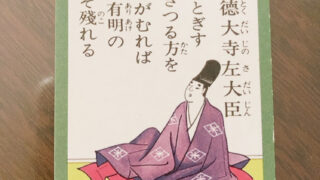
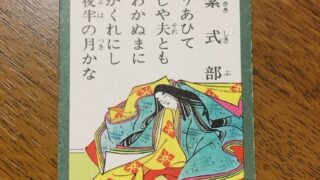
清原深養父の歌です。
Poem by Kiyohara no Fukayabu
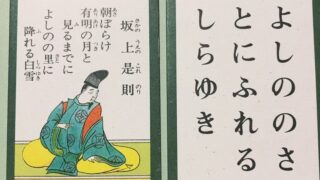
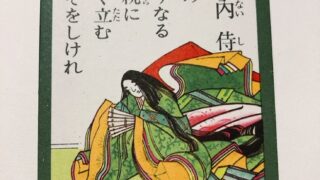
清少納言の歌です。
Poem by Sei Shonagon
表現
- のに:
後ろの部分には、不満や予想外のことが続きます。
The following part expresses frustration, dissatisfaction, or something unexpected.
勉強したのに、合格できなかった。
Even though I studied, I couldn’t pass the exam.
おなかがすいているのに、冷蔵庫に何も入っていない。
I’m so hungry, yet there’s nothing in the refrigerator.
あの子は3歳なのに、もうひらがなを覚えている。
Even though that child is only 3 years old, they already know hiragana. - ~じゃないですか/~じゃない
使い方が三つあります。
1 推測:Conjecture / Guess
これ、夕方までにできるかな?
できるんじゃないですか⤴
できるんじゃない⤴
“Do you think this can be done by this evening?”
“I think it’s probably possible. ⤴“
明日、晴れるかな?
晴れるんじゃないですか⤴
晴れるんじゃない⤴
“Will it be sunny tomorrow?”
“It will probably be sunny.⤴“
文末を上げて (⤴) 言うと「多分~と思います」という意味になります。
目上の人と話すときは「~と思います」のほうがいいです。
When said with a rising intonation ( ⤴ ) at the end of the sentence, it means “I think probably…”. When speaking to superiors, it is better to use “~ と思います”
2. 強い非難:Strong Criticism / Blame
「~よね」も同じように使うことがあります。(「~よね」は、通常、共感を表すときに使います。)
Sometimes the expression “~ yo ne” can be used in the same way. (Usually ”~ yo ne is used to express emphathy to the listener.)
今日までにお金返すって言ったじゃないですか💢
今日までにお金返すって言ったよね💢
You said you would pay me back by today, didn’t you?! 💢
ケガしたんですか?言ったじゃないですか💢危ないって😡
ケガしたの?言ったよね💢危ないって😡
Did you get hurt? I told you so, didn’t I?! I said it was dangerous! 😡
どうして来なかったんですか。約束したじゃないですか💢
どうして来なかったの。約束したよね💢
Why didn’t you come? We promised, didn’t we?! 💢
3 驚き:Surprise
すごい!やればできるじゃない‼️👍
Amazing! Look, you can do it if you try!! 👍
「~のに」「~じゃない」は会話でもよく使います。アニメやドラマで聞くことも多い表現です。イントネーションに気をつけて聞いてみてくださいね。
“~ noni” and “~ janai” are very commonly used in daily conversation. You will often hear them in anime and dramas. Please try listening for them, paying close attention to the intonation!
今日もここまで読んでくれてありがとうございました。
このページのサムネイル画像は、素材サイトのイラストACからダウンロードしたものです。SHIEDAさんという方のイラストを使っています。
令和八年六月十八日