






九州北部では梅雨に入り雨の日が続いていますが、いかがお過ごしですか。
私は先週の週末、歌舞伎を見に博多座に行ってきました。2回目の歌舞伎観劇です。
初めて行った時は、「みんなどんな服着てるんだろう」とか「着物だったら間違いなさそうだけど洋服だったらどのくらいの格好かな」とか考えていました。紺 (ネイビー) のワンピースで行ってみると、着物の人はいましたが、特別フォーマルじゃなくてもいい感じでした(公演の初日と最終日はしっかりおしゃれしているようです)。観客の年齢層も高いので、人の服なんて誰も気にしていません。普段より少しきれいめの格好で行けばよさそうです。ということで、気楽に博多座に向かいました。
The rainy season has started in northern Kyushu, and rainy days are continuing, but how are you spending your time?
On the weekend, I went to Hakataza to watch Kabuki. This was my second time watching a Kabuki performance.
When I went for the first time, I was thinking about things like, “What kind of clothes is everyone wearing?” or “If it’s a kimono, it’s probably safe, but if it’s Western clothes, how formal should it be?” When I went in a navy blue dress, there were people in kimono, but the feeling was that you didn’t have to be specially formal. (It seems people dress up properly on the opening day and the final day of the performances). The age group of the audience is also high, so no one cares about other people’s clothes. If you go in clothes that are a little nicer than usual, it seems be fine. Therefore, I headed to Hakataza with a light heart.
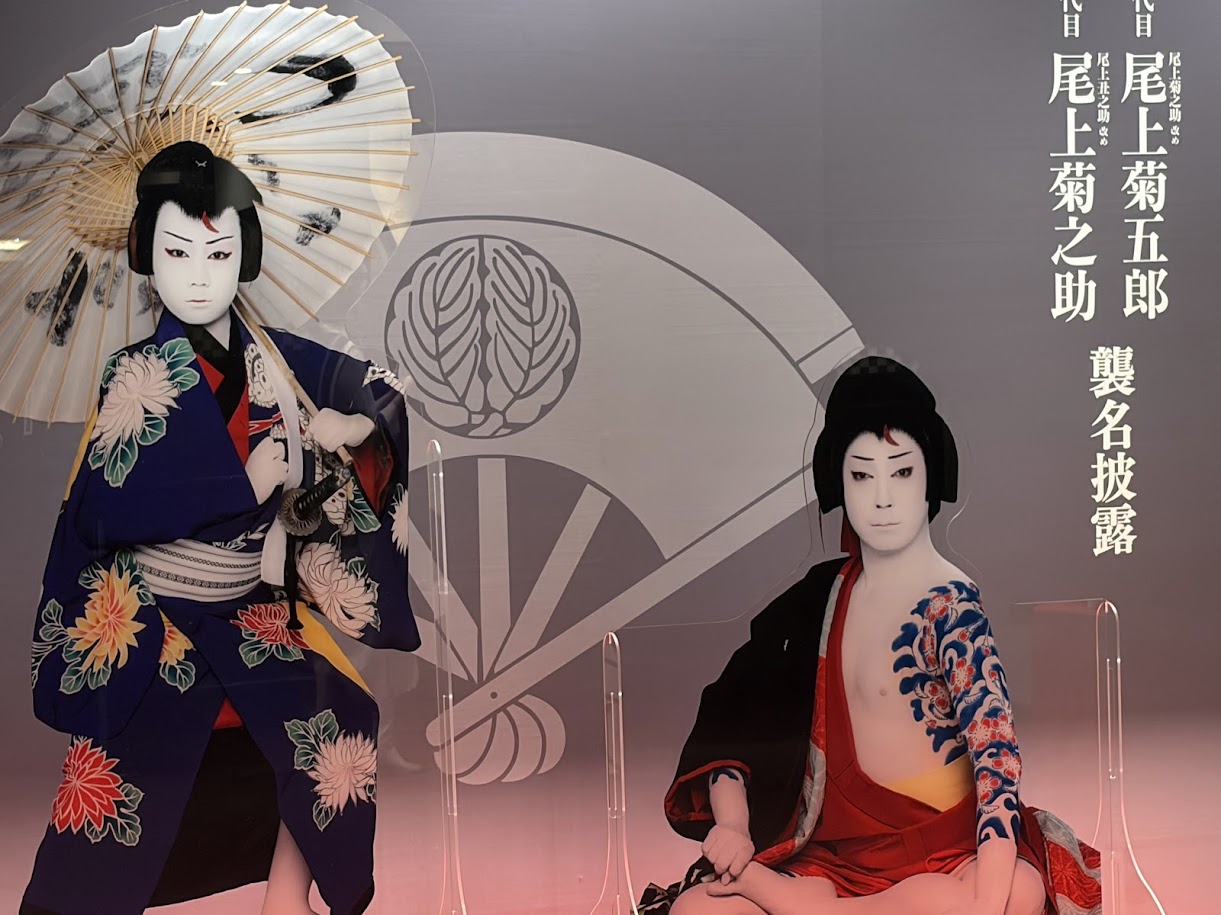
今回の公演は、尾上菊五郎、尾上菊之助親子の襲名公演 (name succession performance) です。「国宝」を見たことがある人はわかると思いますが、歌舞伎の世界では、家族の中で親から子に名前を受け継いでいきます。その襲名を披露する (announce, show) ための公演です。
通常、歌舞伎の公演には昼の部と夜の部があり、それぞれプログラムが異なります。どちらも魅力的で迷いましたが、昼の部に行くことにしました。
This performance was a stage name succession performance (shūmei kōen) of the father and son, Onoe Kikugorō and Onoe Kikunosuke. People who have seen [the movie] “Kokuhō” (National Treasure) will understand, but in the world of Kabuki, names are passed down from parent to child within the family. This is a performance to announce that stage name succession.
Usually, Kabuki performances have a matinee (daytime part) and an evening part, and the programs are different for each. Both were attractive, and I couldn’t decide which I see, but I decided to go to the matinee.
博多座
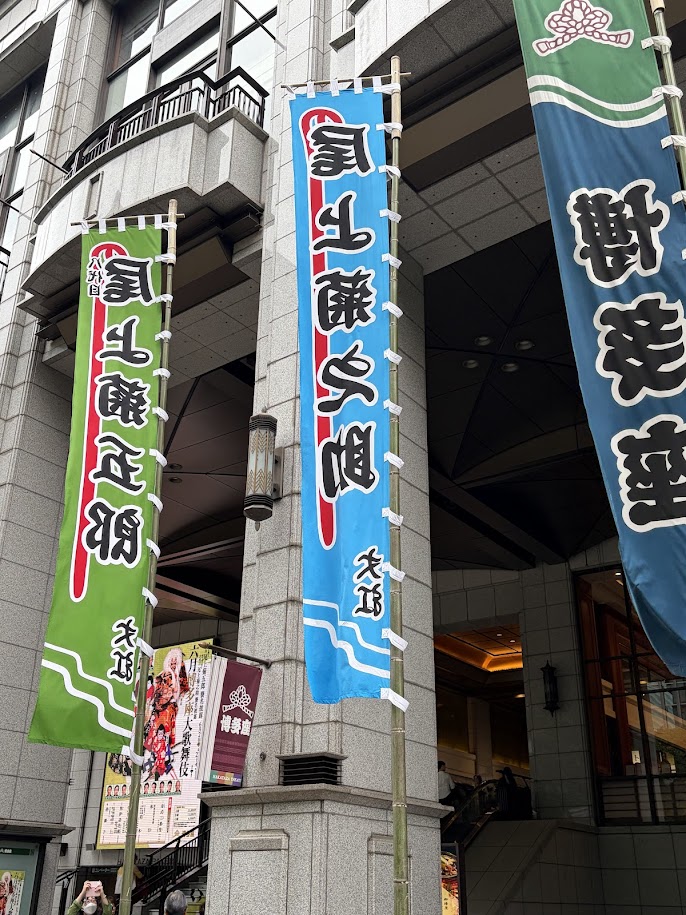
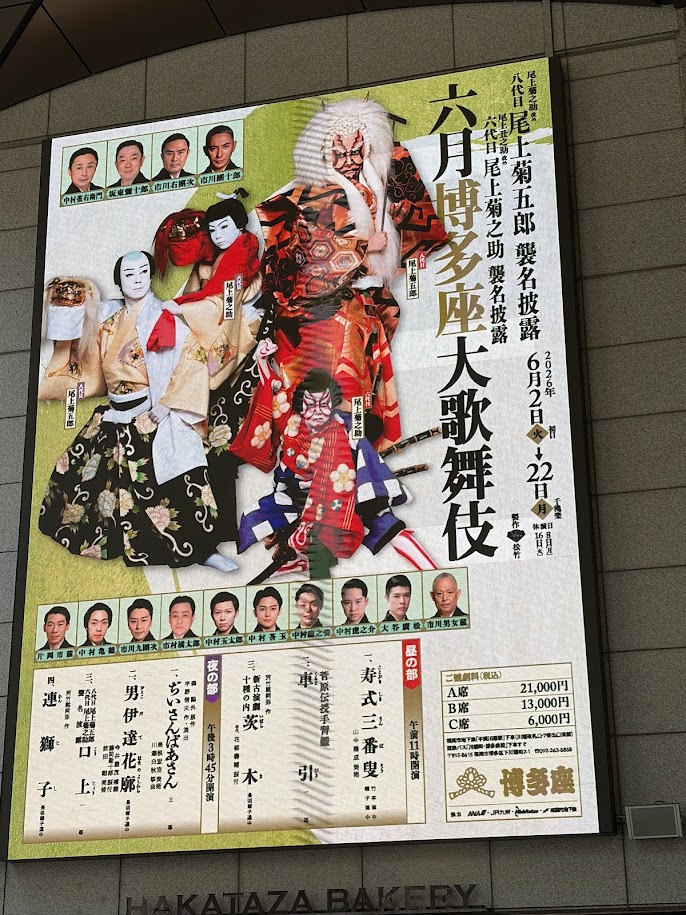
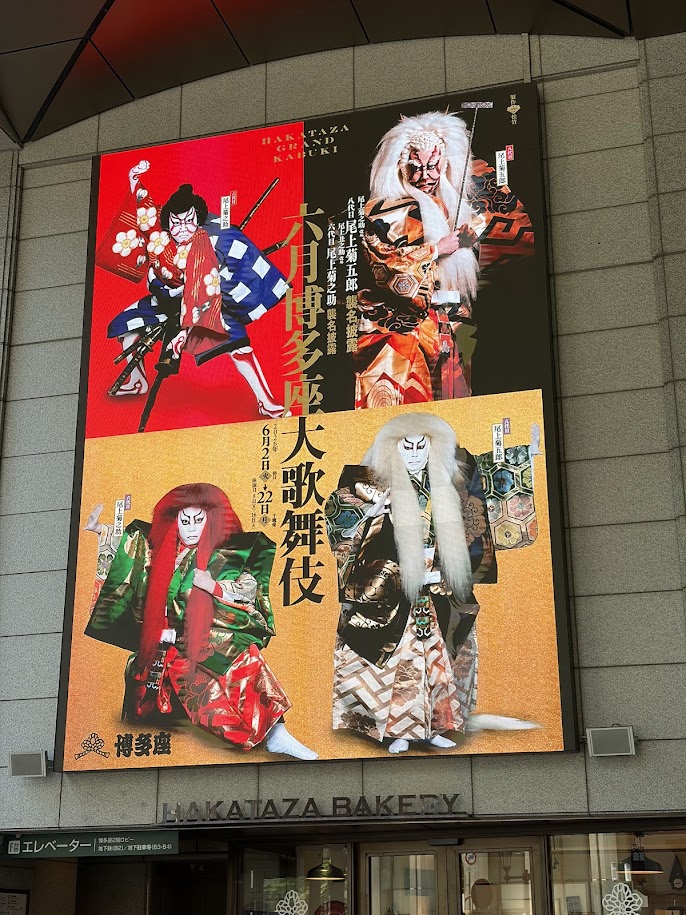
博多座正面ののぼり(旗)やデジタルサイネージにわくわくします。
まず、ネットで購入しておいたチケットを窓口で発券して、それからイヤホンガイドを借りました。歌舞伎で使う言葉は日本人でもわかりにくいものも多いので、ストーリーや衣装 (costume) の意味などを説明してくれるイヤホンガイドがあると、とても助かります。
I get excited by the nobori (banners) and digital signage in front of Hakataza. First, I issued the tickets at the counter, which I had purchased online in advance, and then I rented an earphone guide. There are many words used in Kabuki that are difficult to understand even for Japanese people, so having an earphone guide that explains the story and the meaning of the costumes is very helpful.
※2026年6月現在、博多座では英語の音声ガイドはありませんが、東京の歌舞伎座では英語の音声ガイドや翻訳タブレットを借りることができます。
※As of June 2026, there is no English audio guide at Hakataza, but at Kabukiza in Tokyo, you can rent an English audio guide or a translation tablet.
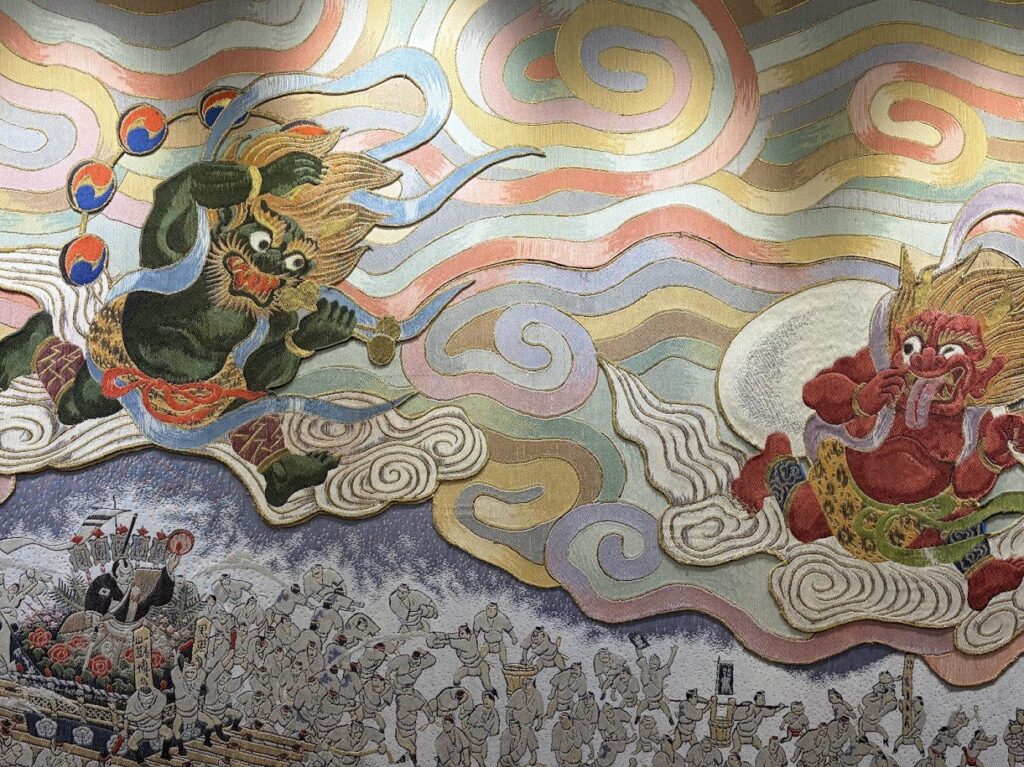
エントランスのフロアから階段をのぼると、途中、下の写真のタペストリーが飾ってあります。
鬼の姿をしていますが、左が雷の神様、右が風の神様です。福岡市のお祭りを見物しています。かわいい表情をしていますね。
When you go up the stairs from the entrance floor, on the way, the tapestry below is displayed.
They have the appearance of demons, but the left is the god of thunder, and the right is the god of wind. They are watching Hakata Gion Yamakasa (a festival in Fukuoka City). They have cute expressions, don’t they?
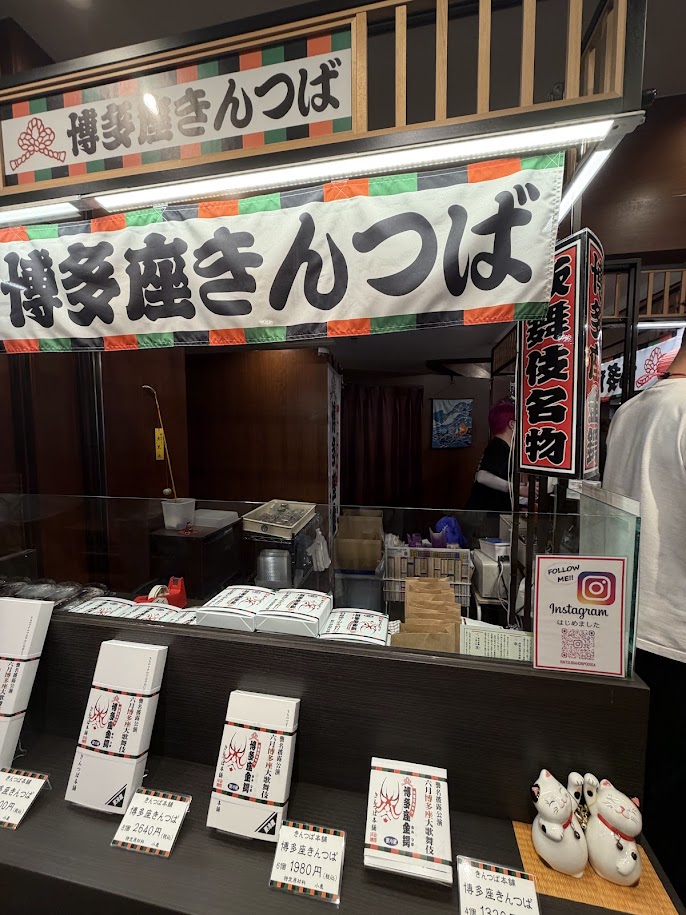
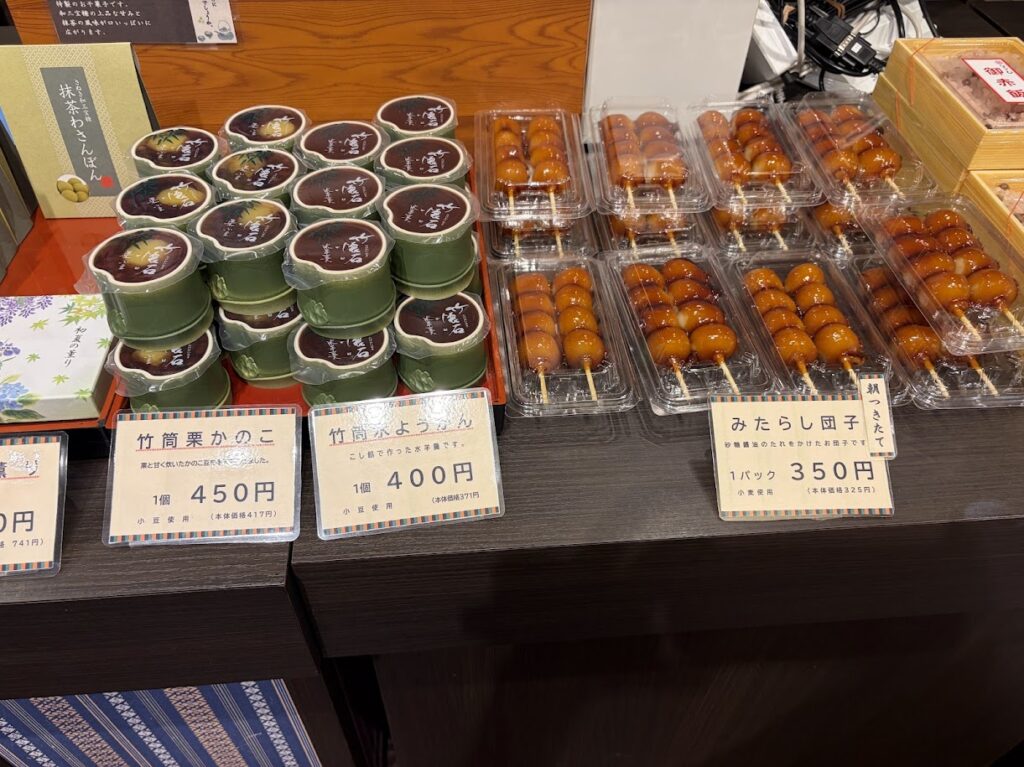
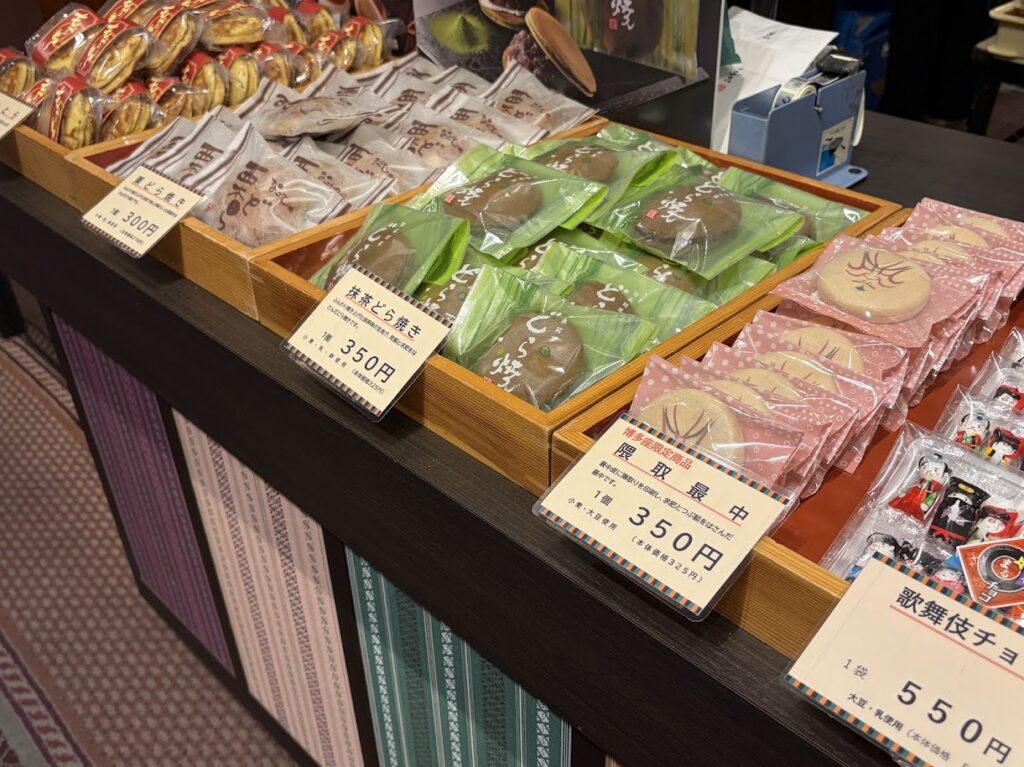
そこから1階客席のフロアに行くと、弁当やお菓子、グッズ (marchandise) などが売っていて、お祭りのような雰囲気を楽しめます。
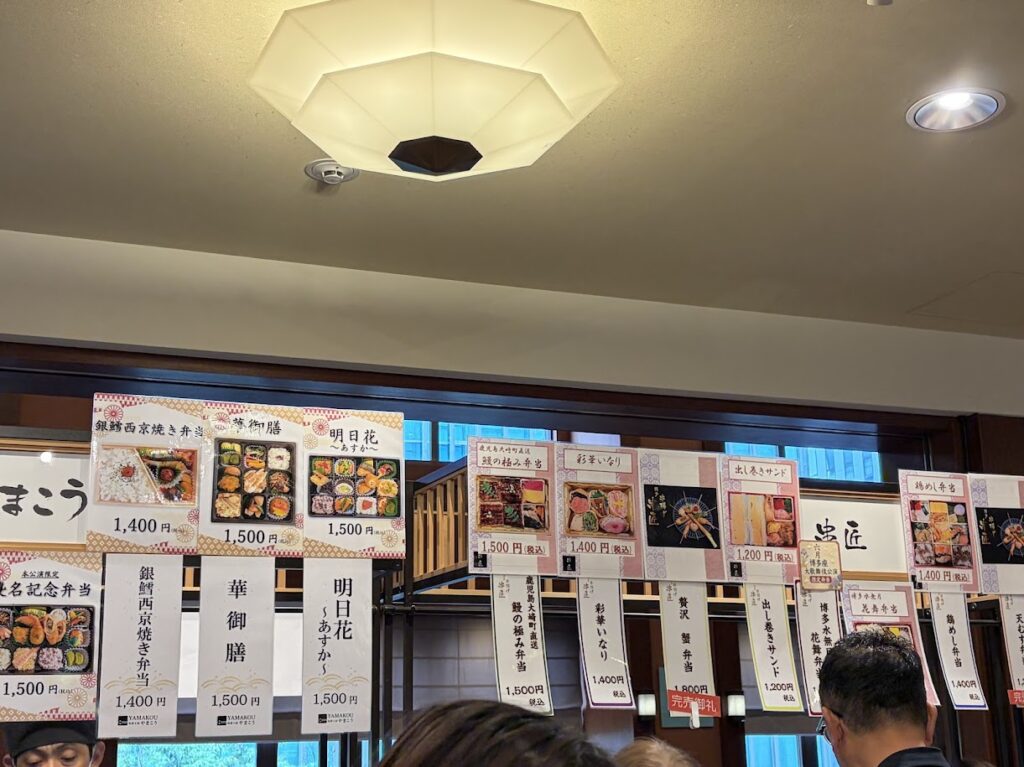
客席で弁当を食べることができますが、休憩時間は短いので、開演前に弁当と飲み物を買っておくといいです。開演前でも、人気の弁当はすぐに売り切れます。早い時間でしたが、カニ弁当と串カツ弁当がすでに売り切れていました。
From there, when you go to the 1st-floor audience seating floor, bento boxes, sweets, and goods are sold, and you can enjoy a festival-like atmosphere.
You can eat a bento box in the audience seats, but because the intermission is short, it is good to buy a bento box and a drink before the performance starts. Even before the performance starts, popular bento boxes sell out quickly. Although it was an early time, the crab bento and the kushikatsu (skewered cutlet) bento were already sold out.
※上演中の飲食は禁止されています。
※Eating and drinking during the performance are prohibited.
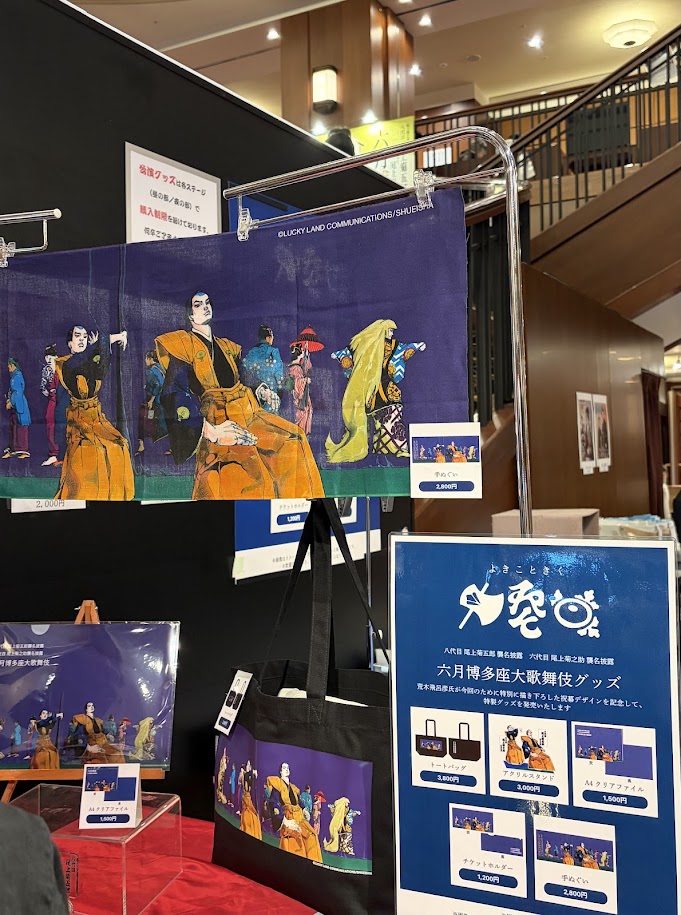
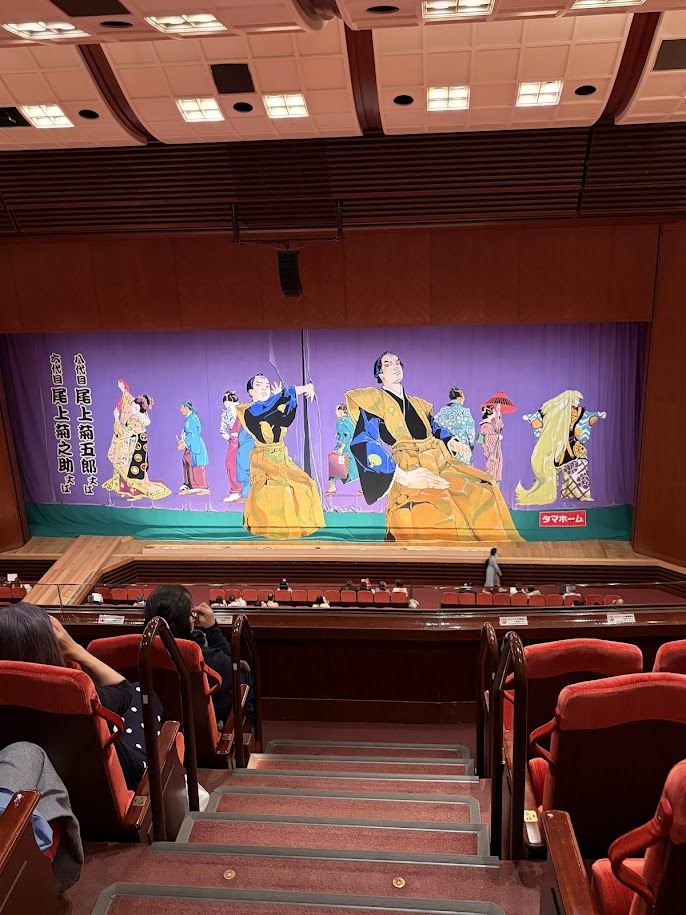
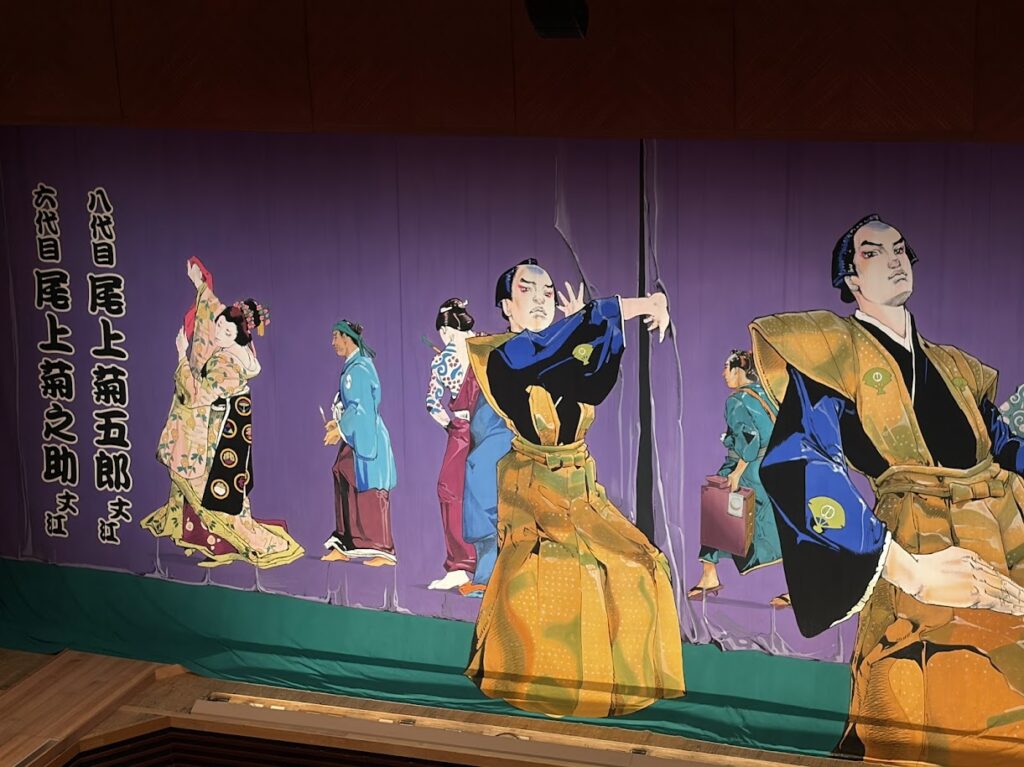
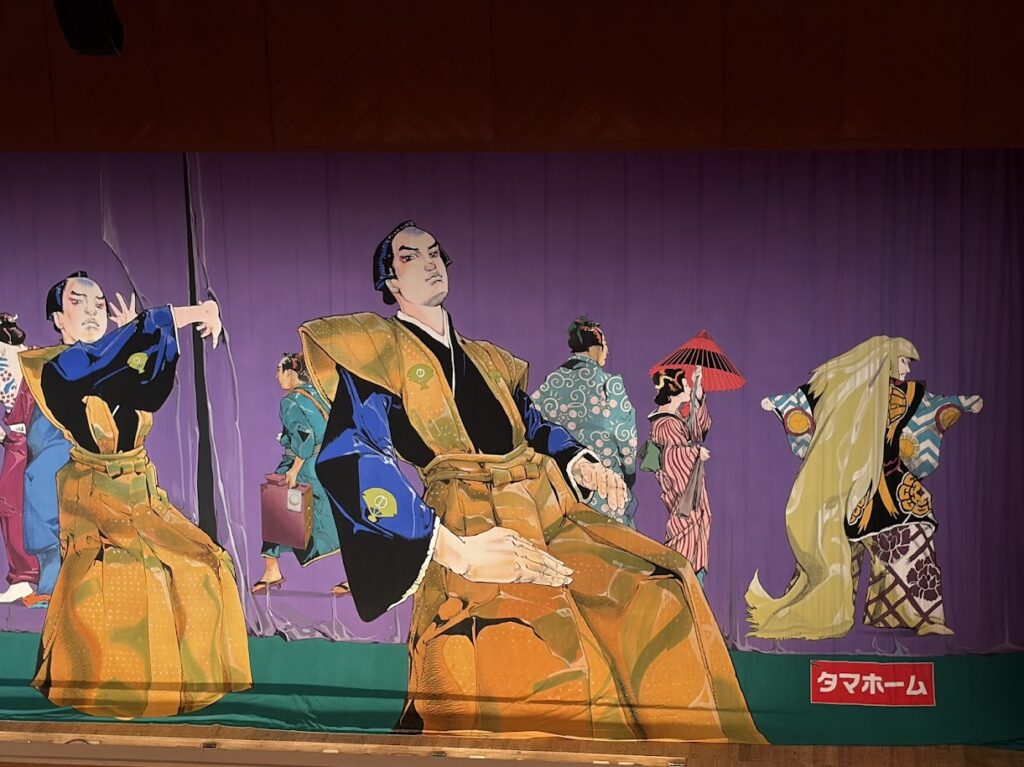
下の写真は博多座の襲名公演 (name successing performance) をお祝いするために作られた幕 (カーテン) です。「JOJOの奇妙な冒険」で有名な荒木飛呂彦先生によるデザインです。色やポーズがとても歌舞伎に合っていますね。かっこよくて迫力のある幕です。
荒木先生は「歌舞伎の伝統を受け継ぎつつも、新しい歌舞伎の未来のますますの繁栄を願って、祝幕を描かせていただきました」とコメントしています。
The photo below is a maku (curtain) created to celebrate the name successing performance at Hakata-za. It was designed by Hirohiko Araki-sensei, who is famous for “JoJo’s Bizarre Adventure.” The colors and poses match Kabuki very well, don’t they? It is a cool and powerful curtain. Araki-sensei comments, “While inheriting the tradition of Kabuki, I drew this celebratory curtain wishing for the further future prosperity of new Kabuki.”
歌舞伎のプログラム
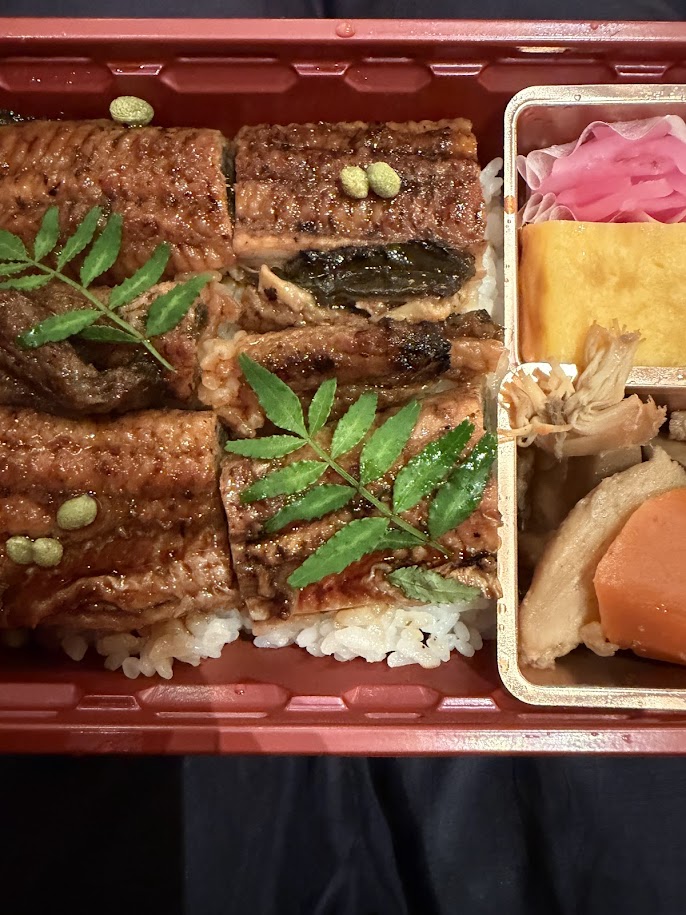
昼の公演は、演目 (プログラム) が3つありました。お祝いの踊り(35分)、親の仇 (enemy)を討とうとする子の話(30分)、鬼の話(1時間20分)です。どれも、見ごたえがありました。プログラムの間に30分、25分の休憩があり、その時間に弁当を食べました。うなぎ弁当がとてもおいしかったです。
The matinee performance had three enmoku (programs). A celebratory dance (35 minutes), a story of a child trying to avenge their parent (30 minutes), and a story of a demon (1 hour and 20 minutes). All of them were worth seeing. There were 30-minute and 25-minute intermissions between the programs, and I had my bento box during that time. The eel bento was very delicious.
最初の動画は昼の部のダイジェスト。二番目の動画は夜の部です。夜の部の「連獅子 (親子のライオンの話)」は、とても人気のある演目です。
The first video is a digest of the matinee performance. The second video is the evening performance. “Renjishi (The story of the parent and child lions)” of the evening part is a very popular program.
歌舞伎の演目 (プログラム) は何種類かあります。踊りを中心としたもの、古典をもとにした話、荒事とよばれる豪快なもの、江戸時代の町人と遊女の話など。軽くあらすじをチェックして、好みの話を選ぶといいです。女形がきれいな演目という選び方でもいいし、映画「国宝」で見たものを選んでもいいですね。
歌舞伎は最初からストーリーがわかっていたほうが楽しめるので、見に行く前に少し調べておくといいです。
There are several types of Kabuki enmoku (programs). Things centered on dance, stories based on classics, powerful and grand things called aragoto, and stories of townspeople and courtesans in the Edo period. It is good to lightly check the synopsis and choose a story of your preference. A way of choosing based on a program where the onnagata (male actors playing female roles) are beautiful is also fine, and choosing something you saw in the movie “Kokuhō” is also good.
Since Kabuki can be enjoyed more if you know the story, it would be good to research a little before you go to see it.
また、派手なアクションが楽しめるスーパー歌舞伎、「NARUTO」や「刀剣乱舞」をはじめとするアニメやゲームが原作の新作歌舞伎、劇団 (theater company) 新感線による歌舞伎NEXTもわかりやすくておすすめです。
下の動画は劇団新感線「朧の森に棲む鬼」のダイジェストです。シェイクスピアの「マクベス」をアレンジした作品です。役者の宙づり (flying in the air) などもあり、迫力のあるおもしろい作品でした。
Also, Super Kabuki where you can enjoy flashy action, New Kabuki whose original works are anime or games such as “NARUTO” or “Touken Ranbu,” and Kabuki NEXT by Gekidan Shinkansen are also very popular and recommended.
The video below is a digest of Gekidan Shinkansen’s “Oboro no Mori ni Sumu Oni” (Demons Dwelling in the Oboro Forest). It is a work that arranged Shakespeare’s “Macbeth.” There was also chūzuri (flying in the air) by the actors, and it was a very powerful and interesting work.
今日もここまで読んでくれてありがとうございました。この記事を読んで歌舞伎に興味が出てきたと思ってもらえたら、うれしく思います。
Thank you for reading this far today as well. I would be happy if you think that you became interested in Kabuki after reading this article.
前に書いた「国宝」の記事です。
令和八年六月九日