


これやこの 行くも帰るも わかれては 知るも知らぬも 逢坂の関
蝉丸 (???-???)
百人一首 十番 雑
「後撰集」
読み方
これやこの いくもかえるも わかれては しるもしらぬも あふさかのせき
Kore ya kono / iku mo kaeru mo / wakarete wa / shiru mo shiranu mo / oosaka no seki
「あふさかのせき」は「おおさかのせき」と読みます。
言葉の意味
これやこの:今の言葉だと「ああ、これがあの (有名な) ~」という感じになります。
In modern Japanese, this feels like, “Ah, so this is that (famous)…”
行くも帰るも:行く人も帰る人も
People going and people returning as well
知るも知らぬも:知っている人も知らない人も
People you know and people you don’t as well
わかれては~逢坂の関:別れては会う、という逢坂の関ですね。
逢坂の関とは、京都の東にあった関所(checkpoint)のことです。「逢坂の関」という言葉に、地名と「逢う(会う)」という二つの意味があります。
The checkpoint where people part and meet again. “Ausaka no seki” refers to a checkpoint that once existed east of Kyoto. The name is a play on words, combining the place name with the verb au (to meet).
現代語訳
ああ、これが、行く人も帰る人も、知っている人も知らない人も、別れては会うという逢坂の関ですね。
Ah, so this is it—the famous Ausakano seki, Meeting-Hill Checkpoint, where those leaving and those returning, friends and strangers alike, part ways only to meet again.
よく名前は聞くけれども、実際に行ったことはない有名な場所に行った時、「ああ、これがあの有名な~ですか。」と言うことがあります。この歌はそういう感情を詠んだ歌です。
「これやこの」「行くも帰るも」「知るも知らぬも」と似た意味の言葉を繰り返すことで、とてもリズムのいい歌になっています。
You might say, “Ah, so this is the famous…?” when visiting a well-known place you’ve heard of but never seen. This poem captures that exact feeling. By repeating similar phrases like “Kore ya kono,” “Iku mo kaeru mo,” and “Shiru mo shiranu mo,” the poem creates a beautiful, rhythmic flow.
この歌の作者、蝉丸はいつ生まれていつ亡くなったのか、どのような人だったのか、よくわかっていません。目の見えない琵琶法師(lute priest)だったと言われています。音に対する感覚がすぐれていたと思われます。あの有名な場所に来たという気持ちがシンプルに伝わると同時に、言葉のリズムの中に行き交う人のにぎわいが感じられます。遠くに行く人、遠くから帰ってくる人、知っている人、知らない人の決意と物語が感じられる気がします。
We don’t know much about the author, Semimaru—neither his birth nor death date. It is said he was a blind biwa hoshi (lute priest). He likely had a keen sense of sound and rhythm. The poem simply conveys the excitement of arriving at a famous spot, while its rhythm echoes the bustle of the people passing through. You can almost feel the stories and determination of those traveling far away or returning home, whether they are acquaintances or strangers.
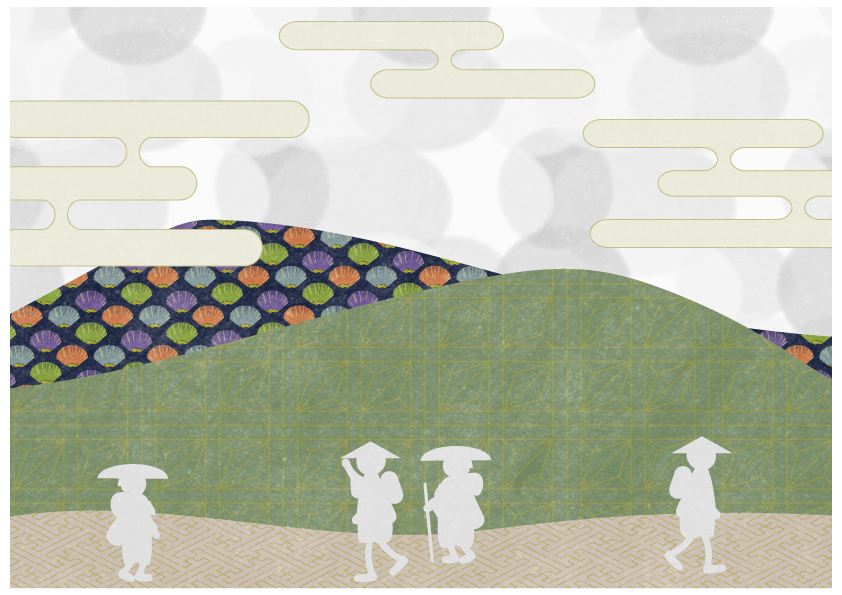
このページのサムネイル画像は、SHIEDAさんという方のイラストです。素材サイトのイラストACからダウンロードしました。昔の人が逢坂の関で行き交う様子を描いています。
The thumbnail image for this page is an illustration by SHIEDA. I downloaded it from the stock site Illustration AC. This painting depicts people passing through the Ōsaka Pass in days gone by.
言葉
V1-ては、V2-ます 、V1-ては、V2-る
この表現は、初めて見る人も多いと思います。N1の文型です。
ふたつの動作がセットになって、何度も繰り返されている様子を表します。
It describes two actions that happen as a set, repeated over and over.
あの子は一日中食べては寝、食べては寝ている。
That child spends all day eating and sleeping, eating and sleeping.
返信が気になって、スマホを手にとってはおき、手にとってはおいている。
Anxious for a reply, I keep picking up my phone and putting it back down.
雨が降ってはやみ、降ってはやみで、なかなか出かけられない。
It keeps raining on and off, so I can’t really go out.
あの子に声をかけようと、行っては戻りを繰り返すうちに、暗くなってきた。
I kept pacing back and forth, trying to work up the courage to call out to them, until it finally got dark.
寄せては返す波の音を海岸に座ってただ聞いていた。
I sat on the beach and just listened to the sound of the waves washing in and out.
人生は、行っては帰りの繰り返し。
Life is a constant cycle of coming and going.
今日もありがとうございました。
今週はまさに「降ってはやみ」の天気です。春はいい季節ですが、天気が安定しません。体調をくずしやすくなるので、気をつけてくださいね。
This week has been a cycle of rain starting and stopping. Spring is a lovely season, but the weather has been so unpredictable. Please take care of yourselves, as it’s easy to feel under the weather during these changes.
令和八年四月十六日