






このページの文章は、N3からN2レベルの文型、N1、JLPT対象外の単語を使って書いています。
The text on this page uses sentence patterns at the N3 to N2 levels, and vocabulary that is N1 and not included in the JLPT.
東洋の哲人たち 史上最強の哲学入門
今年は京都に行こうと思っています。
日本国内に住んでいますが、京都に行くのは本当にひさしぶりです。せっかく行くなら、より深く楽しみたい。楽しめるだけ楽しみたい。そのために仏教(Buddhism) をもっと知っておきたいと思い、この本を手に取りました。
そんな感じで読み始めたのですが、思っていたよりずっとよかったので、書評(book review)を書くことにしました。何かに心を動かされると、誰かに伝えたくなるものです。
この作品の著者、飲茶氏はタイトルに「史上最強の」という言葉を背負わせます。タイトルからすでに、最強の哲学(philosophy)への意気込み(enthusiasm)、自負(pride)を感じます。
この作品は、まず東洋の哲学について、西洋の哲学とどのように違うのかというところからスタートします。それから古代インドの哲学、中国の思想・哲学、日本に渡ってきた仏教へと論を進めます。いずれも、日本の文化を理解する上で欠かせないものです。この作品の論にそって、学習者のみなさんに東洋哲学について紹介しようと思います。
The Philosophers of the East: The Strongest Introduction to Philosophy in History
I am thinking of going to Kyoto this year. I live in Japan, but it has been a really long time since I last went to Kyoto. If I’m going all the way there, I want to enjoy it more deeply. I want to enjoy it as much as I can. For that purpose, I wanted to know more about Buddhism, so I picked up this book.
That was the feeling with which I started reading, but it was much better than I expected, so I decided to write a book review. When you are moved by something, you feel like telling someone about it.
The author, Yamucha, imbues the title with the phrase “The Strongest in History.” From the title, I already feel his enthusiasm and pride toward this “strongest philosophy.”This work starts with how Eastern philosophy differs from Western philosophy. Then, the argument proceeds to Ancient Indian philosophy, Chinese thought and philosophy, and Buddhism that crossed over to Japan. All of these are indispensable for understanding Japanese culture. Following the logic of this work, I would like to introduce Eastern philosophy to all you learners.
古代インド
我は真理を知り得たり。
西洋哲学が「無知の知」から始まるのに対し、「東洋哲学では最初から『真理に到達した』という人間が現れる」と著者は言います。
西洋哲学では理論を積み重ねて「真理(truth)」を目指しますが、「東洋哲学の『真理』は体験しないと知ることができない」と繰り返します。
I have attained the truth.
While Western philosophy begins with “the awareness of one’s own ignorance,” the author says that “in Eastern philosophy, people who have ‘reached the truth’ appear from the very beginning.” He repeats that while Western philosophy builds up theories to aim for the “truth,” the “‘truth’ of Eastern philosophy cannot be known without experiencing it.”
バラモン教
東洋哲学の起源は古代インドのバラモン教にあります。バラモン教は、自然神を崇拝する多神教です。この宗教から輪廻転生、業、解脱という概念が生まれます。これらの概念は、東洋人のマインドに深くセットされています。
人は前の人生の業(カルマ)で苦しみますが、生まれ変わりを繰り返し解脱をめざします。解脱について、著者は以下のように述べます。
解脱とは、悟りを得て生まれ変わりのループから抜けることである。
仏教では、「悟る(真理を理解する)と仏になる」と考えられています。
Brahmanism
The origin of Eastern philosophy lies in the Brahmanism of ancient India. Brahmanism is a polytheistic religion that worships nature gods. From this religion, the concepts of reincarnation (Rinnetensei), karma (Go), and liberation (Gedatsu) were born. These concepts are deeply set into the minds of Eastern people. People suffer due to the karma of their previous lives, but they repeat rebirth and aim for liberation. Regarding liberation, the author states the following:
Liberation is to gain enlightenment and escape from the loop of rebirth.
In Buddhism, it is believed that “when you attain enlightenment (understand the truth), you become a Buddha.”
ヤージュニャヴァルキヤ BC650~BC550ごろ
紀元前7世紀ごろ、バラモン教からウパニシャッドという哲学が生まれます。
アートマン(私)とブラフマン(世界の根源)は同じものである。
この思想がウパニシャッド哲学の基本です。
アートマン(私)とブラフマン(世界の根源)が同じであることを知った人間は、全ての苦悩から解放され「究極の真理」に到達する。
これがヤージュニャヴァルキヤの主張であり、東洋哲学で「悟り」と呼ばれるものであると著者は述べます。
「アートマン(私)とは何か」
この問いにヤージュニャヴァルキヤは答えます。
アートマン(私)とは認識するものである。
認識するものを認識することはできない。
そして、認識できないのであるから「私については『~ではない、~ではない』としか言えない」という言葉を残します。「私はバラモン(肩書)ではない」「私は足ではない」「私は脳ではない」というように。
アートマン(私)については、「~にあらず、~にあらず」としか言えない。
それは捉えることができない。捉えようがないからである。
それは破壊することができない。破壊しようがないからである。
それは執着することができない。執着しようがないからである。
…
不死とはこういうことである。
私を認識することはできない。認識できないものは破壊できない。認識できないものは執着できない。害することができない。不死とはこういうことである。
Yajnavalkya (Around 650 BC – 550 BC)
Around the 7th century BC, a philosophy called the Upanishads was born from Brahmanism.
Atman (the self) and Brahman (the root of the world) are the same thing.
This idea is the basis of Upanishadic philosophy.
A person who knows that Atman (the self) and Brahman (the root of the world) are the same is released from all suffering and reaches the “ultimate truth.”
The author states that this is Yajnavalkya’s claim and is what is called “enlightenment” in Eastern philosophy.
“What is Atman (the self)?” Yajnavalkya answers this question.
Atman (the self) is that which perceives. That which perceives cannot be perceived.
And since it cannot be perceived, he leaves the words: “Regarding myself, I can only say ‘it is not this, it is not that’.” Like, “I am not a Brahman (title),” “I am not a foot,” “I am not a brain.”
Regarding Atman (the self), one can only say “Neti, Neti” (Not this, not that). It cannot be grasped, for there is no way to grasp it. It cannot be destroyed, for there is no way to destroy it. It cannot be attached to. Because there is no way to attach to it. … This is what immortality means.
You cannot perceive “me.” What cannot be perceived cannot be destroyed. What cannot be perceived cannot be an object of attachment. It cannot be harmed. This is what immortality means.
シャカ BC400ごろ
ヤージュニャヴァルキヤ以降、インドではウパニシャッド哲学が大流行します。シャカもまた、その流行に飛び込んだ一人であると著者は言います。
「老い、病気、死の苦しみから解放されたい」
誰しも持つ願い。しかし、有名な僧のもとで学んでも、激しい苦行をしても、よくわからない。
シャカは気づきます。
「苦行には意味がない」
それから、シャカは菩提樹の下にただ座り続けます。そしてたどり着きます。
アートマン(私)は存在しない。
私と宇宙の根源が同じであるのならば、私というものは存在しない。私が存在しないのなら、私の苦しみも存在しない。
Shaka (Around 400 BC)
After Yajnavalkya, Upanishadic philosophy became a huge trend in India. The author says Shaka was also one of those who jumped into that trend.
“I want to be released from the suffering of aging, illness, and death.” A wish that everyone has. However, even if he studied under famous monks or performed intense asceticism (hard training), he didn’t quite understand. Shaka realizes: “There is no meaning in asceticism.” After that, Buddha just continues to sit under the Bodhi tree. And he arrives.
Atman (the self) does not exist.
If “I” and the root of the universe are the same, then the thing called “I” does not exist. If “I” do not exist, then “my” suffering does not exist either.
龍樹 150~250ごろ
シャカは自分が到達した真理を書いて残そうとはしませんでした。言葉で、思考で、論理で、そこにたどり着くことはできないからです。分別(人間の言葉)で悟ることはできない。「悟り」は体験でしかわからない。
真理とは、無分別智でしか理解することができないものである。
無分別智とは、思考を使わないで理解することです。
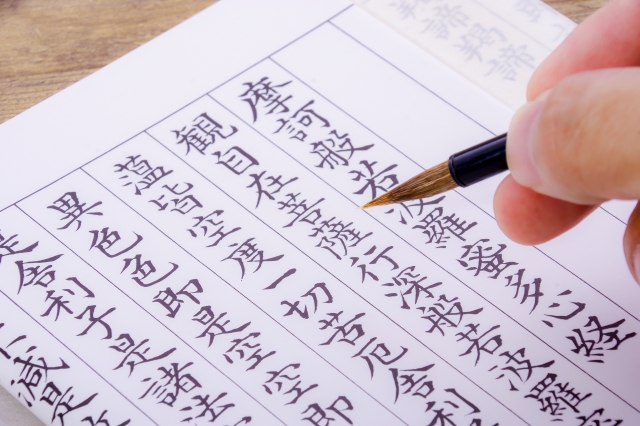
それでも、後の時代の僧、龍樹はシャカの哲学を発展させ、600巻もの経典を残します(複数人で書いたという説もあります)。龍樹の残した経典をまとめたもの、これが最も有名なお経、般若心経です。般若心経は誰が書いたものかわかっていませんが、龍樹の経典の核心であると著者は言います。
色即是空
般若心経で最もよく知られている言葉です。色とは「目で見たり、触れたりできるもの」であり、「空」とは「実体が無い」という意味です。
この世の全てのものは空なのだ。
生まれることもなければ、死ぬこともない。
汚れることもなければ、きれいになることもない。
…
眼も、耳も、鼻も、舌も、体も意識も無い。
意識が対象とするものも無い。
…
その全てが無いのだ。
わからないということも無い。わからないということがなくなるということも無い。
この世の全てのものは、実体がない。
「長いもの」と「短いもの」がないのと同じように、「きたないもの」と「きれいなもの」、「生」と「死」もない。全ては人間の思考が生み出したものだからです。
何かを意識している私、私が意識しているもの、全てを否定します。さらに、
「人生は苦である」という真理も無い。
「苦の原因は煩悩である」という真理も無い。
「煩悩を無くせば苦が消滅する」という真理も無い。
「煩悩を無くす道がある」という真理も無い。
と、シャカの教えも否定します。意識している「私」、「私」が意識しているもの全て、シャカの言う真理、「無い」「無い」「無い」、「そんなものは無い」と全否定します。そして、人は真言(呪文)を知るべきだと述べます。
それはすべての苦しみを取り除き、
真実であり、偽りなきものである。
羯諦羯諦 波羅羯諦 波羅僧羯諦 菩提薩婆訶
私がまとめるとおもしろくなくなるのが悔しいところですが、悔しいという感覚も無いと思うことにします。わかりやすいだけではなく、リズムもすばらしく、インド哲学の壮大さがこれでもかというくらいに伝わってきました。
Nagarjuna (Ryuju) (Around 150 – 250 AD)
Shaka did not try to leave the truth he reached in writing. This is because you cannot reach there through words, thoughts, or logic. You cannot attain enlightenment through “discrimination” (human words). “Enlightenment” can only be understood through experience.
Truth is something that can only be understood through “non-discriminative wisdom” (a way of understanding that does not use words).
Nevertheless, a monk of a later era, Nagarjuna, developed Shaka’s philosophy and left 600 volumes of scriptures (there is also a theory that multiple people wrote them). The summary of scriptures left by Nagarjuna is the most famous sutra, the Heart Sutra (Hannya Shingyo). It is not known who wrote the Heart Sutra, but the author says it is the core of Nagarjuna’s scriptures.
Form is exactly emptiness (Shiki-soku-ze-ku).
This is the most famous phrase in the Heart Sutra. “Form” refers to “things we can see or touch,” while “Emptiness” means “having no fixed substance.”
All things in this world are empty. There is no birth, and there is no death. There is no becoming dirty, and there is no becoming clean. … There are no eyes, no ears, no nose, no tongue, no body, and no consciousness. There are no objects of consciousness. … All of it does not exist. There is no such thing as “not knowing.” There is no such thing as “the end of not knowing.”
All things in this world have no substance. Just as there are no “long things” or “short things,” there are no “dirty things,” “clean things,” “life,” or “death.” This is because everything is something created by human thought. It denies the “me” who is conscious of something, and the things “I” am conscious of—it denies everything. Furthermore:
There is no truth that “life is suffering.” There is no truth that “the cause of suffering is worldly desires (shuucyaku).” There is no truth that “if you eliminate desires, suffering will disappear.” There is no truth that “there is a path to eliminate desires.”
In this way, he also denies Shaka’s teachings. The “me” who is conscious, everything “I” am conscious of, the truth Shaka speaks of—”None,” “None,” “None,” he completely denies them, saying “There is no such thing.” And then, he states that people should know the Mantra (spell).
It removes all suffering. It is the truth, and it is not false.
Gyaatee Gyaatee Haragyaatee Harasoogyaatee Bojisowaka.
It is a pity that it becomes less interesting when I summarize it, but I will try to think that even the feeling of being “pity” (frustrated) does not exist. It was not only easy to understand, but also the rhythm was wonderful, and the grandiosity of Indgyoian philosophy was conveyed more than enough.
古代中国の政治思想と道
諸子百家 BC552~233
争いの時代の思想家たち 孔子ほか
この時代の思想については学校教育で多少学習しているし、道徳教育っぽくもあるので、特に強い興味は持っていませんでした。「孔子でしょ。知ってる」と。しかし、読み進めると意外とおもしろい。考えてみれば、生きるか死ぬかの戦国時代の王たちを相手にしていた思想家たちです。眠いことを言っているわけがないのです。この時代の思想は、統治のためのもの。どうすれば国が栄えるかという切実な問いです。この時代の倫理と法治の概念が作られていくプロセスがおもしろい。やっぱり中国大陸の歴史はダイナミックでいい。
ただ、「仏さまに祈ればいいことが起こる」。中国の価値観の中で、仏教は現生利益的な宗教だと解釈されてしまったと著者は言います。
The Hundred Schools of Thought (552 BC – 233 BC)
Thinkers in an Age of Conflict: Confucius and others
I had learned a little about the thought of this era in school education, and since it felt like moral education, I didn’t have a particularly strong interest. I thought, “It’s Confucius, right? I know.” However, as I read on, it was unexpectedly interesting. If you think about it, these are thinkers who were dealing with the kings of the Warring States period, where it was a matter of life or death. There’s no way they were saying boring (“sleepy”) things. The thought of this era was for the sake of governance. It is a desperate question of how to make a country prosper. The process of how the concepts of ethics and the rule of law were created in this era is interesting. As expected, the history of the Chinese continent is dynamic and good. However, “If you pray to the Buddha, good things will happen.” The author says that within Chinese values, Buddhism ended up being interpreted as a religion for “this-worldly benefits.”
老子 BC300?~400?
「道(タオ)」で知られる老子がいつ生きていたのかは、わかっていません。先に述べた思想家たちの活動がほぼ就職活動であったのに対し、老子はそんな世間から距離をおきます。老子の哲学を学ぶ人たちを道家と言います。
「道(タオ)」 とは何か。
天地よりも先に存在した混沌としたものが「道(タオ)」である。
全てのものは「道(タオ)」から生まれた。
学を為せば日々に益し、道を為せば日々に損ず。
これを損じてまた損じ、もって無為に至る。
学問をすれば知識を得る。道(タオ)に進めば知識を捨てることになる。さらに知識を捨て「無為(悟り)」に到達する。
無為(悟り)に到達するとどうなるのか。
無為にして為さざるは無し。
無為自然になる。
「自分が何もしなくても、そうなる」
起こるべきことが自然に起こるようになる。
Laozi (300 BC? – 400 BC?)
It is not known when Laozi, known for “Tao,” lived. In contrast to the activities of the thinkers mentioned earlier, who were almost like “job hunting,” Laozi distanced himself from such worldly matters. People who learn Laozi’s philosophy are called Taoists (Doka).
What is “Tao”?
The chaotic thing that existed before heaven and earth is “Tao.” All things were born from “Tao.”
In the pursuit of learning, every day, something is acquired. In the pursuit of the Tao, every day, something is dropped until one reaches non-action (Wu Wei).
If you learn, you gain knowledge. If you proceed toward Tao, you will end up discarding knowledge. Furthermore, you discard knowledge and reach “Wu Wei, non-action” (enlightenment).
What happens when you reach Wu Wei, non-action (enlightenment)?
Things that should happen begin to happen even if you do nothing.
You become one with “Wu Wei Jizen” (Natural Non-action). “Even if I do nothing, things will become as they should.” Things that should happen begin to happen naturally.
荘子 BC369~286ごろ
老子は自分が知ったことについて積極的に書こうとはしませんでした。それは伝えられるものではないから。体験することでしか「無為」に到達することはできないから。それでも、荘子は書きます。伝えようとします。
天地と私は共に生じ、万物と私はひとつである。すでにひとつであるのだから「万物と私はひとつである」という言葉は本来不要である。しかし「ひとつである」と言ってしまった以上、「言葉」が必要となる。こうして、「一」と「それを表す言葉」でふたつになってしまった。すると、さらに…。…
これは仏教と同じことを言っています。「私と世界の根源はひとつである」ということです。そして、言葉が生まれて実体のないものをあると信じるようになり、「私と万物が同じである」ということがわからなくなってしまった。
言葉を捨て、思考を捨てつくすことにより、道(タオ)に到達する。
「道(タオ)とは、無分別智の境地である」と著者は解説します。
荘子は物語を通して道(タオ)を伝えようとします。蝶の夢の話が有名ですね。
ある日、荘子は夢の中で蝶になって飛んでいた。自分が荘子であることを忘れていた。目を覚ましたら、自分は蝶ではなく荘子であった。
荘子が夢の中で蝶となったのであろうか。蝶が夢の中で荘子となったのであろうか。
荘子と蝶には確かに区別がある。これを「物化」という。
これは「荘子」である、これは「蝶」である、という意識があるのだから、道からすれば同じことなのでしょう。
中国に仏教が伝わってきたとき、道家の学者たちは、仏教哲学と老子の哲学がとてもよく似ていることに気づきます。仏教哲学、禅は道家の学者たちにより研究されるようになります。
Zhuangzi (Around 369 BC – 286 BC)
Laozi did not actively try to write about what he knew. This is because it is not something that can be communicated. Because “non-action” can only be reached through experience. Nevertheless, Zhuangzi writes. He tries to communicate.
Heaven and earth were born together with me, and all things and I are one. Since we are already one, the words “all things and I are one” are originally unnecessary. However, once I have said “we are one,” “words” become necessary. Thus, with “One” and “the word that represents it,” they have become two. Then, further…
This is saying the same thing as Buddhism. It means “I and the root of the world are one.” And because words were born and we came to believe that things without substance exist, we became unable to understand that “I and all things are the same.” By discarding words and discarding thoughts to the limit, one reaches Tao.
The author explains, “Tao is the realm of non-discriminative wisdom.”
Zhuangzi tries to communicate Tao through stories. The story of the butterfly dream is famous, isn’t it?
One day, Zhuangzi was flying as a butterfly in a dream. He had forgotten that he was Zhuangzi. When he woke up, he was not a butterfly but Zhuangzi. Did Zhuangzi become a butterfly in a dream? Did a butterfly become Zhuangzi in a dream? There is certainly a distinction between Zhuangzi and the butterfly.
This is called ”Buttsuka (Something that does not actually exist becomes something that people believe exists).”
Since there is an awareness that “this is Zhuangzi” and “this is a butterfly,” from the perspective of the Tao, it must be the same thing.
When Buddhism was transmitted to China, Taoist scholars noticed that Buddhist philosophy and Laozi’s philosophy were very similar. Buddhist philosophy, Zen, came to be researched by Taoist scholars.
日本の仏教
538年、仏教は日本に来ます。
仏教が日本に来てまず始まったのが争いです。仏教派と反仏教派の激しい争い。反仏教派は破れ、仏教が国の宗教となり、国により多くの寺が作られます。仏教は日本の文化に大きな影響を与えることになります。日本の古典文学には「生きることは苦しい。救われたい」という願いと、「(この世には)ずっと変わらないものはない」という仏教由来の無常観が強く反映されています。
ところが、当時の仏教は、貴族政治の世の中で次第に現世利益的なものになっていきます。
しかし、そこから発展し、人々に語りかけてきた仏教があります。
In 538, Buddhism came to Japan.
What began when Buddhism came to Japan was a conflict. A fierce battle between pro-Buddhist and anti-Buddhist factions. The anti-Buddhist faction was defeated, Buddhism became the national religion, and many temples were built by the state. Buddhism would come to have a major influence on Japanese culture. In Japanese classical literature, the wish that “living is painful; I want to be saved” and the Buddhist concept of impermanence (Mujokan)—the idea that “nothing (in this world) remains the same forever”—are strongly reflected.
However, Buddhism at that time gradually became focused on worldly benefits in the society of the aristocracy.
But from there, a form of Buddhism developed and began to speak to the people.
親鸞 1173-1262 浄土真宗
幼少期から仏教の修行をしていた親鸞は悩むようになったと著者は言います。
「今ここでまさに苦しんでいる目の前の人」に対して、果たしてその哲学は有効なのだろうか?
ある時、親鸞は法然という僧を訪れ、「念仏」というものを知ります。
「南無阿弥陀仏」と唱えるという方法です。修行をしなくてもいい、瞑想もしなくていい。ただ「南無阿弥陀仏(阿弥陀様、助けてください)」と唱えるだけでいいという思想は、仏教の革命でした。
Shinran (1173–1262), Jodo Shinshu
The author says that Shinran, who had practiced Buddhist training since childhood, began to worry.
Is that philosophy truly effective for the “person right in front of me who is suffering right here and now”?
One day, Shinran visited a monk named Honen and learned about “Nenbutsu.” It is the method of chanting “Namu Amida Butsu.” The idea that you don’t have to practice or meditate—that simply chanting “Namu Amida Butsu” (Amida Buddha, please save me) is enough—was a revolution in Buddhism.
親鸞はさらに発展させます。
善人なをもて往生をとぐ、いはんや悪人をや。
「善人ですら仏のもとに行けるのだから、悪人が仏のもとに行けるのは当然である」という思想です。
それはなぜか。
みずから善に励み、自分の作った善により極楽往生しようとする人は、おのれの善を誇って、阿弥陀様の他力の心に欠けているからだ。
これは「他力」という思想です。
「自分の力」で悟ろうとするのではなく、「仏様」にたよりなさいという考え方です。老子の「無為」と同じ思想です。無責任な考えのように見えますが、「私が考えて」「私がやる」ことなど、浅いのです。ただ「阿弥陀様、助けてください」と求めなさい。「南無阿弥陀仏」と唱えなさいということを伝えています。
一般常識に反していて誤解を招くことの多い言葉ですが、広く大衆を救う思想となります。
古代インドで生まれた仏教は、道教の考えを取り入れ日本にわたり、大衆に届きます。
Shinran developed this further.
If even a good person can attain rebirth in the Pure Land, how much more so an evil person.
It is the thought that “Since even a good person can go to the place of Buddha, it is only natural that an evil person can go to there.” Why is that?
Because a person who strives for goodness on their own and tries to attain rebirth through their own good deeds takes pride in their own goodness and lacks a heart reliant on the “Other-power” (Tariki) of Amida Buddha.
This is the core of “Tariki” (Other-power). It is the idea that we should not try to reach enlightenment through “our own power,” but instead rely on the “Buddha.” It is the same philosophy as Laozi’s “Wu-wei” (non-action). It may seem like an irresponsible idea, but things like “I think” and “I do” are shallow. It conveys: just ask, “Amida Buddha, please save me.” Just chant “Namu Amida Butsu.” Although these are words that often go against common sense and invite misunderstanding, they became a philosophy that saved the masses. Buddhism, born in ancient India, incorporated Taoist ideas, crossed over to Japan, and reached the common people.
禅
禅はインドの僧が中国に伝え、日本で発展しました。「悟る」ためにどうしたらいいか。多くの僧が試行錯誤を重ねて来ました。日本に伝わった禅には、ふたつの宗派があります。禅は日本に来ると、かなり日本文化を感じさせるものになります。
Regarding Zen, an Indian monk brought it to China, and it developed in Japan. What should one do to “attain enlightenment”? Many monks repeated trial and error. Two sects of Zen reached Japan. When Zen came to Japan, it became something that strongly evokes Japanese culture.
栄西 臨済宗
弟子を驚かせて思考を止めさせて悟らせる、「問答」を通して悟らせるという方法を伝えました。
前者は「思考のブレーカーが落ちた、その一瞬の「奇跡」にかける」方法であると著者は言います。
後者は答えようのない問に対して徹底的に答えようとし続ける。「そんなものは意味がない」という思考を無視して答えようとし続ける。その先に「思考がはがれ落ちる瞬間がある」と言います。
「両手で拍手をするとパチパチと音がするけど、では片手でやるとどんな音がする?」
普通に考えるとそんなものはありません。でも、答えをさがします。
正直、これはできる気がしません。
しかし、この宗派からは茶道、中国風の文学、水墨画、庭園などの豊かな文化が生まれます。
Eisai, Rinzai School
He taught the method of surprising disciples to stop their thinking and lead them to enlightenment, or leading them to enlightenment through “Mondo” (Zen riddle). The author says the former is a method that “bets on that momentary ‘miracle’ when the circuit breaker of thought trips.” The latter is to keep trying thoroughly to answer questions that have no answer. To ignore the thought that “such a thing is meaningless” and keep trying to answer. He says that beyond that, “there is a moment when thought peels away.”
“When you clap with both hands, it makes a sound, but then what sound does it make with one hand?” Normally thinking, there is no such thing. But one searches for the answer.
Honestly, I don’t feel like I can do this. However, from this sect, rich cultures such as the tea ceremony, Chinese-style literature, ink wash painting, and gardens were born.
道元 曹洞宗
ただ座る。そうすると、いろいろな考えが頭に浮かんできます。それらについて深く考えることなく、ただ座り続ける。そうすることで、真理に気づきます。和の雰囲気を感じますが、シャカの教えに近い方法です。
ただ座っていると、いろいろ考えるのが止まらなくなります。止めようとして止まるものではないのですが、「思考が離れ、悟る瞬間がある」ようです。
(曹洞宗では禅は「方法」ではないとしています。)
この宗派の考え方は、西洋にも大きな影響を与えました。スティーブ・ジョブズに影響を与えたことで有名です。
Dogen, Soto School
A sect that teaches the method of attaining enlightenment through “Zazen” (seated meditation). Just sit. When you do, various thoughts float into your head. Without thinking deeply about them, just keep sitting. We notice the truth by doing so. It feels like a Japanese atmosphere, but it is a method close to Shakyamuni’s teachings. When you just sit, you can’t stop thinking about various things. It’s not something that stops just because you try to stop it. However, apparently, “there is a moment when thought detaches and one attains enlightenment.”
(In the Soto School, Zen is not considered a “method.”)
The thinking of this sect also had a great influence on the West. It is famous for having a major impact on Steve Jobs.
終わりに
この作品を読んでいて浮かんだ言葉があります。
「巨人の肩の上に立つ」
著者は「理論では伝えられない」と繰り返しますが、過去の偉大な人物が言っていたことを手がかりに仏教が発展してきたのがわかります。ため息が出るほど壮大でした。
著者は「~がこういうことを言っていた」と言うだけにとどまらず、その教えに対し「とは言うものの」「しかし、こんな疑問が湧いてこないだろうか」「そうは言っても痛いものは痛い」という我々に理解しやすい言い方で疑問をぶつけ、偉人たちの言葉を伝えます。その論の展開はカタルシスををおぼえるほどに鮮やかでした。仏教哲学ってすばらしい。
There is a phrase that came to mind while reading this work. “Standing on the shoulders of giants.” The author repeats that “it cannot be conveyed through theory,” but I can see how Buddhism has developed using the words of great figures from the past as clues. It was so grand it made me sigh.
The author doesn’t stop at just saying “so-and-so said this,” but conveys the words of the great figures by challenging the teachings with questions in a way that is easy for us to understand, such as “Having said that…”, “But wouldn’t a question like this arise?”, or “Even so, what’s painful is painful.” The development of his argument was so vivid that I felt a sense of catharsis. Buddhist philosophy is wonderful.
また、著者は最初に「本書を読んで東洋哲学を理解することは不可能である」と言います。作品の中で「東洋哲学を言葉で伝えることはできない」ということを繰り返し伝えます。
「言葉で伝えることはできない」
それでも誰かに伝えようとしてきた偉人たちがいる。この作品からも、言葉を尽くして伝えたいという強い姿勢、「最強の哲学」に対する意気込みを感じました。
Also, the author says at the beginning, “It is impossible to understand Eastern philosophy by reading this book.” Throughout the work, he repeatedly conveys that Eastern philosophy cannot be communicated through words.
“It cannot be conveyed through words.”
当然、この短いブログの記事で仏教について伝えることはできません。この作品の魅力を伝えることもできません。この作品の魅力は読まなければわかりません。この本は、仏教についてよくわからない人でも、わかりやすく、楽しく読むことができます。
私の生徒さんには、いつか太宰治や芥川龍之介の本を日本語で読みたいと言っている人が多くいます。そういう生徒さんといつか一緒に読みたいと思わせる作品でした。
また、生徒さんが日本に来てお寺を見たときに、少しだけこの記事の内容を思い出してくれるとうれしく思います。
ここまで読んでくれてありがとうございました。
Naturally, I cannot convey Buddhism in this short blog post. I cannot convey the charm of this work either. You won’t understand the charm of this work unless you read it. Even for people who don’t know much about Buddhism, it is easy to understand and enjoyable to read.
Many of my students say they want to read books by Osamu Dazai or Ryunosuke Akutagawa in Japanese someday. This was a work that made me want to read it together with such students one day.
Also, I would be happy if my students remembered the contents of this article even just a little when they come to Japan and see a temple.
令和八年四月二十三日