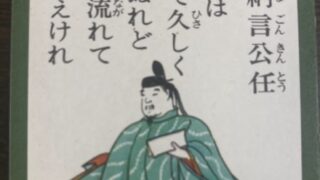










つくばねの 峰より落つる みなの川 恋ぞつもりて 淵となりぬる
陽成院 (869-949)
百人一首 十三番 恋
「後撰集」
かな
つくばねの みねよりおつる みなのがは こひぞつもりて ふちとなりぬる
「みなのがは」は「みなのがわ」、「こひぞ」は「こいぞ」と読みます。
言葉の意味
つくばねの:筑波山の of Mount Tsukuba
東京の北、現在の茨城県にある山です。男山、女山とよばれるふたつの峰(peak)を持つ山です。
It is a mountain located in the north of Tokyo, in what is currently Ibaraki Prefecture. It is a mountain that has two peaks called Otokoyama (Male Mountain) and Onnayama (Female Mountain).
峰より:峰から from the peak
落つる:落ちる to fall/falling
男女川:現在の茨城県つくば市にある川です。男山の川と女山の川が合流してできた川です。
It is a river located in what is currently Tsukuba City, Ibaraki Prefecture. It is a river formed by the confluence of the river from Otokoyama and the river from Onnayama.
恋ぞつもりて:恋がつもって love accumulates and…
淵となりぬる:淵(deep pool)になってしまいましたよ。
It has become a deep pool, you know.
現代語訳
筑波山の峰から落ちる男女川のように、あなたを想う気持ちもつもって深い淵のようになりましたよ。
Just like the Minanogawa River that falls from the peaks of Mount Tsukuba, my feelings of thinking of you have accumulated and become like a deep pool, you know.
「あなたを想う気持ちがどんどん深くなっています」というストレートな恋心を詠んだ歌です。この歌を送られた女性は、陽成院 (Retired Emperor Yozeiin) の妃 (Emperess)となります。片思いの歌や、忍ぶ恋 (隠さなければいけない恋) の歌が多い百人一首の中では、新鮮に感じる歌です。
This is a poem that expresses a straightforward romantic feeling: “My feelings of thinking of you are becoming deeper and deeper.” The woman to whom this poem was sent became the empress of Retired Emperor Yozeiin. In the Ogura Hyakunin Isshu, which has many poems about unrequited love or hidden love (love that must be concealed), this one feels fresh.
この歌の作者、陽成院は9歳で天皇になりましたが、17歳で退位させられています。問題行動が多かったとも、政権をめぐる争いに巻き込まれたとも言われています。長い歴史を通して、日本では天皇の地位が一番高いとされていますが、実際には貴族による支配であったり、武士による支配であったりします。「象徴 (symbol) である」という意味においては、現在とあまり変わらないのかもしれません。
The author of this poem, Yozeiin, became emperor at the age of 9, but was forced to abdicate at the age of 17. It is said both that he had many problematic behaviors, and that he was involved in a struggle over political power. Throughout long history, the status of the emperor is considered the highest in Japan, but in reality, it was rule by aristocrats or rule by samurai. In the sense of “being a symbol,” it might not be much different from the present.
男山、女山とよばれる対の山は全国にたくさんあります。その中でも筑波山は神話の夫婦の山であり、当時、自由に男女が出会う場であったと言われています。この歌は10世紀前後に読まれた歌ですが、それよりも古い時代 (8世紀中ごろ) に作られた日本最古の歌集「万葉集」には、男山、女山を詠んだ歌が数多くあります。「万葉集」にある歌は、自由でのびのびとしていると評価されています。
見たことがない東にある自由な山、知ることができない自由(に見える)な時代によく使われた表現を、どのような気持ちで詠んだのだろうと思うと陽成院の苦しさが少し伝わってくるような気がします。
There are many pairs of mountains called Otokoyama and Onnayama all over the country. Among them, Mount Tsukuba is the mountain of a mythical married couple, and it is said to have been a place where men and women could freely meet at that time. This poem was composed around the 10th century. In Japan’s oldest poem anthology, “Manyoshu,” compiled in an earlier era (around the middle of the 8th century), there are many poems composed about the Male and Female mountains. The poems in the “Manyoshu” are evaluated as being free and carefree.
When I wonder with what kind of feelings Yozeiin composed this, using expressions that were often used in a free era that cannot be known, about a free mountain in the east that he had never seen, I feel as if Yozeiin’s painful feelings are transmitted to me a little.
表現
Noun1 をめぐる Noun2
後ろの名詞には、争い、議論、対立などの言葉が来ます。
遺産をめぐる争い A dispute over an inheritance
社会保険をめぐる議論 A discussion over social insurance
予算をめぐる対立 A conflict over the budget
Nounをめぐって、~
後ろの部分には、争っている、議論している、対立しているなどの言葉が来ます。
父親の遺産をめぐって、親族が争っている。
Relatives are disputing over their father’s inheritance.
社会保険の改革をめぐって、国会で議論をしている。
In the Diet, they are discussing the reform of social insurance.
今年度の予算をめぐって、与野党の対立が続いている。
Over this fiscal year’s budget, the conflict between the ruling and opposition parties is continuing.
Noun を通じて/Noun を通して
・長い期間を表す名詞をとります。ただし、「3日から8日」のような表現には使えません。
後ろの部分には、「~の間ずっと続いている」というような表現が来ます。
京都には四季を通じて観光客が訪れる。
In Kyoto, tourists visit throughout the four seasons.
在職期間を通して、みなさまには大変お世話になりました。
Throughout my term of office, I was greatly indebted to everyone.
・手段を表します。「で」と同じです。
現代では、インターネットを通じて、世界中の情報が手に入る。
In modern times, through the internet, information from all over the world can be obtained.
ボランティア活動を通して、いろいろな国の人と仲良くなりました。
Through volunteer activities, I became close friends with people from various countries.
※ただし、箸、電話、英語のような直接的な手段には使えません。
✕箸を通じてご飯を食べる。
〇箸でご飯を食べる。
✕英語を通じて話す。
〇英語で話す。
△インターネットを通してホテルを予約する。
〇インターネットでホテルを予約する。
Noun において~/Noun1 における Noun2
名詞の部分には、場所、状況、分野などの言葉が来ます。「で」とだいたい同じですが、アナウンスや仕事で使われます。
人間関係において一番大切なことは、思いやりです。
In human relationships, the most important thing is consideration.
2021年、東京においてオリンピックが開催された。
In 2021, the Olympics were held in Tokyo.
コロナ禍におけるオリンピックの開催
The holding of the Olympics during the COVID-19 pandemic
小学校における英語教育
English education in elementary schools
~という意味においては If you think about it in the sense of ~/in the sense of ~
~という意味で考えると
彼は能力という意味においては一流ですが、性格に問題があります。
In the sense of ability, he is first-class, but there is a problem with his personality.
あの計画は失敗に終わりましたが、挑戦したという意味においては評価すべきです。
That plan ended in failure, but in the sense that they challenged it, it should be evaluated positively.
今日もここまで読んでくれてありがとうございました。
もう6月になりました。これから日本はどんどん蒸し暑くなります。お体に気を付けてお過ごしください。
この記事のアイキャッチ画像は写真ACのCOCO0217さんの作品を使っています。
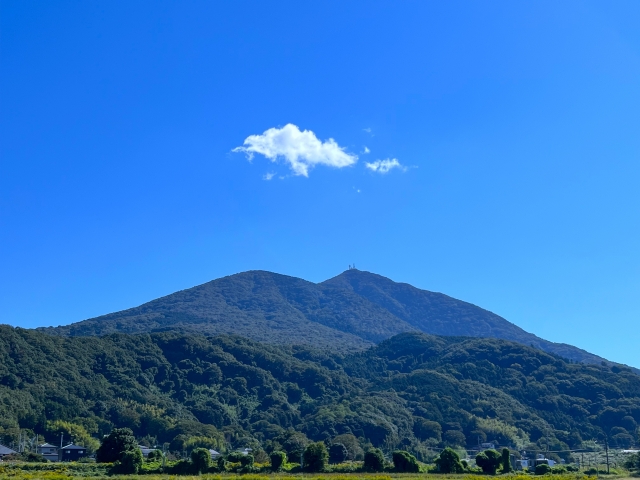
青い空に映えるきれいな筑波山です。
Thank you for reading this far today as well. It has already become June. From now on, Japan will become hotter and more humid. Please take care of your health.
For the eyecatch image of this article, I am using a photo by COCO0217 from Photo AC. It is a beautiful Mount Tsukuba that stands out against the blue sky.
令和八年六月一日