

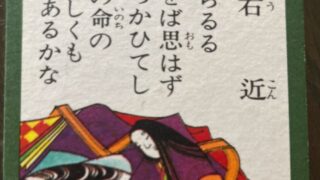






逢ふことの 絶えてしなくは なかなかに人をも身をも 恨みざらまし
百人一首 四十四番 恋
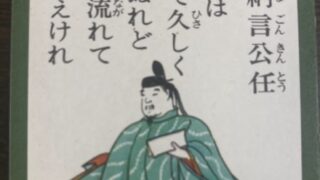
中納言朝忠(910-967)
「拾遺集」
かな
あふことの たえてしなくは なかなかに ひとをもみをも うらみざらまし
「あふこと」は「あうこと」と読みます。
言葉の意味
逢ふこと:会うこと
現在では通常「会う」を使いますが、小説などの中では大事な人に出会うという意味で「逢う」という言葉を使うこともあります。
To meet: In modern times, “会う” is usually used, but in novels and other works, “逢う” is sometimes used to mean meeting someone special.
絶えてしなくは:なくなってしまえば
「絶える」は、完全になくなってしまうという意味で下のように使われます。
If it were never to happen, if it were to disappear, or never exist. “Taeru” (to cease/end) is used as follows to mean completely disappearing:
人通りが絶える・・・通りから人がいなくなる
Traffic stops … People disappear from the street.
息が絶える・・・死ぬ
Breath stops … To die.
血筋が絶える・・・家族を継ぐ人がいなくなる
Bloodline ends … There is no one left to inherit the family.
なかなかに:
これは、現在の日本語とは使い方が異なります。現在「なかなか」という言葉は、望ましい状態が簡単に来ないという意味で下のように使われます。
This usage is different from modern Japanese. Nowadays, the word “nakanaka” is used to mean that a desired state does not come easily, as shown below:
ずっと待っているけど、なかなかバスが来ない。
I’ve been waiting for a long time, but the bus “nakanaka” (hardly) comes.
ピアノを練習しているけど、なかなか上手にならない。
I’m practicing the piano, but I “nakanaka” (not easily) get better.
この歌で使われている「なかなか」は、今の日本語の「かえって」「逆に」「反対に」という意味になります。
The “nakanaka” used in this poem means “rather,” “on the contrary,” or “conversely.”
人をも身をも:相手のことも自分のことも
Others and myself, both the other person and oneself.
恨みざらまし:恨まなかったのに
Would not have resented, Would not have felt resentment (but I do).
現代語訳
あなたに会うことがないのなら、あなたのことも自分のことも恨まないでよかったのに。
If I were never to meet you, I would not have had to resent you or myself.
あなたに会いたい。でも、つきあえないとわかっているのに会うのはかえってつらい。見ているとつらくなるから、会わないほうがよかった。
手に入れられないものは見えない方がいいし、いっしょにいることができない人なら会えない方がいい。勝手ですが、よくあることですね。「恨む」というずいぶん強い言葉を使っていますが、相手への思いが強ければ強いほど、相手に受け入れられなかったときの気持ちも強くなります。ただ、作者の中納言朝忠は「人をも身をも」という言葉で、相手のことだけではなく自分のことも嫌になると表現しています。現代の私たちにも、この気持ちはよく理解できるのではないでしょうか。この歌が百人一首に選ばれたのは、シンプルな普遍性があるからだと思っています。時代が変わっても、手に入れられないものを前にどうするかということは人生の大きなテーマのひとつですね。
I want to see you. But meeting you when I know we cannot be together is, on the contrary, painful. Because looking at you makes me suffer, it would have been better not to meet.
It is better not to see things you cannot have, and it is better not to meet people you cannot be with. It is selfish, but it is a common feeling. The word “resent” (恨む) is a very strong word, but the stronger the feelings for the other person, the stronger the feeling when you are not accepted by them. However, the author, Chunagon Asatada, uses the words “others and myself” to express that he dislikes not only the other person but also himself.
I believe we today can also understand this feeling well. I think this poem was chosen for the Hyakunin Isshu because it has a simple universality. Even as times change, how to face what we cannot have is one of the great themes of life.
中納言朝忠は10世紀の貴族です。朝忠の家は栄えていて、朝忠も順調に出世していました。歌や楽器の才能も認められていたようです。欲しいものがだいたい手に入る力を持っていても、思う人に受け入れられないという現実のつらさが短い歌に表現されています。
Chunagon Asatada was a 10th-century nobleman. Asatada’s family was prosperous, and Asatada’s career was progressing smoothly. His talents in poetry and musical instruments were also recognized. Even with the power to get almost anything he wanted, the pain of reality—not being accepted by the person he loves—is expressed in this short poem.
今回紹介した歌(百人一首44番)は、前回紹介した歌(百人一首43番)といっしょに紹介されることが多いです。どちらの歌も、思う人に会ったあとの苦しさを表現しています。自分の心でさえも予測することや思い通りにコントロールすることは難しいということを感じさせる歌です。
The poem introduced this time (Hyakunin Isshu No. 44) is often introduced together with the previously introduced poem (Hyakunin Isshu No. 43). Both poems express the pain after meeting the person one loves. They are poems that make us feel that it is difficult to predict or control as we wish, even our own hearts.

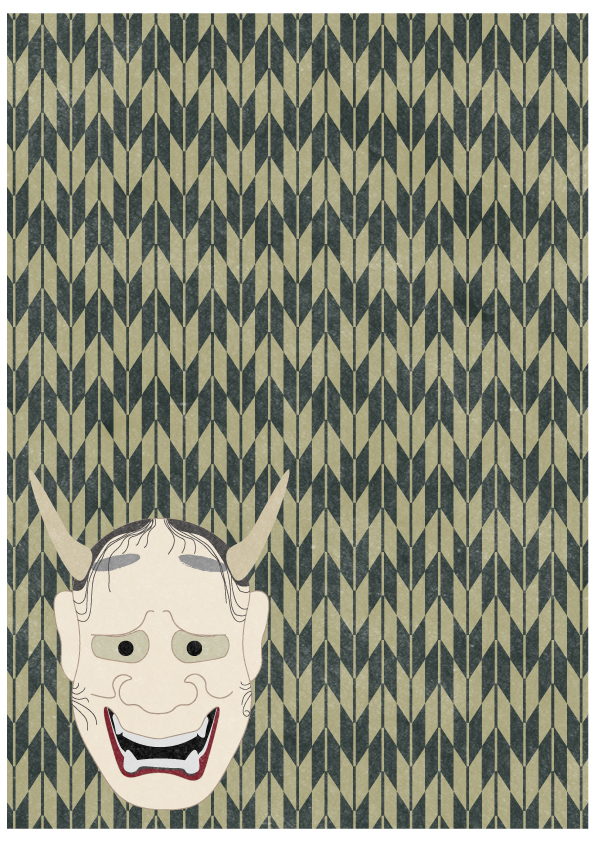
このページのサムネイル画像は、SHIEDAさんという方のイラストです。素材サイトのイラストACからダウンロードしました。
「恨み」という言葉から、少し怖い絵になっています。この歌と絵は「源氏物語」のワンシーンを思い出させます。主人公の光源氏に対する女性の恨みを書いたシーンです。最も印象的なシーンのひとつです。この歌が詠まれたのが10世紀、「源氏物語」が書かれたのが11世紀のはじめごろです。思い通りにならない人に対する執着が普遍的なテーマであることがわかります。
The thumbnail image on this page is an illustration by someone named SHIEDA. I downloaded it from the stock site Illustration AC.
Due to the word “resentment,” it has become a slightly scary picture. This poem and picture remind me of a scene from “The Tale of Genji.” It is a scene describing a woman’s resentment toward the protagonist, Hikaru Genji. It is one of the most memorable scenes. This poem was composed in the 10th century, and “The Tale of Genji” was written in the early 11th century. We can see that obsession toward people who do not act as we wish are a universal theme.
今日もここまで読んでくれてありがとうございました。
令和八年二月二十五日